Venus flytrap is a herbaceous plant; a complete introduction to it
Other names for the Venus flytrap
The Venus flytrap is also called Venus's flytrap, insect-eating grass, insect-catching grass, fly hell, ground pearl, etc.
Growth habits
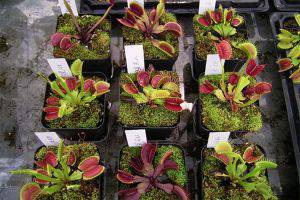
A perennial herbaceous plant native to North America. It belongs to the genus Dionaea in the sundew family (Droseraceae), among the carnivorous plants.
The Venus flytrap prefers to live in environments with plenty of water and acidic conditions.
After the Venus flytrap germinates from seed, it matures, flowers and sets seed after 4~5 years. If cared for well, the Venus flytrap can live at least 20~30 years.
In summer, the lower part of the Venus flytrap's leaf is slender and extends into the air, while in other seasons the lower part of the leaf is short and wide and lies flat on the ground. When there is sufficient light, the inside of the trap takes on a pale red color; after autumn begins the trap turns red, and during winter dormancy the leaves basically wither.
Variety classification of the Venus flytrap
To date there are more than 600 horticultural varieties of the Venus flytrap, most of which are mutant varieties or hybrid varieties produced through tissue culture. Well-known mutant varieties include:
Baron Venus flytrap, toothy Venus flytrap, B52 Venus flytrap, flower market Venus flytrap, alien Venus flytrap, shell Venus flytrap, etc.
Related Articles
- How to prevent and control pests and diseases on desert rose? Ventilation and dryness are the key to prevention
- The three main causes of cotton diseases: climate, seeds and cultivation
- How to Grow Bird's Nest Fern in Water? Master Temperature, Light, and Water Change Techniques
- A Complete Guide to Identifying and Controlling Common Potted Flower Pests
- Do Carnivorous Plants Need Watering? Pot Watering and Wet/Dry Assessment Methods
- How to manage cotton during the flowering and boll-setting stage? Apply flowering and boll fertilizer heavily, use chemical regulation and pruning to prevent premature senescence
- How to Grow Chinese Hibiscus? Master These 5 Key Points for Blooms All Year Round
- How to Grow Tulips in Water? The Complete Process from Bulb Preparation to Blooming