What kind of plant is the firecracker plant? Let's get to know this vine
Alternative names of the firecracker plant
The firecracker plant (Russelia equisetiformis) is a clump-forming subshrub herbaceous plant, also known by the alternative names "auspicious grass" and "firecracker flower."
Morphological characteristics of the firecracker plant
The firecracker plant (Russelia equisetiformis) grows upright as a whole and can reach a height of about 1 m. The entire plant has almost no leaves and no soft hairs. During the flowering period, the stems droop under the weight of the flowers.
The firecracker plant (Russelia equisetiformis) has extremely few leaves; the simple leaves are oblong-ovate or oblong, less than 1.5 cm long, and most have already degenerated into "scales."
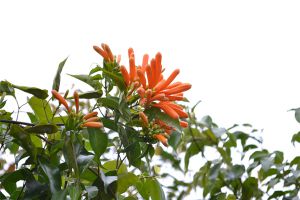
The flowers of the firecracker plant (Russelia equisetiformis) are named "firecracker plant" because they resemble "firecrackers." The flower color is bright red, and during the flowering period large clusters hang down from the tips of the stems, pouring down in fiery red swaths that look very spectacular.
Growth habits of the firecracker plant
The firecracker plant (Russelia equisetiformis) has certain requirements for the humidity of both the soil and the air. If proper humidity cannot be maintained during its growth, the lower leaves will turn yellow and drop, and the upper leaves will lose their gloss.
Because the place of origin of the firecracker plant (Russelia equisetiformis) is in the tropics, it grows more suitably in high-temperature environments. If the temperature is below 10°C, normal growth will be inhibited; frosty weather in winter in particular poses the greatest threat, making it difficult to overwinter safely.
A semi-shaded environment is also suitable for the firecracker plant (Russelia equisetiformis). In addition to needing shading in early summer, it should be given sufficient light in all other seasons.
Value and uses of the firecracker plant
Ornamental value: The branches and leaves of the firecracker plant (Russelia equisetiformis) are basically drooping, and the plant itself is slender in form. When it blooms, the flowers are extremely abundant, and the fiery red flowering branches hang down like firecrackers, lasting and vividly red, making it an excellent hanging greening plant for decorating a balcony.
Medicinal value: The flowers of the firecracker plant (Russelia equisetiformis) taste sweet and can also be used medicinally, with good effects in promoting blood circulation and removing blood stasis, and in rejoining tendons and setting bones.
Flower language of the firecracker plant
Because of its "prosperous and fiery" appearance, the firecracker plant (Russelia equisetiformis) usually symbolizes "wealth and auspiciousness."
Related Articles
- How to prevent and control pests and diseases on desert rose? Ventilation and dryness are the key to prevention
- The three main causes of cotton diseases: climate, seeds and cultivation
- How to Grow Bird's Nest Fern in Water? Master Temperature, Light, and Water Change Techniques
- A Complete Guide to Identifying and Controlling Common Potted Flower Pests
- Do Carnivorous Plants Need Watering? Pot Watering and Wet/Dry Assessment Methods
- How to manage cotton during the flowering and boll-setting stage? Apply flowering and boll fertilizer heavily, use chemical regulation and pruning to prevent premature senescence
- How to Grow Chinese Hibiscus? Master These 5 Key Points for Blooms All Year Round
- How to Grow Tulips in Water? The Complete Process from Bulb Preparation to Blooming