Aster is a herbaceous plant; let us get to know this common ornamental flower
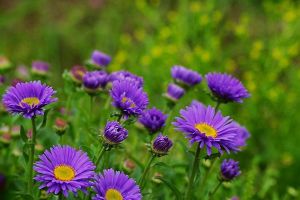
The family and genus of aster
Aster, a herbaceous plant, belongs to the genus Aster in the family Asteraceae.
Other names for aster
Aster, also known as annual aster, is also called Jiangxi wax, July chrysanthemum, and Gesang flower.
The origin of aster
It is produced in Jilin, Liaoning, Hebei, Shanxi, Shandong, Yunnan and Sichuan provinces in China. It grows on hillside wasteland, hillside grass, beside water or in the shade of sparse forest, at an altitude of 30-2700 m.
In Japan and Korea, there are extensive cultivated and wild types, and botanical gardens in the Soviet Union and other European countries have introduced it as an ornamental flower.
Morphological characteristics of aster
Annual or biennial herb, about 30-100 cm tall. The stem is erect, solitary, with white rough hairs, and the base diameter is 6-7 mm.
The capitulum is solitary, 6-8 cm in diameter, the flower bud is hemispherical, and the flower colors are rich, including red, pale red, blue, yellow or pale blue-purple.
The achene is long elliptical oblanceolate, relatively flat, and falls off very easily. The flowering and fruiting period of aster is from May to October.
Related Articles
- How to prevent and control pests and diseases on desert rose? Ventilation and dryness are the key to prevention
- The three main causes of cotton diseases: climate, seeds and cultivation
- How to Grow Bird's Nest Fern in Water? Master Temperature, Light, and Water Change Techniques
- A Complete Guide to Identifying and Controlling Common Potted Flower Pests
- Do Carnivorous Plants Need Watering? Pot Watering and Wet/Dry Assessment Methods
- How to manage cotton during the flowering and boll-setting stage? Apply flowering and boll fertilizer heavily, use chemical regulation and pruning to prevent premature senescence
- How to Grow Chinese Hibiscus? Master These 5 Key Points for Blooms All Year Round
- How to Grow Tulips in Water? The Complete Process from Bulb Preparation to Blooming