Is the camellia a woody plant? An introduction to the botanical characteristics of the camellia
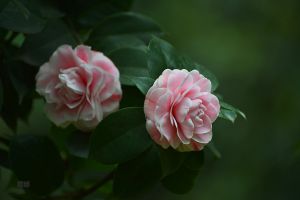
Other names for the camellia
The camellia is also called shancha or shancha hua
Growth habits of the camellia
The camellia is a shrub or small tree in the genus Camellia, family Theaceae.
The camellia fears wind and likes sun, and the planting site is best on high, open ground with good air circulation. It likes a warm, humid environment.
The soil is best loose, fertile sandy loam, loess, or humus soil, with good drainage.
The suitable growing temperature is 20~32°C. Growth stops above 29°C, and at 35°C the leaves will show scorching. A certain temperature difference is required. Most cultivars can tolerate a low of -8°C.
Main camellia cultivars
There are roughly 2000 camellia cultivars, which can be divided into 3 major groups and 12 flower forms. By 2013 China had more than 306 camellia cultivars.
Single form - Petals in 1-2 whorls, 5-7 in number, joined at the base, mostly tubular, and fertile.
Semi-double form - Petals in 3-5 whorls, around 20 in number, sometimes nearly 50.
Double form - Petals in 3-5 whorls, around 20 in number, sometimes nearly 50.
Most stamens are petaloid, the petals increase naturally, and the petal count is above 50.
Camellia propagation methods
There are many ways to propagate the camellia, and both sexual and asexual propagation can be used, among which cuttings and approach grafting are the most common.
Related Articles
- How to prevent and control pests and diseases on desert rose? Ventilation and dryness are the key to prevention
- The three main causes of cotton diseases: climate, seeds and cultivation
- How to Grow Bird's Nest Fern in Water? Master Temperature, Light, and Water Change Techniques
- A Complete Guide to Identifying and Controlling Common Potted Flower Pests
- Do Carnivorous Plants Need Watering? Pot Watering and Wet/Dry Assessment Methods
- How to manage cotton during the flowering and boll-setting stage? Apply flowering and boll fertilizer heavily, use chemical regulation and pruning to prevent premature senescence
- How to Grow Chinese Hibiscus? Master These 5 Key Points for Blooms All Year Round
- How to Grow Tulips in Water? The Complete Process from Bulb Preparation to Blooming