What kind of plant is the tricolor convolvulus? An introduction to its herbaceous characteristics
Morphological characteristics of the tricolor convolvulus
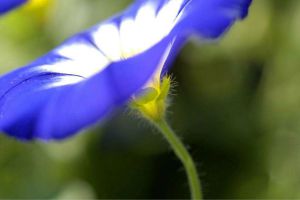
The tricolor convolvulus is an annual or perennial herb. The stems climb upward; the leaves are narrowly oblong to spoon-shaped, with blunt rounded tips, stalked, and entire; the neck is short and clustered, the flowers are sparse, and the cymes are solitary. The corolla is bell-shaped or funnel-shaped, blue and red with white edges and a yellow throat. It is annual, with stems that are erect or climbing upward, much branched and drooping. Inside the flower there is a white star-shaped zone and a yellow center, plus an outer ring surrounding a single color of red, blue, pink, or white, but the flower, just like the morning glory, can only stay open for one day. It can truly be said to be a tricolor morning glory, a single flower possessing three colors.
Growth habits of the tricolor convolvulus
The tricolor convolvulus can be sown from March to May, blooms from June to July, and mostly opens in the morning.
The tricolor convolvulus likes warmth, moisture, and plenty of sunlight; it is not demanding about soil, and an organic all-purpose potting mix can be used for cultivation. During the growing period the soil must be kept moist and must not be allowed to dry out, and the plant should be placed outdoors in a spot with ample light. About 70 to 90 days after sowing it will bloom. From one to one and a half months before flowering, apply fertilizer once every two weeks to increase the nutrient supply at flowering and make the flower colors more vivid.
The branches of the tricolor convolvulus are trailing in nature, so during the growing period, when the stems and branches elongate, moderate pruning can be given, and supports should be set up to prevent lodging. It can also be planted in hanging baskets or flower beds and allowed to trail down freely, which is also a good choice.
Although the tricolor morning glory has good heat tolerance, when the intense heat of midsummer arrives, the stuffy weather easily makes the plant look weak, so the growing environment needs to be kept ventilated; moreover, transpiration is relatively fast, so attention must be paid to replenishing water, but the growing medium used must drain well, so as to avoid the roots rotting easily in hot, humid conditions. Its cold tolerance is also good, so the cultivation period can be extended into early autumn.
Propagation methods of the tricolor convolvulus
The tricolor convolvulus is generally propagated mostly by sowing. The sowing period can be from early spring to early summer. The optimum germination temperature is about 18 to 25°C. It can be sown in a seedling tray and covered with a thin layer of soil, keeping the soil moist. The seedling tray can be wrapped with clear plastic film to maintain humidity, but water must not accumulate in the tray. It will germinate in about 7 to 14 days, at which point the plastic film can be removed and the tray placed in a bright spot. When 3 to 5 true leaves have formed, it can be transplanted into a pot, but the seedlings of the tricolor morning glory do not tolerate transplanting well, so care must be taken during transplanting; alternatively, it can be sown directly into the pot from the start.
The tricolor convolvulus is suitable as greening and beautifying material for hedges, fences, and trellises.
Related Articles
- How to prevent and control pests and diseases on desert rose? Ventilation and dryness are the key to prevention
- The three main causes of cotton diseases: climate, seeds and cultivation
- How to Grow Bird's Nest Fern in Water? Master Temperature, Light, and Water Change Techniques
- A Complete Guide to Identifying and Controlling Common Potted Flower Pests
- Do Carnivorous Plants Need Watering? Pot Watering and Wet/Dry Assessment Methods
- How to manage cotton during the flowering and boll-setting stage? Apply flowering and boll fertilizer heavily, use chemical regulation and pruning to prevent premature senescence
- How to Grow Chinese Hibiscus? Master These 5 Key Points for Blooms All Year Round
- How to Grow Tulips in Water? The Complete Process from Bulb Preparation to Blooming