Introduction to the Sedum dasyphyllum variety, a succulent in the Crassulaceae family
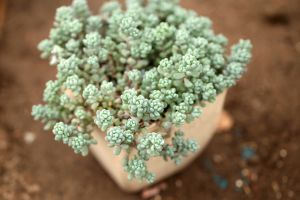
Common names of Sedum dasyphyllum
Sedum dasyphyllum is commonly known as English stonecrop
Habits of Sedum dasyphyllum
Sedum dasyphyllum is a succulent in the Crassulaceae family, genus Sedum, and winter is its growing season.
Sedum dasyphyllum is native to arid regions such as West Asia and North Africa. It is drought-tolerant and fears water; moderate watering during the growing season is enough to meet its growth needs.
Sedum dasyphyllum is a full-sun plant and grows best in a sunny environment, but strong direct sunlight should be avoided; it can also grow in semi-shaded environments. It is cold-tolerant, and the most suitable temperature for growth is 18~25°C.
Home cultivation usually uses cuttings for propagation.
Four-season care tips for Sedum dasyphyllum
Sedum dasyphyllum is a drought-tolerant plant. It needs moderate watering during the growing season; simply keep the potting soil moist.
In summer, Sedum dasyphyllum is in a semi-dormant state. At this time, keep the potting soil dry and avoid water accumulating in the pot.
Cool autumn weather is the best season for fertilizing. A special fertilizer for succulent potted flowers can be used; fertilize 1~2 times. Control the amount of
fertilizer to avoid leggy growth, which makes the stems stretch too quickly and the leaves soft. If lodging occurs, stop fertilizing immediately, increase light, reduce watering, and let it gradually recover.
In spring and autumn, with ample sunlight and a large temperature difference, the leaves of Sedum dasyphyllum turn pink.
Propagation methods for Sedum dasyphyllum
The most commonly used propagation method for Sedum dasyphyllum is cuttings. Cuttings can be taken throughout the year, but spring and autumn are best. During the growing season, cut a small cluster of healthy, plump stems and leaves, about 3~4 cm long, and plant them directly in a pot or insert them into the pot; the survival rate is high.
Combination suggestions: Sedum adolphi, Sedum morganianum.
Related Articles
- How to prevent and control pests and diseases on desert rose? Ventilation and dryness are the key to prevention
- The three main causes of cotton diseases: climate, seeds and cultivation
- How to Grow Bird's Nest Fern in Water? Master Temperature, Light, and Water Change Techniques
- A Complete Guide to Identifying and Controlling Common Potted Flower Pests
- Do Carnivorous Plants Need Watering? Pot Watering and Wet/Dry Assessment Methods
- How to manage cotton during the flowering and boll-setting stage? Apply flowering and boll fertilizer heavily, use chemical regulation and pruning to prevent premature senescence
- How to Grow Chinese Hibiscus? Master These 5 Key Points for Blooms All Year Round
- How to Grow Tulips in Water? The Complete Process from Bulb Preparation to Blooming