Haworthia cooperi var. truncata: Variety Characteristics and Care Methods of a Haworthia Succulent
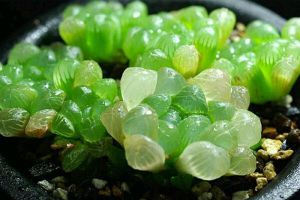
The Appearance and Form of Haworthia cooperi var. truncata
Haworthia cooperi var. truncata is a succulent plant, with fleshy leaves arranged compactly, shaped like a lotus rosette.
The leaves are plump and thick, emerald green, and what is special is that the upper half of Haworthia cooperi var. truncata is transparent or semi-transparent.
The stems and leaves of Haworthia cooperi var. truncata have dark linear markings that turn reddish-brown when there is plenty of sunlight, and the leaf tips have fine "bristles."
Haworthia cooperi var. truncata is also called a "window plant" because in South Africa it generally buries most of its body in the soil, exposing only the windowed part above ground, to adapt to the dry summer.
The Growth Habits of Haworthia cooperi var. truncata
Haworthia cooperi var. truncata prefers a cool, semi-shaded environment. When the air humidity reaches a certain level, the whole plant becomes translucent.
Haworthia cooperi var. truncata is drought-tolerant but not cold-tolerant, and its growing season is in the cooler spring and autumn seasons.
Haworthia cooperi var. truncata dislikes high temperatures and humid environments, cannot be exposed to the scorching sun, and is afraid of deep shade and waterlogged soil.
The Main Value of Haworthia cooperi var. truncata
Haworthia cooperi var. truncata is relatively small in appearance, and the shape and color of its leaves are very attractive, giving it a certain ornamental value.
When Haworthia cooperi var. truncata is made into a potted plant and placed next to household appliances, it can absorb radiation.
Haworthia cooperi var. truncata can also be planted indoors, where it can absorb harmful substances such as formaldehyde and purify the living environment.
Related Articles
- How to prevent and control pests and diseases on desert rose? Ventilation and dryness are the key to prevention
- The three main causes of cotton diseases: climate, seeds and cultivation
- How to Grow Bird's Nest Fern in Water? Master Temperature, Light, and Water Change Techniques
- A Complete Guide to Identifying and Controlling Common Potted Flower Pests
- Do Carnivorous Plants Need Watering? Pot Watering and Wet/Dry Assessment Methods
- How to manage cotton during the flowering and boll-setting stage? Apply flowering and boll fertilizer heavily, use chemical regulation and pruning to prevent premature senescence
- How to Grow Chinese Hibiscus? Master These 5 Key Points for Blooms All Year Round
- How to Grow Tulips in Water? The Complete Process from Bulb Preparation to Blooming