What kind of woody plant is the crape myrtle? A brief introduction to its plant characteristics
Alternative names
The crape myrtle is a woody plant belonging to small trees or deciduous shrubs, and has alternative names such as "Hundred-Day Red", "Full-Hall Red", "Mosquito Flower" and "Itch Tree".
Morphological characteristics
The crape myrtle tree grows up to about 7 m tall; the bark of the tree is gray or brown, relatively smooth to the touch, most branches grow twisted, and the twigs are rather slender.
The leaves of the crape myrtle are papery leaves that are obovate or (elliptic, broadly oblong) round.
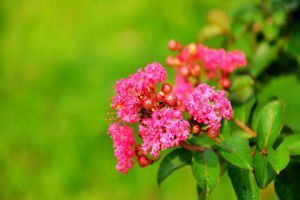
Crape myrtle flowers come in rich colors such as rose red, deep pink, bright red, purple and white; the diameter of the flowers is about 3-4 cm, and the flowering period is usually in the flower-sparse autumn and lasts a long time, which is why it is also named "Hundred-Day Red".
Growth habits
The crape myrtle is suitable for growing in a warm, humid, sunny environment, and can also accept a semi-shaded environment.
Its growth requires sufficient fertilizer, and the planting soil is best a fertile, deep sandy soil; both acidic soil and calcareous soil are acceptable.
In terms of humidity, the crape myrtle is best planted in moist soil and has a certain adaptability to dry environments, but it fears waterlogging, so when planting in the ground one must not choose low, wet spots with a high groundwater table.
The crape myrtle also has a relatively strong resistance to pollution and can, to a certain extent, resist pollution from sulfur dioxide, hydrogen fluoride and chlorine gas, etc.
Value and uses
Ornamental value: The crape myrtle flower has long enjoyed the fine name "Hundred-Day Red", and the flowers, roots and trunks of the bonsai made from it all have good ornamental value. Crape myrtles planted in courtyards, parks and along roads also have a good landscaping function.
Practical value: The trunk of the crape myrtle tree is hard in material and good in rot resistance, and can be used as timber for furniture, buildings and farm tools.
Medicinal value: After the leaves of the crape myrtle are used as medicine, they can dispel wind and dissipate blood stasis, and also have effects such as clearing heat and detoxifying, and stopping bleeding and reducing swelling.
Flower language
The crape myrtle flower represents "obsessive love", and also has different symbolic meanings such as "good luck", "women" and "eloquence".
Related Articles
- How to prevent and control pests and diseases on desert rose? Ventilation and dryness are the key to prevention
- The three main causes of cotton diseases: climate, seeds and cultivation
- How to Grow Bird's Nest Fern in Water? Master Temperature, Light, and Water Change Techniques
- A Complete Guide to Identifying and Controlling Common Potted Flower Pests
- Do Carnivorous Plants Need Watering? Pot Watering and Wet/Dry Assessment Methods
- How to manage cotton during the flowering and boll-setting stage? Apply flowering and boll fertilizer heavily, use chemical regulation and pruning to prevent premature senescence
- How to Grow Chinese Hibiscus? Master These 5 Key Points for Blooms All Year Round
- How to Grow Tulips in Water? The Complete Process from Bulb Preparation to Blooming