The Survival of Fisheries Under Wind Turbines 02"Changhua Fishermen's Association Pushes Symbiotic Reconciliation, Industry Players Fund Offshore Ranching, Fishery Rights Groups: Don't Let It Become Empty Promises
(Continued from previous article) Wind power development has been raging with unending controversy. In Changhua County, an indicator region, the offshore waters will soon be filled with wind turbines, and the traditional coastal and near-shore fishing industry is on the verge of disappearing. After years of conflict and confrontation, since 2019 the Fishermen's Association has proposed a "reconciliation and symbiosis" plan, with wind power developers providing funding, and is about to establish the "Changhua Offshore Wind Power Fishery Co-prosperity Foundation" as a foundation corporate person, to promote a sustainable fishery plan for Changhua, transforming into "offshore ranching," with capture fisheries converting to offshore aquaculture.
Wu Fei-chun, a researcher at the Fishermen's Rights and Environmental Sustainability Center, worries that the concept of offshore ranching is still "drawing a big pie in the sky." The cage net aquaculture tested during the first-stage demonstration wind farm in Miaoli has yet to produce concrete results. Now the Changhua wind farm is about to begin construction, and fishermen's livelihoods are an urgent problem - we can no longer just offer an imagined vision!" (Background reading: Changhua's offshore waters will be filled with a thousand wind turbines, capture fishermen forced to exit)
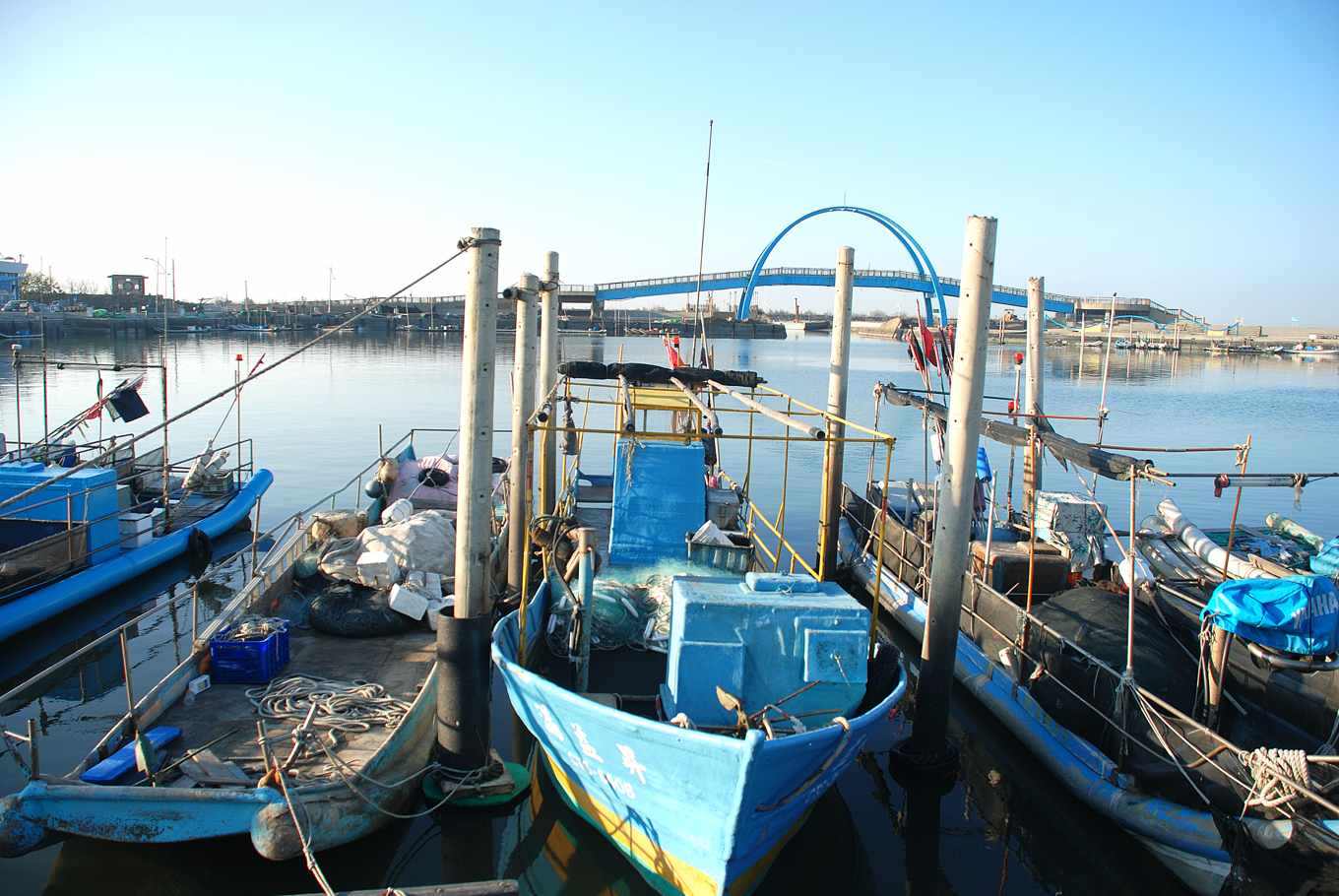
Changhua Fishermen's Association General Secretary Chen Chu-tsan: The path of transformation is cruel, but it must be taken
"Fishery transformation is a painful process. (After the wind turbines arrive,) some people may be able to find work as whale and dolphin observers or alert vessel crew after vocational training, but most will probably leave the sea for good." Changhua District Fishermen's Association General Secretary Chen Chu-tsan admitted frankly,
"For these fishermen who generally have limited education, leaving the sea to seek work on land will likely mean facing livelihood difficulties. The Fishermen's Association must find a way to keep these people working at sea, so we must find a new way out." Chen Chu-tsan added, "Moreover, fishermen have spent so long at sea that they are used to being independent and free by nature, and will probably find it hard to adapt to the outside world. To continue in the fishing industry, they may have to move their entire families."
The concept proposed by the Changhua District Fishermen's Association is for wind power developers to provide funding and form a platform in four-party cooperation with the Fishermen's Association, the Bureau of Energy, and the Fisheries Agency, commissioning experts and scholars to develop concrete plans for sustainable marine resources and fisheries. These include "offshore ranching," allowing fishermen to transition to offshore cage net aquaculture, or deploying fishing reefs and changing fishing methods, shifting from traditional gillnet operations to single-hook fishing.
Chen Chu-tsan also proposed many alternative projects, including "cultivation fisheries," establishing new seedling centers and selecting fish, shellfish, and mollusk fry for release; there is also a plan to guide fishermen into recreational fisheries, having some fishermen switch to tourism-based fishing, taking tourists offshore for angling.
Chen Chu-tsan stated that the foundation has entered the preparatory stage. Currently, most of the five wind power developers in Changhua have agreed to participate, with only one still watching and waiting. Two preparatory meetings have already been held, and the initial startup fund is estimated at 200 million, which will be in place by the end of the year, and will gradually expand with experimentation in the future.
Bureau of Energy: If offshore wind power and fisheries can co-prosper, it will be promoted to other counties and cities
Chen Chung-hsien, head of the Energy Technology Division at the Bureau of Energy under the Ministry of Economic Affairs, pointed out that offshore wind power only uses the space above the sea surface, and the waters below still have fishery potential. He hopes to use the concept of symbiosis to combine wind power development with sustainable fisheries. "It is still in the research and development stage and requires much experimentation. If successful, it will not only resolve the conflict between offshore wind power development and fisheries, but will also become a model for Taiwan."
As the competent authority that facilitated the industry players' proposal to provide funding, will the foundation's composition have an official background? Chen Chung-hsien clarified, "This is a foundation funded entirely by private sources and advocated by private parties; there will be no official participation." He emphasized, "Currently, offshore ranching or cage net aquaculture is still small-scale research. If Changhua can succeed, it will be extended to other counties and cities."
Another important driving force, Liu Chia-chen, deputy head of the Fisheries Policy Division of the Fisheries Agency, believes that in the future this foundation's goal is set on "co-prosperity of offshore wind power and fisheries." The prototype is still under communication and coordination, and it has been preliminarily established that it will not belong to the Fishermen's Association or wind power developers, but will operate entirely as an independent foundation corporate person, ensuring independence and impartiality.
Taiwan Power Company: Will cooperate with policy to conduct preliminary basic research
Wind energy development in Changhua County has cut the offshore waters of Changhua into fragmented pieces, originally pushing fisheries to the brink of extinction. However, starting last year, the "coexistence and co-prosperity plan" between wind power and fisheries went from being distant and unreachable to taking initial shape. Under the carrot-and-stick approach of the Bureau of Energy and the Fisheries Agency, which hold the power of life and death over development projects, domestic and foreign wind power developers had no choice but to buy in.
Currently, the five developers that have obtained second-phase permits in Changhua's offshore waters are Orsted, Copenhagen (CIP), Zhongneng (developed by China Steel, now operated by CIP), Taiwan Power Company, and Canada's Northland Power (NLP). Among them, Taiwan Power Company is the only developer with official shareholding background, and it has also put up the first sum of funding, commissioning Ou Ching-hsien to conduct initial research and to visit the Goto Islands in Kyushu, Japan, for a cage net fishery study tour.
Tsai Ying-sheng, director of the Renewable Energy Division at Taiwan Power Company, revealed that because the co-prosperity fund is led and coordinated by the Bureau of Energy and the Council of Agriculture, Taiwan Power Company, as a state-owned enterprise, is obligated to support it. Most of the other developers selected to enter the market have also expressed agreement, with only one still considering, and it has now progressed to the stage of concrete implementation.
"Because land and sea areas are limited, offshore wind power refers to the spirit of rooftop solar photovoltaics and fishery-solar symbiosis, hoping to develop toward a symbiotic model, providing sustainable fishery operations while generating power, rather than single-use." Tsai Ying-sheng explained, "After all, Taiwan Power Company is a state-owned enterprise. When it is difficult for private parties to invest, Taiwan Power Company can cooperate to do basic work and provide reference for future policy or company operations, so the initial research funding is provided by Taiwan Power Company."

Related Articles
- How to prevent and control rabies in dogs? Timely vaccination of puppies ensures safety
- How to Explore Keelung's Fishing Port Docks? Practical Tips for Picking Fresh Seafood
- The Slow Food movement advocates that how you eat matters more than what you eat, helping you eat your way to health
- How to Identify Inferior Cooking Oil? Key Points for Quality Control from Cultivation to Purchase
- Which agricultural activities require tax payment? The ranch court case clarifies the boundary of tax exemption
- Ractopamine, a lean meat agent, is banned; scientific pig farming to increase lean meat percentage is the right path
- Horizontal Windbreak Nets for Welsh Onion Cultivation in Winter Reduce Losses
- Top Ten Fungicides Ranking Released, a Useful Reference for Farmers Choosing Products