Pink and pretty red girl radish cake: A symbiotic kitchen connects small farmers, restaurants and the community
The pink and pretty "red girl radish cake" is perfect for Chinese New Year! It comes from a "symbiotic kitchen" formed by small farmers, restaurants and the community, creating this spring-like pink radish cake and embodying a new model of cooperative economics.
This innovative idea comes from Hsieh Sheng-yu, founder of Haoshiji. He said that small farmers grow a special pink radish that is better suited to processing than to eating fresh, but small-scale farmers are easily affected by weather, their yields are unstable, and they face great sales pressure. Yet when the volume is too small, it is also hard to find processing opportunities. So he connected restaurants and communities, had food technicians design the recipe and production process, and used the restaurants' off-hours to let community residents make the radish cake.
Currently there are 2 restaurants serving as production sites. Hsieh Sheng-yu explained that many people in the community have left the workforce because of family factors, and the symbiotic kitchen can offer these people flexible working hours. The proceeds from selling the radish cake cover wages, ingredient costs and restaurant venue fees. This production and processing chain is "small but fully complete in every part," and it can increase income for farmers, restaurants and the community. "This is a radish cake rich in social welfare."
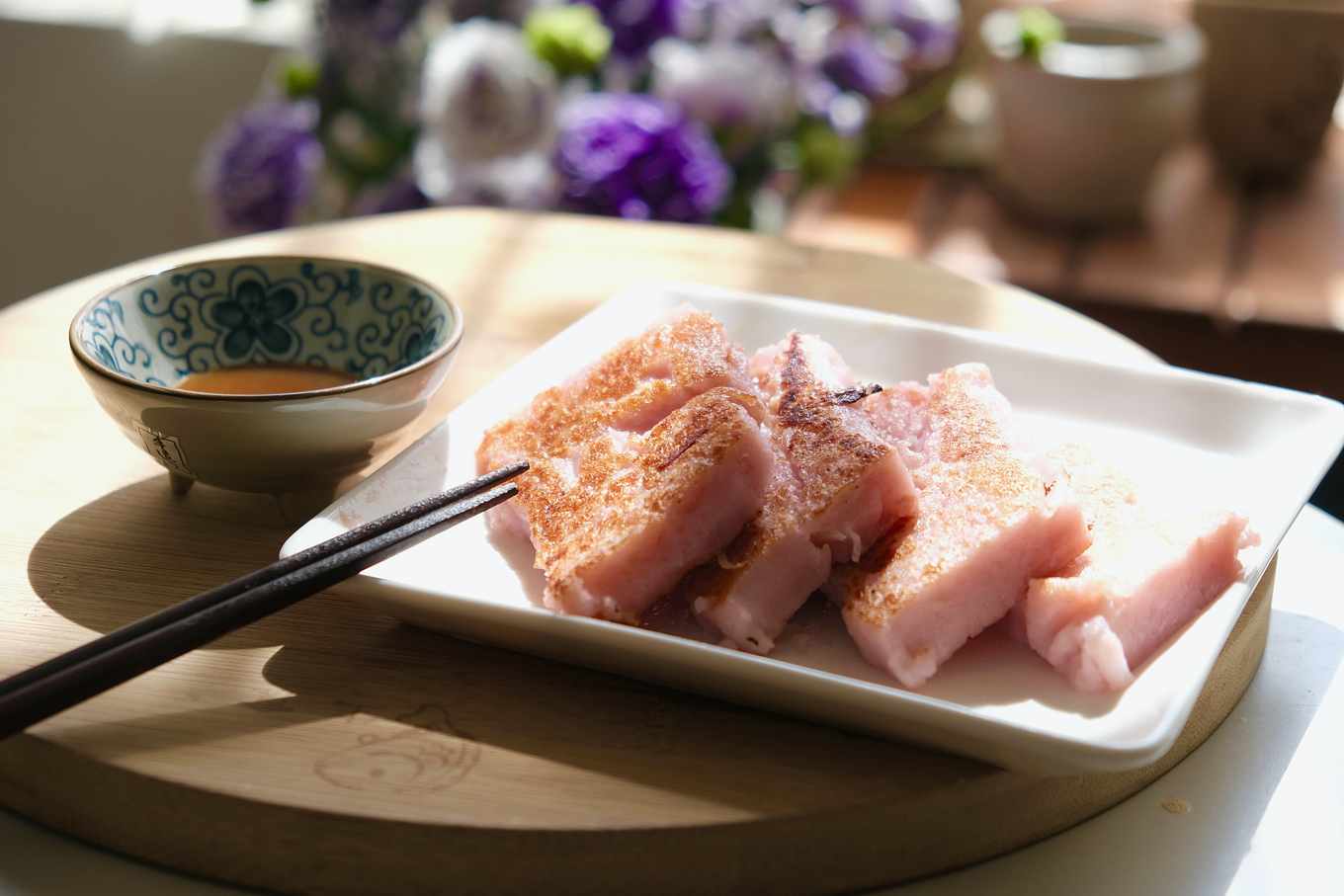
Pink radishes are scarce and hard to find processing plants for; the symbiotic kitchen opens another window for small farmers
According to Council of Agriculture data, the average cultivated land area per farm household in the country is only about 0.72 hectares, and most farm households are part-time farmers, so production costs are relatively high. Small farmers often face challenges such as unstable yields and having to handle sales themselves. Haoshiji, which has long assisted small farmers, hoped to break through these difficulties, so it came up with the symbiotic kitchen linking "small producers, small restaurants and communities."
Hsieh Sheng-yu explained that the concept of the symbiotic kitchen originated from the pink radish "red girl" grown at Me Zao Ju Natural Farm. Unlike most white radishes on the market, which are mostly eaten fresh, it is suitable for processing, but because the production scale is not large, it is hard to find a suitable processing plant, or the price offered by processors does not match the cost.
"There must be a way for small-scale operations to survive." To make use of the pink radishes, Hsieh Sheng-yu began thinking about developing processed products, and so the pink and pretty red girl radish cake was born. He believes that compared with large producers, small producers have greater experimental energy and flexibility. Therefore, by using the idle time of restaurant kitchens, restaurants become the "symbiotic kitchen" processing base for small farmers. Through planning and training by food technicians and the participation of community manpower, processed agricultural products are made that benefit farmers, communities and restaurants alike.

Using restaurants as processing bases, supervised by food technicians, made only after pre-orders are received
According to regulations, agricultural food processing must be carried out in a processing facility with a processing registration certificate. So can a restaurant become a food processing site? Hsieh Sheng-yu explained that the entire plan has applied to and been approved by the Taipei City Government. Restaurant production of processed agricultural products follows the concept of a front shop and back factory. Just as with delivery platforms UberEats and Foodpanda, customers place orders with restaurants and the food is then made. There will be no stock on site at the restaurant. Consumers must pre-order from the restaurant in advance, and the restaurant makes the product after receiving the order.
The development of the radish cake and order management are both handled by Haoshiji. After consumers pre-order, they can choose which restaurant to pick it up from. The final sales proceeds pay the restaurant venue fee, agricultural ingredient costs and wages for community manpower. Hsieh Sheng-yu explained that agricultural product processing has certain hygiene standards. The recipe and production process for the radish cake are designed and planned by food technicians, and a food technician must be present each time it is made.
Because the production space is in a restaurant, the time must be chosen during the restaurant's closed off-hours. During production, every worker must be fully equipped (wearing a hat, gloves, mask and apron), and the environment must be cleaned before and after production. Hsieh Sheng-yu said that restaurants provide the venue, Haoshiji's "Food and Farming Artisan Manufacturing Studio" provides professional food technicians, and the Department of Social Work at Soochow University is responsible for coordinating flexible community labor and arranging personnel. All community manpower must also undergo education and training by food technicians before work can begin.

Related Articles
- How to prevent and control rabies in dogs? Timely vaccination of puppies ensures safety
- How to Explore Keelung's Fishing Port Docks? Practical Tips for Picking Fresh Seafood
- The Slow Food movement advocates that how you eat matters more than what you eat, helping you eat your way to health
- How to Identify Inferior Cooking Oil? Key Points for Quality Control from Cultivation to Purchase
- Which agricultural activities require tax payment? The ranch court case clarifies the boundary of tax exemption
- Ractopamine, a lean meat agent, is banned; scientific pig farming to increase lean meat percentage is the right path
- Horizontal Windbreak Nets for Welsh Onion Cultivation in Winter Reduce Losses
- Top Ten Fungicides Ranking Released, a Useful Reference for Farmers Choosing Products