What are the common problems in home flower care?
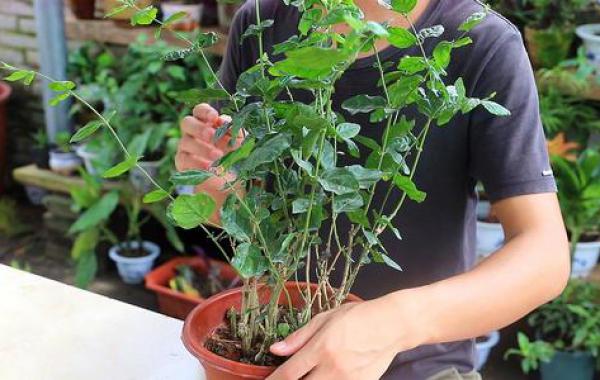
What problems arise in the care of home flowers.
To grow flowers, you must first master the ecological habits of the flowers, and master the adjustment of the light, water, fertilizer, temperature, humidity and pest and disease control needed for home flower growth. Solve some of the common problems that often appear in the process of growing flowers.
Most homes cannot reach the humidity of a greenhouse, and most plants native to the tropics like a damp environment. In a greenhouse, flowers can receive sunlight through a shade net all day, so that they are not exposed to direct sunlight, while at home there is often insufficient light, or the sun is blazing. Many flowers like a semi-shady environment, but in winter the sunlight is too weak, so the flowers can be allowed to receive full sunlight. The suitable growth temperature for most flowers is between 15°C and 20°C; if the temperature is too high, the flowers bloom quickly and problems are also likely to occur.
In a greenhouse, regular fertilizing and moderate watering are carried out, and compound fertilizers suitable for each growth stage need to be used; at home, however, due to insufficient gardening knowledge, either no fertilizer is applied, causing malnutrition, or too much fertilizer is applied at one time, burning the flowers. In particular, note that during the flowering period you may skip fertilizing or apply a small amount of compound fertilizer; "too much fertilizer" is unfavorable for blooming.
Flowers mostly like neutral or slightly acidic soil. If the tap water is alkaline, long-term watering will make the soil alkaline, which also affects the quality of the flowers. If the soil is heavy and not breathable, it also affects the respiration of the root system, and can even cause root rot. For watering, basically grasp "wet then dry": in winter the evaporation is small, so do not water too frequently; too much water easily causes root rot. Before watering, be sure to touch the potting soil with your hand, so you can judge the degree of dryness and moisture of the soil and avoid blind watering.
Most flowers like an environment with high air humidity, so spray more water around the flowers to increase air humidity. Try to keep the flowers in a sunny and well-ventilated place, which can avoid the occurrence of pests and diseases. The room temperature should preferably not be lower than 5°C, and not exceed 25°C. Too much water, low air humidity and excessively high temperature are often the main factors that cause problems for flowers.
1. Daily management
(1) Temperature
For indoor flowers, the optimal temperature is the suitable temperature for people's living; generally speaking, a temperature between 15-25°C is the optimal temperature for indoor flower growth, and outside this temperature range, flower growth will have problems.
(2) Light
Compared with outdoors and greenhouses, the indoor light conditions are not very ideal, and are mostly dominated by scattered light. Differences in light conditions have a great influence on the choice of indoor flowers: in places with sufficient light, you can try placing some plants with high light requirements, such as cactus, bougainvillea and Chinese hibiscus; in places with direct light, you can arrange some plants such as ficus, violet and spider plant; in places with light but not for a long time, you can place plants such as Japanese evergreen, serissa and pothos; semi-shady places are suitable for placing plants such as dragon tree, snake plant and Japanese aralia; and in cool places it is suitable to place shade-loving plants such as cast-iron plant and nerve plant.
(3) Air humidity
Air humidity is also a major factor affecting indoor flower growth. In the north, in places with little rain and winter heating, the air humidity is relatively low, and the growth of leafy plants native to warm and tropical zones is restricted; similarly, in the warm and humid environment of the south, the roots of some northern flowers remain in overly moist soil for a long time, which also easily causes the plants to become diseased.
(4) Watering
The watering time for indoor plants should be comprehensively considered according to the plant variety, the soil and air humidity, and the surrounding environment. When watering, adhere to the basic principle of "do not water if not dry, and water thoroughly when watering". Never give half-hearted watering, that is, the upper half of the pot is wet and the lower half is dry. Plants near windows, in strong west-facing light, or in air-conditioned spots should be watered more; succulent and perennial root plants should be watered less. Water more in summer and autumn, and less in winter and spring.
(5) Pruning
Through pruning, not only can the flower branches be evenly distributed, nutrients saved, plant vigor regulated and leggy growth controlled, thus making the flower plant neat in shape and graceful in posture, but more importantly it helps produce more flowers. Pruning is mainly divided into the following two forms: dormant-period pruning and growing-period pruning. Depending on the flower variety, the pruning time is also different. Flowers that bloom in spring generally should not be pruned in winter, and should not be pruned before germination in early spring, because the flower buds are mostly on the branches of the previous year; pruning should be done within 1-2 weeks after flowering. However, for flowers that bloom on branches of the current year, pruning should be done during the winter dormant period, with the purpose of prompting them to send out more new buds and grow more new branches, which can increase the number of flowers.
(6) Fertilizing
For indoor flowers, growth amount is not the goal being pursued; as long as there are no conditions such as yellow leaves and spotted leaves, there is no need to add much fertilizer. On the contrary, home flower growing often easily causes flower growth problems due to excessive fertilizing. Many people, once they see poor flower growth, blindly apply fertilizer, and there are not a few cases of flowers dying as a result. There are many causes of yellowing leaves, and improper fertilizing is one of them. Usually indoor flowers have three most important fertilizing times: 1. Apply an appropriate amount of nitrogen fertilizer in spring, mainly to promote the growth of branches and leaves; commonly used fertilizers include ammonium sulfate, soybean cake and urea; 2. Apply phosphorus fertilizer in summer; 3. Apply a certain amount of potassium fertilizer in autumn.
2. Common pest and disease control management
Physiological diseases and infectious diseases are common disease types of flowers. Physiological diseases are mostly caused by environmental factors, mainly shown in the flowers' incompatibility with environmental factors, physiological disorders, and then pathological changes. This type of disease usually does not need drug treatment; by changing environmental factors (light, humidity, water, temperature, etc.), the purpose of relieving the disease can be achieved. Infectious diseases can be subdivided into many types. Diseases caused by tiny parasites invading flowers and leading to viral infection are called viral diseases. This type of virus can accumulate in flower seeds or flower soil and overwinter. Effective control measures include removing diseased plants, burning soil and spraying drugs. Common bacterial pests are: 1. Red spider mite: usually occurs more in high-temperature and dry environments (such as indoors by sun-facing windows), and reproduces quickly. It mostly attaches to leaves to suck sap, causing yellow-white small spots on the leaves, then gray-white, the leaf surface loses luster, and even the leaves scorch or fall off.
Control method: you can choose 0.5% veratrine soluble concentrate 300-500 times dilution or 25 g/L bifenthrin emulsifiable concentrate, 500-800 times dilution for spray control. 2. Aphids: mainly suck sap on new buds and leaves, often causing plant leaves to deform, shrink and curl; at the same time, they can spread viruses, and their secretions induce sooty mold. Control method: low-toxicity and environmentally friendly agents are recommended, such as acetamiprid and imidacloprid, each small bag of 10 g can be mixed with 7-10 kg of water, and use a small spray bottle to focus on spraying the plant's growth points and places where pests gather; the dosage can be appropriately increased or decreased according to the number of pests. 3. Scale insects: mainly gather and parasitize on the young stems and leaves of plants, inserting piercing-sucking mouthparts into plant tissues to suck sap. Their wounds are very easily infected with diseases and can induce sooty mold. Control method: our most common household low-toxicity agent, you can use Huhuashen 1:200 mixed with water; after the first spraying, spray again at an interval of 5-7 d, which can very effectively and more thoroughly control scale insects.