Six fish recommended for eating in winter: grey mullet, largehead hairtail, red snapper, fourfinger threadfin, sea bass, and sea eel
As the old saying goes: "When the north wind blows fierce, the belly grows tight," meaning that when the northeast monsoon blows, fishermen enjoy a bountiful harvest and eat until their bellies are stuffed. The reason is that when the northeast monsoon rises, air and water temperatures drop, and either northern migratory fish travel south to the waters off Taiwan to spend the winter, or fish on the seafloor swim up toward the surface to escape the cold, both of which help fishermen make their catch.
To avoid the winter cold and to prepare in advance for next spring's spawning season, fish store up a great deal of fat, making their flesh especially rich and plump. Fatty fish are rich in protein and Omega-3 fatty acids, and the saturated fat and trans fat in fish meat are relatively low, so you could say fish comes with "a whole body of good oil."
An expert leads the way: Hsu Cheng-yu, founder of Upwelling Ocean, recommends six great fish you must eat in winter; Wu Yu-ying, manager of the sales department at Taipei Fishery Products Marketing Company, shares tips for choosing frozen fish; and Liu Hsin-yi, daughter of a fishing family, teaches ways to cook fish. This winter, let's all eat fish and eat good oil, and get smarter together!

Wild grey mullet is a treasure from head to tail; "oil belt" largehead hairtail is only available in winter
Grey mullet, nicknamed "Taiwan's black gold," arrives in the coastal waters off Taiwan around the winter solstice each year, hence the saying "Grey mullet is just right to eat at the winter festival." Every part of the grey mullet is a treasure, and it is the "year-end bonus" fishermen look forward to year after year. Grey mullet roe, grey mullet swim bladder, and grey mullet gizzard are known as the "three treasures of grey mullet." The roe can be thinly sliced to go with drinks, the swim bladder can be pan-fried dry or braised with garlic, and the gizzard can be deep-fried or stir-fried. The fish body after the roe is removed is called "grey mullet shell," and whether it is grey mullet rice noodles, braised grey mullet, or three-cup grey mullet, all are well-known old-time dishes.
Hsu Cheng-yu says that sayings such as "Saltwater grey mullet beats a chicken drumstick" (grey mullet is even more delicious than chicken legs) and "I'd rather go without pants than go without grey mullet" (I'd pawn my pants just to eat grey mullet) give a glimpse of how much Taiwanese people love grey mullet. Although Taiwan's grey mullet farming techniques have advanced, fishermen value the roe most, so when farming they emphasize the eggs over the flesh. Though the roe quality is good, the flesh may be too oily and affect the texture. Relatively speaking, wild grey mullet meat is more suitable for eating.
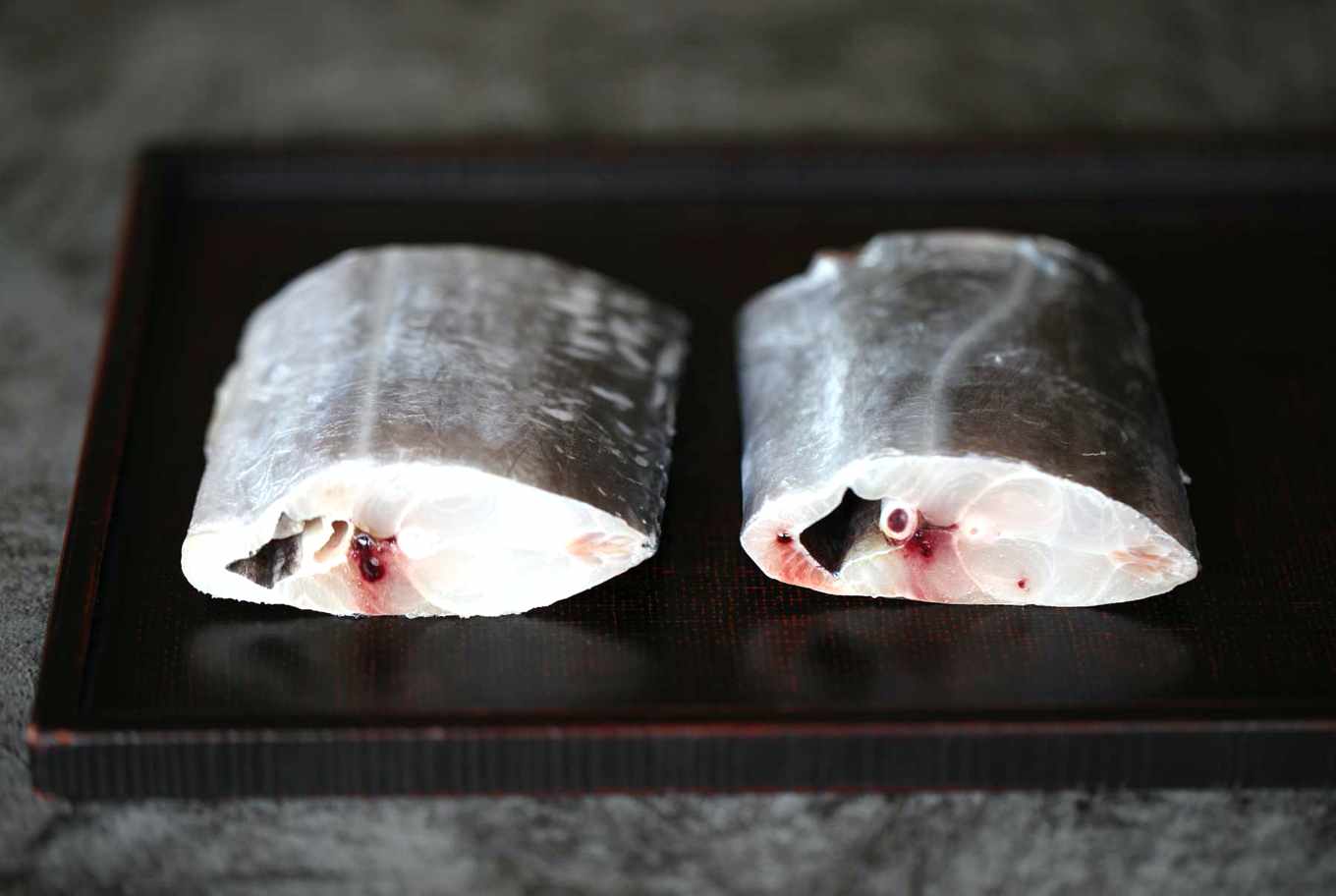
Largehead hairtail can be said to be one of the most common fish on Taiwanese dinner tables. Hsu Cheng-yu explains that what is caught in Yilan and Keelung is the Japanese cutlassfish, commonly known as "thin belt," while what is caught in Taichung and Miaoli after December is the "oil belt." Just from the name you can tell that oil belt must be more delicious than thin belt, and the price difference between the two is enormous. Because most is exported to China, only two to three thousand metric tons remain each year for domestic sale in Taiwan, so if you see oil belt at the market, don't miss it easily.
As for how to identify top-grade fish like wild grey mullet and oil belt? Hsu Cheng-yu advises consumers that besides choosing a trusted fishmonger, they can also ask questions when a crowd is present; under everyone's watchful eyes, the fishmonger is more likely to answer honestly.
Red snapper and fourfinger threadfin are available in all four seasons, but winter fish are far plumper and richer than summer fish
Red snapper can be caught in all four seasons, but summer fish are lean and not as plump and delicious as winter fish. Hsu Cheng-yu says that in the past there were many red snapper smuggled in from China, but in the past two years the government has cracked down strictly, and smuggling has decreased a lot, so almost all the red snapper bought at the market now is caught or farmed in Taiwan, and this is just the right time to put the plumpest and finest ones into your mouth.
Every part of the red snapper can be eaten. Besides commonly appearing on sashimi platters, the head can be cooked into hot pot or miso soup, and even the bones after the meat is removed can be cut into sections and grilled, then sprinkled with sea salt and squeezed with a few drops of lemon juice to make a fine companion for drinks.
Fourfinger threadfin is also a species farmed and supplied year-round, but Hsu Cheng-yu stresses that the top-grade "big threadfin" and "bamboo threadfin" only migrate back to Taiwan in winter. Whether it is "first threadfin, second pomfret, third
Related Articles
- How to prevent and control rabies in dogs? Timely vaccination of puppies ensures safety
- How to Explore Keelung's Fishing Port Docks? Practical Tips for Picking Fresh Seafood
- The Slow Food movement advocates that how you eat matters more than what you eat, helping you eat your way to health
- How to Identify Inferior Cooking Oil? Key Points for Quality Control from Cultivation to Purchase
- Which agricultural activities require tax payment? The ranch court case clarifies the boundary of tax exemption
- Ractopamine, a lean meat agent, is banned; scientific pig farming to increase lean meat percentage is the right path
- Horizontal Windbreak Nets for Welsh Onion Cultivation in Winter Reduce Losses
- Top Ten Fungicides Ranking Released, a Useful Reference for Farmers Choosing Products