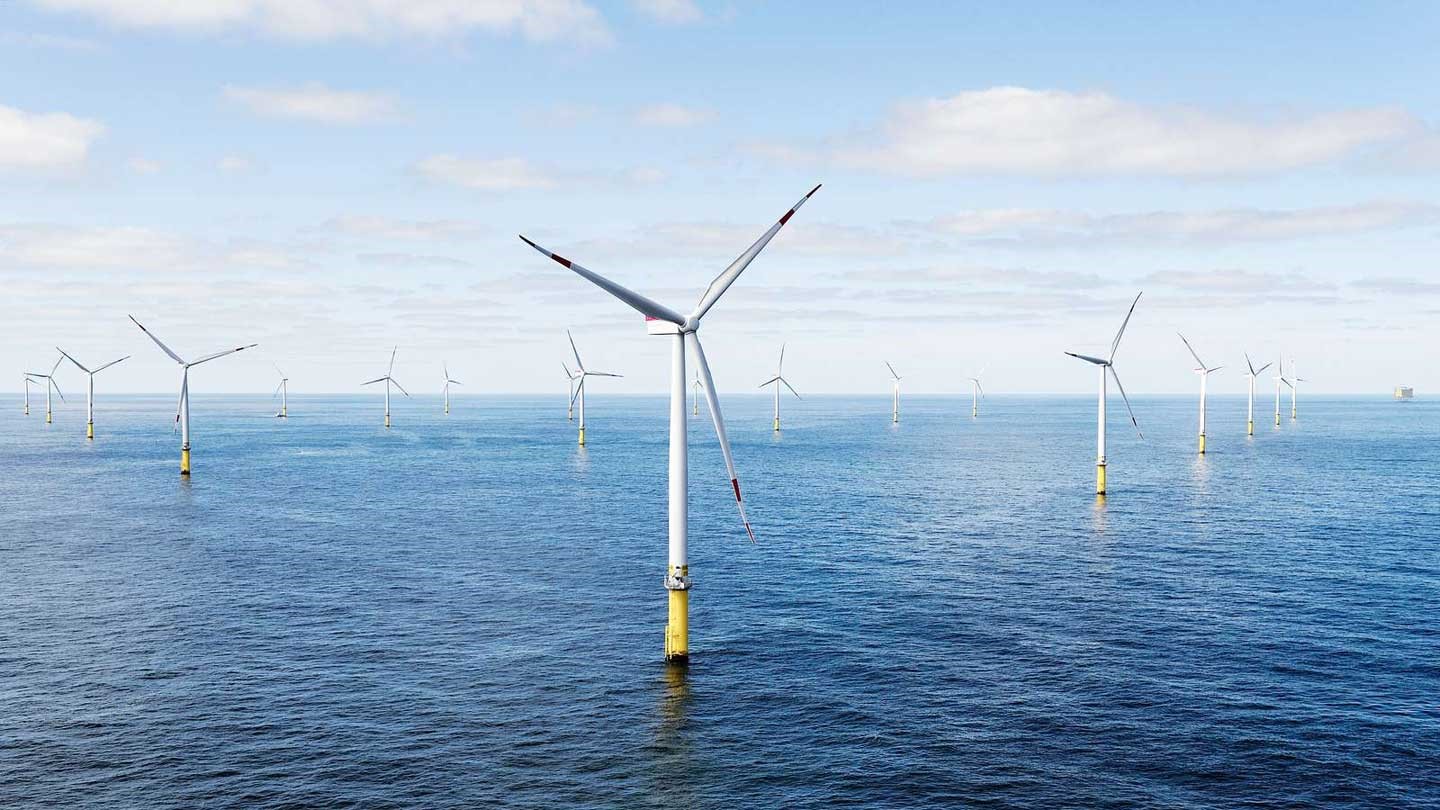
Environmental groups urge a halt to Phase 3 offshore wind development, criticizing developers for pirate-style land grabbing
Text by Lin Chi-yang and Lin Yi-chun, reporters for Newsmarket
In the energy transition policy, offshore wind power is seen as holding great promise. However, yesterday (the 29th), environmental groups and legislator Chen Jiao-hua held a press conference calling on the government to suspend the opening of Phase 3 development. The environmental groups pointed out that wind developers have violated environmental impact assessment commitments, new development sites are being added too quickly, and the resulting ecological conservation and fishery resource problems remain unresolved, making it inappropriate to open up development hastily.
Offshore wind has passed through the Phase 1 demonstration wind farms, and in Phase 2 the government planned 36 potential wind farm sites, but developers, believing the development costs of the remaining sites to be higher, began demanding that the Bureau of Energy open up Phase 3, that is, "letting wind developers choose sites themselves." Environmental groups disagree with this, arguing that the government should first take stock of the problems and establish supporting measures before opening up Phase 3, so as to best serve the public interest.
This news is also worth your attention: "Crazy" wind power wipes out fishing! Taiwan's largest fishing ground, the Three Northern Isles, has been encircled for wind farm development
Mazu Fish Conservation Alliance: Developers violated environmental impact assessment commitments and refused to dispatch enough cetacean observers
Kuo Chia-wen, a member of the Taiwan Mazu Fish Conservation Alliance, pointed out that some wind developers have not fulfilled their environmental impact assessment commitments. She gave an example: "The Hsinchu Formosa 1 Zhunan Offshore Wind Farm did not dispatch enough cetacean observers, and was fined NT$1.5 million by the Environmental Protection Administration. At the Yunlin Dade Wind Farm, cetacean observation vessels were found leaving early, with no adequate number of observers on site, also violating environmental impact assessment commitments."
Shih Chung-ping, the alliance's executive secretary, pointed out that the strategic environmental assessment for offshore wind policy was completed more than three years ago, and now that turbine sizes have increased, the spacing regulations are long out of date, yet there is no rolling amendment mechanism, and supporting legislation has still not been enacted. For example, the "Guidelines for Underwater Noise Assessment of Offshore Wind Turbine Operations" have yet to be completed, yet the relevant wind farm environmental impact assessments are still being approved as usual, so the low quality of these assessments is entirely predictable.
Shih Chung-ping criticized that the Environmental Protection Administration and the Ocean Conservation Administration lack sufficient vessels, and given the many construction cases that are also far from the coast, their monitoring and enforcement capacity is clearly insufficient to reach that far. Moreover, the administrative agencies are unwilling to provide construction information, so no matter how many environmental impact assessment commitments there are, they are difficult to supervise, and developers cannot be trusted.

Environmental group lawyers: Official monitoring has become empty talk on paper, and survey data is long overdue for disclosure
Kuo Hung-yi, a full-time lawyer at the Wild at Heart Legal Defense Association, mentioned that Taiwan lacks local empirical research, making it impossible to confirm whether wind power's preventive and inspection measures have any protective effect on endangered species, especially the white dolphin. Environmental groups have twice found that developers violated environmental impact assessments, and the Environmental Protection Administration has also been unable to require developers to fulfill their commitments.
Kuo Hung-yi mentioned that offshore wind development has conducted insufficient fishery resource surveys, leading to frequent protests by fishermen along the North Coast and the western coast. These problems, which remain unresolved from Phases 1 and 2, should be discussed pragmatically by the Ministry of Economic Affairs. He also pointed out that the Ministry of Economic Affairs once commissioned the Industrial Technology Research Institute to conduct empirical research. That study referenced Germany's regulations on the impact of turbine noise on cetaceans and birds, yet the report has still not been made public, leaving the Environmental Protection Administration and the Ocean Conservation Administration without a basis to formulate relevant regulations.