Which kind of flower fertilizer should be chosen to be suitable?
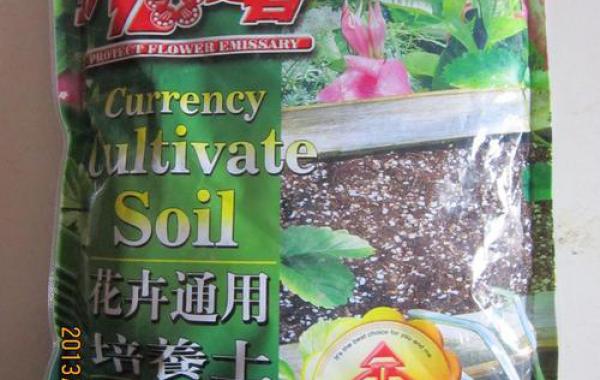
Which kind of flower fertilizer it is.
Question: Which kind of flower fertilizer is the best.
Answer: Scotts Peters Professional (Manager Zhou: 13826207657).
Question: What advantages does it have.
Answer: 1. Peters takes water quality into consideration; 2. Peters leads in technology and has the highest quality; 3. Only Peters fertilizer has the unique patented formula M-77.
Whether the water is hard, neutral or soft, you can choose a Peters formula that suits it. Peters has high purity and strong solubility. More importantly, the concept behind Peters fertilizer goes far beyond simply supplying nutrients. Only Peters has added the M-77 component. Peters can ensure to the greatest extent that nutrients are fully absorbed by plants, thereby ensuring that plants grow well, and it takes effect quickly, with results visible immediately.
Only Peters fertilizer contains the unique patented formula M-77 - a plant nutrient activator. M-77 is an important component of Peters fertilizer. Based on the principle of "not only providing nutrients to plants, but also ensuring that plants can absorb these nutrients," Scotts innovatively introduced the M-77 nutrient activator, maximizing the availability and absorbability of all nutrient elements.
M-77 is a product combining multiple components, and this combined form is precisely the advantage of M-77. It ensures optimal nutrient availability and absorbability and optimizes the rhizosphere environment. This makes M-77 an indispensable component of Peters.
M-77 improves nutrient availability, just like a key that opens the channel for absorbing nutrients. You can see its remarkable effect through the growth of plants.
1. Fertilize according to the season. Spring and summer are the peak growing seasons for flowers. During this period, plants grow rapidly and have vigorous metabolism, requiring more nutrients. Therefore, a "three-element" fertilizer mainly based on nitrogen fertilizer should be applied, so that the root system becomes well developed and robust, absorption capacity is enhanced, and branch growth is promoted to facilitate flowering and fruiting. After summer, if nitrogen fertilizer continues to be applied, it will be unfavorable to plant development and affect flowering and fruiting; moreover, applying too much nitrogen fertilizer can easily lead to diseases and pests, or make stems and leaves weak and flower colors less vivid. Therefore, before plants enter the reproductive growth stage (flower bud differentiation stage), nitrogen fertilizer should be stopped. In autumn, plant growth slows and fertilizer demand decreases. To improve their cold resistance and ability to overwinter, a small amount of phosphorus and potassium fertilizer can be applied. Besides benefiting reproductive growth, phosphorus and potassium fertilizer can also make plants stronger and flower colors more vivid. In winter, flowers enter dormancy, and no fertilizer should be applied. However, some potted flowers brought indoors in winter may continue to grow. In this case, a small amount of fertilizer can be applied to meet the needs of growth.
2. Fertilize according to plant growth. Robust plants have vigorous physiological activity, grow quickly, have strong absorption capacity, and need more nutrients, so nitrogen fertilizer should be applied frequently. Diseased and weak plants grow slowly, have sluggish metabolism, poor absorption capacity, and need less fertilizer, so less or no fertilizer can be applied. Flowers also have the problem of "being too weak to benefit from tonics." If the nutrient concentration in the soil is too high, it can easily cause reverse osmosis, scorch the roots, and cause plant death.
3. Fertilize according to the growth stage of flowers. 1) Fertilizing at the bud stage. Flowers need a large amount of nutrients at the bud stage and should be given fertilizer mainly based on phosphorus and potassium to promote flower bud differentiation and produce more buds and flowers. However, do not fertilize when the flowers are blooming, so as to avoid prematurely inducing new branches, forcing the flowers to fade early, and shortening the flowering period. 2) Fertilizing during fruit enlargement. After fruit-setting, flowering and fruiting trees need a large amount of nutrients, but before the fruit has set steadily, do not fertilize, so as to avoid causing heavy fruit drop. After the fruit has set steadily, especially during the fruit enlargement stage, phosphorus and potassium fertilizer should be applied. This can not only make the fruit grow quickly, but also help the fruit stalk become thick and strong, making it less likely to fall.
4. Fertilize according to flower species. For azaleas, gardenias, and others, never apply alkaline fertilizer. 2) For flowers that need heavy pruning every year, increase the proportion of phosphorus and potassium fertilizer to facilitate the sprouting of new branches. 3) For foliage-oriented flowers, nitrogen fertilizer can be emphasized. 4) For flowers with large blooms such as chrysanthemums and dahlias, apply an appropriate amount of complete fertilizer during the flowering period to promote full blooming and produce flowers of beautiful shape and vivid color. 5) For fruit-oriented flowers, appropriately control fertilizer and water during the flowering period, and apply sufficient complete fertilizer during the fruit-strengthening period, so as to produce abundant fruit. 6) For fragrant flowers, when they enter the flowering period, an appropriate amount of phosphorus and potassium fertilizer should be applied to help make the fragrance rich.
5. Precautions. 1) Do not fertilize immediately after repotting. When potted flowers grow in a pot for a long time, the nutrients in the soil are gradually depleted, so the potting soil needs to be replaced in time and base fertilizer added to facilitate flowering and fruiting. However, newly planted plants after repotting often have damaged root systems and a weak ability to absorb fertilizer and water, so they must not be fertilized, lest the fertilizer solution irritate the wounds, cause root rot, and affect the survival rate. 2) Master the suitable dryness and moisture of the potting soil. Fertilization should be timed properly and according to the dryness and moisture of the potting soil. When the potting soil is slightly dry, fertilizing will allow the fertilizer solution to directly seep into the soil and be absorbed by the root system; if the potting soil is too dry and gaps appear between the soil and the pot wall when fertilizing, the fertilizer solution will be lost through the gaps. If fertilizing when the potting soil is too moist, it can easily cause root rot and plant death. 3) Supplement with foliar fertilization. When the climate and potting soil conditions are unsuitable for fertilization or when fertilization has little effect, foliar feeding can be adopted. Practice has proved that in such cases, foliar feeding can achieve relatively good results.
In addition, pay attention to the following matters:
Eight cases in which flowers should not be fertilized:
1. Do not fertilize newly planted plants. Newly planted plants have many wounds. If stimulated by the outside world, they cannot heal and will develop root rot.
2. Do not fertilize during the flowering period. Fertilizing during the flowering period will cause bud drop, flower drop, and fruit drop.
3. Do not fertilize during dormancy. During dormancy, flowers stop or slow their growth, have slow metabolism, and poor photosynthesis. If fertilizer is applied, dormancy will quickly be broken and the plants will continue to grow, which will consume more nutrients and affect the following year's flowering.
4. Do not fertilize directly under the root crown. As flowers and plants grow continuously, their root systems gradually expand accordingly. If fertilizer is applied directly under the root crown, it is instead unfavorable for full absorption and utilization. Therefore, depending on the plant's growth, fertilizer should be applied in holes at an appropriate distance from the roots or at the edge of the pot to facilitate root absorption.
5. Do not apply concentrated fertilizer. When fertilizing potted flowers, the concentration must not be too high or the amount too much, otherwise it will cause death. Generally, the principle of "thin fertilizer applied frequently" should be followed, with three parts fertilizer to seven parts water being most appropriate.
6. Do not apply raw fertilizer. If undecomposed fertilizer is applied, it will not only easily breed insects and maggots and often give off a foul odor that pollutes the environment, but will also ferment when it encounters water and damage the plant's root system.
7. Do not apply nitrogen fertilizer alone. When fertilizing flowers, nitrogen, phosphorus, and potassium should be used together. It is best to rely mainly on farmyard manure such as cake fertilizer, barnyard manure, compost, chicken, duck, and pigeon manure, bone meal, leaves, and plant ash. If nitrogen chemical fertilizer is applied alone, it can easily cause branches and leaves to prolong their growth period, delay flowering or prevent flowering, or produce small and pale flowers.
8. Do not fertilize diseased and weak plants. Diseased and weak plants have thin and weak branches, poor photosynthesis, and slow metabolism, and are "too weak to benefit from tonics." If fertilizer is applied arbitrarily, it can easily cause fertilizer damage.