Wind turbines swallow Sihu Township 02"Green energy development is unjust, residents angrily criticize "the state sacrifices rural areas to benefit a few"
(Continued from previous) "Of the 105 onshore wind turbines in Yunlin County, 26 are planted in Sihu Township, and 5 of them surround my village. This kind of green energy development is no different from plunder." Wu Lianjin, chairman of the Sihu Township Anti-Wind Turbine Self-Rescue Association, lashed out at this development approach, saying it "amounts to the state sacrificing rural areas, trampling on the people who live here, to benefit a few."
The anti-wind turbine self-rescue association organized by Sihu Township traveled all over Taiwan to exchange views on the anti-wind turbine movement. They saw that in Wujiazhuang, Da'an, Taichung, the installation of wind turbines caused the village to decline faster and accelerated population outflow. On the contrary, Yuanli, which successfully blocked the wind turbines, continued to see population return. This made the self-rescue association even more convinced that opposing wind turbines was the right choice, otherwise Sihu Township, which already suffered serious population outflow, might face a crisis of village extinction.
Video by Lin Jiyang
Villagers: Are places with fewer people just destined to be unlucky?
Pan Zhenggang, director of the Yunlin office of Dade Energy, once publicly stated during the anti-wind turbine protest in Taixi Township, Yunlin, that onshore wind turbine sites are not in densely populated areas, and the nearest villages are all more than 300 m away, exceeding the legal range. As for noise, Dade's wind turbines have been tested and meet the Class 2 rural area standards of the noise control standards, within plus or minus three decibels of the (background value).
Why does wind turbine installation that appears to comply with regulations provoke such a huge backlash from residents? A conversation between farm women growing garlic in Xiwei Village reflects the common sentiment of local villagers:
A: The company says there are fewer people here, so they can build wind turbines here. Where are we lacking people?
B: Are we not people?
A: Are rural areas (countryside places) just supposed to die? This kind of talk is really insulting. It would have been better if they had not said it; hearing it makes my blood boil.
B: Right! There are people everywhere here, how can there be no people.
A: That conglomerate is so rich, it went to sign a contract with the landowner, and that landowner does not even live here, but we still have to live here!
B: The company really should not do this. They should build out by the seaside. How could they build right into our village?
A: So we have to keep a close eye on that company. If anyone tries to come in and start construction, we must report it immediately and everyone go stop them.
B: Right!

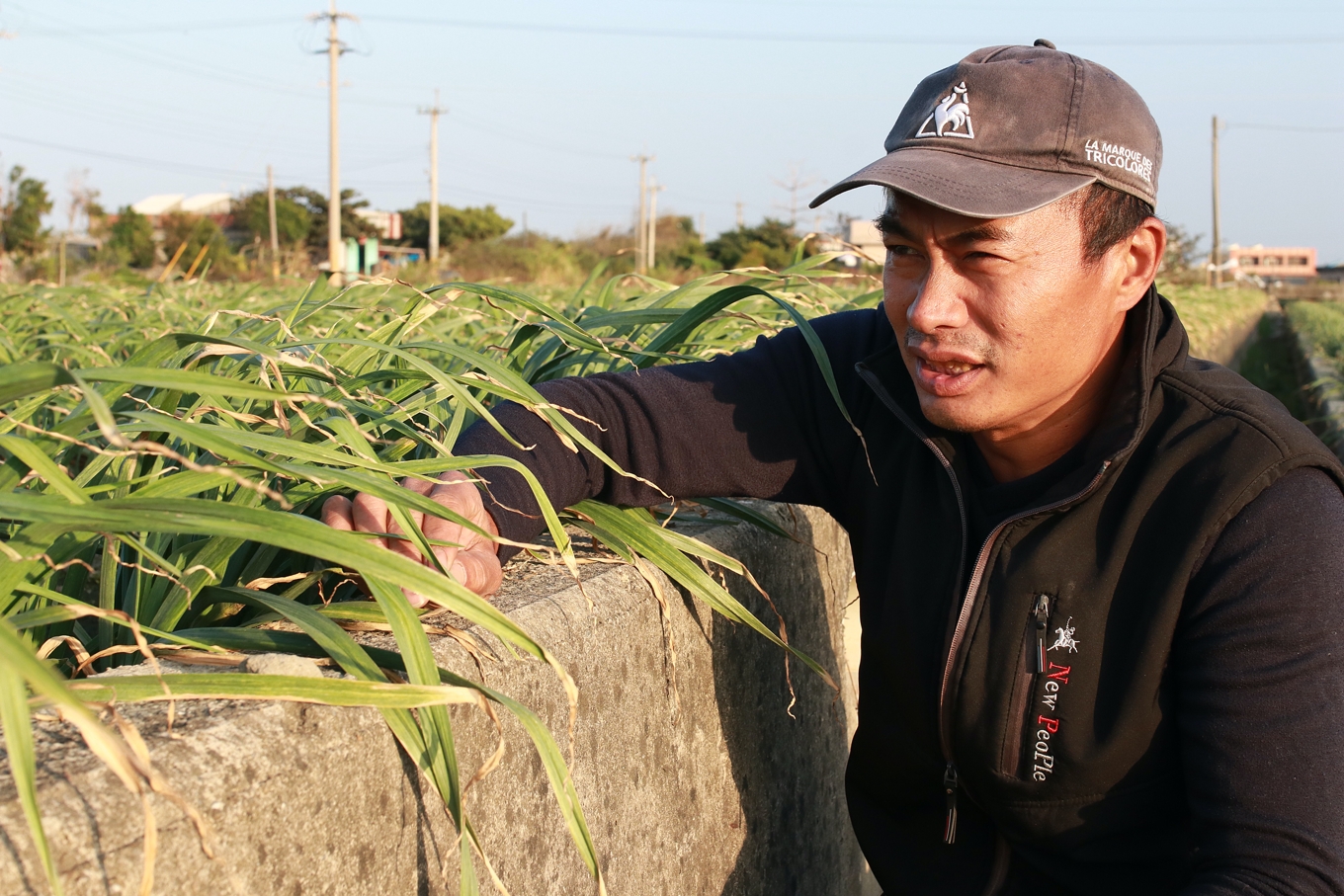
The same feeling is reflected in Ding Qixiang, who stayed in the village to farm. Ding Qixiang is also a member of the self-rescue association. Whenever he talks about the company's public statements, he gets furious. "What do they mean there are fewer people here? Saying this is really taking advantage and still acting aggrieved. It is simply bullying rural people."
"The government and conglomerates promoting this green energy policy was originally a good thing, but now the development has turned into bullying farming and fishing villages, which leaves us very disappointed. We do not ask for givebacks, nor do we want any compensation. If we want to make money, we can rely on ourselves. Anyway, just do not come here." Ding Qixiang said.
Returning young farmer: Came home to keep both feet on the ground, start a farming business, and does not want wind turbines to stir up trouble again
Cai Huiyun is a seventh-grade student, born in the 1970s, tired of the busy, mundane life in Taipei, and often missed the strong human warmth of her hometown. So after discussing with her family, she decided to build a greenhouse farm in her hometown and embark on the path of returning home to farm. "Leaving Taipei, where I lived for 20 years, is because my hometown is here, and my roots are in this land." She said that doing management work in Taipei was very exhausting, "but farming is different. However much you do, it will repay you accordingly." Through recommendations from relatives and friends, stable sales made her very confident about the farm.
Facing the large-scale invasion of wind turbines, she believes, "It is unreasonable for electricity companies to sell electricity earned by harming villages and let consumers spend money to buy this kind of electricity." She finds it incredible that government policy allows companies to overlap wind farms with residents' living areas. "The huge oppressive feeling of wind turbines should not be so close to villages."

Another young farmer who also takes an opposing stance is Huang Sanbao, 46 years old this year. Huang Sanbao previously sold fruit in Wugu. "Renting a place in the city to do business, the money earned either goes to rent or gets spent, and in the end my hands are still empty. Better to come back early." He returned home to take over his parents' garlic fields. Although farming is hard, it made him feel grounded for the first time. In addition, last year's garlic prices were not bad, so he slowly saved a little money. "After all, this is my own hometown, standing on my own land."
Cai Huiyun said, "Sihu Township absolutely cannot agree to become a wind farm. More and more people are gradually coming back, unlike in the past when information was not developed and a few people dominated everything." Huang Sanbao also pointed out that most villagers are very concerned about this matter and do not want the whole township shrouded under the threat of wind turbines.
Related Articles
- How to prevent and control rabies in dogs? Timely vaccination of puppies ensures safety
- How to Explore Keelung's Fishing Port Docks? Practical Tips for Picking Fresh Seafood
- The Slow Food movement advocates that how you eat matters more than what you eat, helping you eat your way to health
- How to Identify Inferior Cooking Oil? Key Points for Quality Control from Cultivation to Purchase
- Which agricultural activities require tax payment? The ranch court case clarifies the boundary of tax exemption
- Ractopamine, a lean meat agent, is banned; scientific pig farming to increase lean meat percentage is the right path
- Horizontal Windbreak Nets for Welsh Onion Cultivation in Winter Reduce Losses
- Top Ten Fungicides Ranking Released, a Useful Reference for Farmers Choosing Products