What are the purple woody flowering plants? A grand overview of common varieties
Purple is a fairly common color in everyday life, and it is formed by mixing warm red with calm blue, making it a stimulating color to which the eye is especially sensitive. In the traditional sense, purple represents nobility and is a tone that balances warm and cool. The same is true of flowers, though there are quite a few plants that can produce purple blooms. So, what are they?
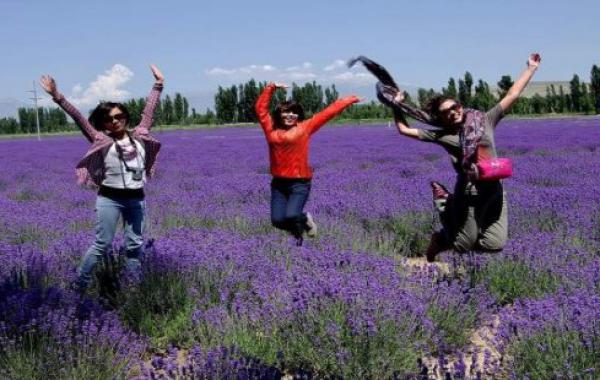
In practical landscape applications, red loropetalum (Loropetalum chinense var. rubrum), purple-leaf barberry (Berberis thunbergii var. atropurpurea), purple-leaf plum (Prunus cerasifera f. atropurpurea), lavender (Lavandula) and others are all typical representatives of purple woody flowering plants. Lavender in particular looks like a grass that produces purple flowers, but because its stems and branches gradually become woody as they grow, it is a woody flowering plant. Moreover, among the many purple woody flowering plants, lavender has extremely high ornamental value and is the most widely used. It can not only be planted to create a sea of flowers, but can also be grown as a potted plant for viewing, and can even be dried for brewing tea or made into sachets, so its uses are truly wide-ranging.
But whether grown as a sea of flowers or as a potted plant, it often brings people an exotic flavor, and it is also very simple to grow, often thriving without any deliberate care from us. This is especially true when it is planted in the ground to form a sea of flowers: among clear waters, blue skies, flower fields and mountain streams, the fragrance refreshes the heart and brings a touch of romance and coolness in the hot summer days.
However, to grow lavender well, the temperature in its growing environment must first be suitable; generally, maintaining the ambient temperature at around 15°C is most suitable for its growth, and it is best to keep the ambient temperature above 5°C at the leaf tips, so as to ensure it maintains good growth and ornamental effect. If you sow and propagate it in a hotter environment, sowing in the morning or evening when the temperature is relatively lower and the weather is cooler usually gives a higher germination rate.
After the seeds germinate, as the seedlings keep growing strong, the plant also gives off an striking fragrance that is extremely attractive to people. To keep the plant growing normally and giving off a pleasant fragrance in moderation, maintenance and management must be done well, especially in the supply of water and fertilizer, which must be sufficient. However, the management of water and fertilizer must also be scientific and reasonable, neither too much nor too little, and the amount and frequency should specifically be decided according to the growth needs of the plant.
But note that during the weaker growth stage, we must do a good job of pest control, because in summer, with high temperatures, high humidity and poor ventilation, lavender is relatively prone to attack by aphids. Therefore, we should normally do good prevention and control work to avoid bringing unnecessary damage and losses to our lavender when the time comes.