What factors should be considered when fertilizing flowers? How to fertilize flowers
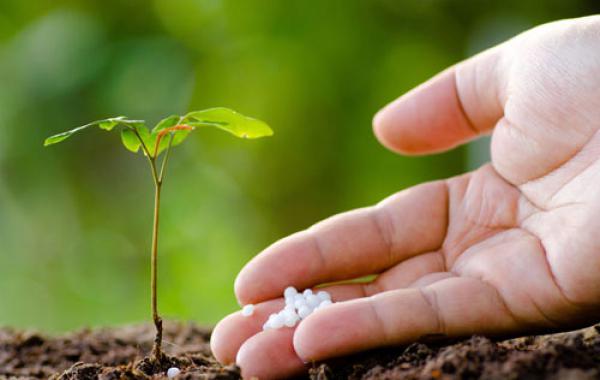
Fertilizing flowers is different from fertilizing crops. There are many aspects to pay attention to when fertilizing flowers, and a slight oversight may cause the flowers to wither and die. Therefore, when fertilizing flowers, you must grasp all aspects of the factors well. Let's take a detailed look together below.
The key to doing a good job of fertilizing lies in doing it at the right time and in the right amount. At the right time means fertilizing when the flowers need fertilizer. For example, if you find that the flower leaves have become lighter in color and the plants are growing thin and weak and slowly, fertilizing at this time is like sending charcoal in snowy weather, and it is most timely. This can be compared to people eating food. When you get food when you are hungry, you will eat it very deliciously, and it is good for your health. On the contrary, if you eat a large amount of food when you are full or when you are about to sleep, it is not only not good for your body, but harmful to your health. The right amount means that the amount of fertilizer applied must be controlled well. Applying too little has no effect; while applying too much will not only fail to achieve the goal, but will burn the flower branches to death. Also note that flowers should be given nitrogen fertilizer at the seedling stage, which can promote rapid and robust growth of the seedlings, while at the flowering stage phosphorus fertilizer should be applied to help them set flowers.
Fertilizing must also pay attention to the relationship with the seasons. In spring and summer, flowers grow fast and vigorously, so more fertilizer can be applied; after the beginning of autumn, flowers grow slowly, so less fertilizer should be applied; by winter, there is no need to apply fertilizer anymore. It is also very important to grasp the number of fertilizations well. For potted flowers, the number of fertilizations may be more, but the amount each time should be less. Never apply too much or too concentrated. From the Beginning of Spring to the Beginning of Autumn, generally a thin fertilizer solution can be applied once every 1-2 weeks; after the Beginning of Autumn, apply a thin fertilizer solution once every 2-3 weeks; after the Beginning of Winter, there is no need to apply it anymore.
As for the time of fertilizing, it can generally be done in the evening. Special attention should be paid to the fact that in hot seasons, fertilizing must not be done around noon, because the soil temperature is very high during this period, and fertilizing easily damages the roots. In addition, before watering with fertilizer solution, it is best to loosen the potting soil first, so that the fertilizer solution can smoothly seep down and be absorbed by the plant's root system.
Chemical fertilizers such as ammonium sulfate (nitrogen fertilizer), superphosphate (phosphorus fertilizer), and potassium sulfate (potassium fertilizer) are suitable for use on garden flowers. Potted flowers, however, should not be fertilized with them often, otherwise over time the potting soil will become harder and harder, until it becomes compacted.
Fertilizing should also be done according to the variety of flowers. The fertilizer used cannot be the same for all. For example, osmanthus and camellia like pig manure and avoid human urine; camellia, azalea, gardenia, and other flowers native to the south avoid alkaline fertilizers; flowers that need pruning every year should have the proportion of phosphorus fertilizer and potassium fertilizer increased. Flower-focused flowers such as chrysanthemums and dahlias need an appropriate amount of nutritionally complete fertilizer during the flowering period to make the flowers large and beautifully colored; foliage-focused flowers should lean toward applying nitrogen fertilizer; fruit-focused flowers should appropriately reduce fertilizer solution during the flowering period, while during the fruit-swelling period they should apply enough nutritionally complete fertilizer. Bulbous flowers should be given more potassium fertilizer to help the bulbs become plump; fragrant flowers should be given phosphorus fertilizer and potassium fertilizer when they enter the flowering period to promote a rich floral fragrance. When applying organic fertilizer, never use raw fertilizer that has not been fermented. Be sure to wait until it is fully decomposed and add water to make it thin before applying. For chemical fertilizers, the dosage must be strictly controlled. Better less than more, better thin than concentrated, otherwise it is very easy to burn the flower roots and cause death.
Some experts with many years of flower-growing experience have summarized a set of practical fertilizing essentials. That is "four more, four less, four not, and three avoid." "Four more" means apply more when yellow and thin, apply more before sprouting, apply more during the bud stage, and apply more after flowering; "four less" means apply less when fat and strong, apply less when sprouting, apply less when flowering, and apply less in the rainy season; "four not" means do not apply when growth is leggy, do not apply when newly planted, do not apply in the height of summer, and do not apply during dormancy. "Three avoid" means first avoid concentrated fertilizer, second avoid hot fertilizer (meaning avoid fertilizing when the soil temperature is very high around noon in summer), and third avoid sitting fertilizer (meaning avoid directly planting the flower roots on the base fertilizer at the bottom of the pot when planting flowers; instead, a layer of soil should be used on top of the base fertilizer to separate them).