Xinyi Herb Fruit Garden is a pioneer of organic cultivation
Text / Veggie Life Pickup Station
Xinyi Herb Fruit Garden is located in the hilly area of Zhuqi, Chiayi. The owner, Huang Xinyi, had many ailments since childhood, and his father complained, "The money you earn isn't even enough to buy your medicine." On top of that, long-term use of Western medicine caused side effects such as allergies, drowsiness, and lack of energy, so he began teaching himself traditional Chinese medicine in order to heal himself, and took the special examination for traditional Chinese medicine certification. He came to understand that "herbs are meant to save people," and from then on devoted himself to organic herb cultivation.

Walking through his garden with Uncle Xinyi, it is wild and vast, with treasures everywhere. Halfway through, you often find bean vines overhead and herbs underfoot, or fruit above and vegetables below, or seemingly dry, messy weeds under which grow many "gastrointestinal tract scavenger" crops known as Huangtu Jin.

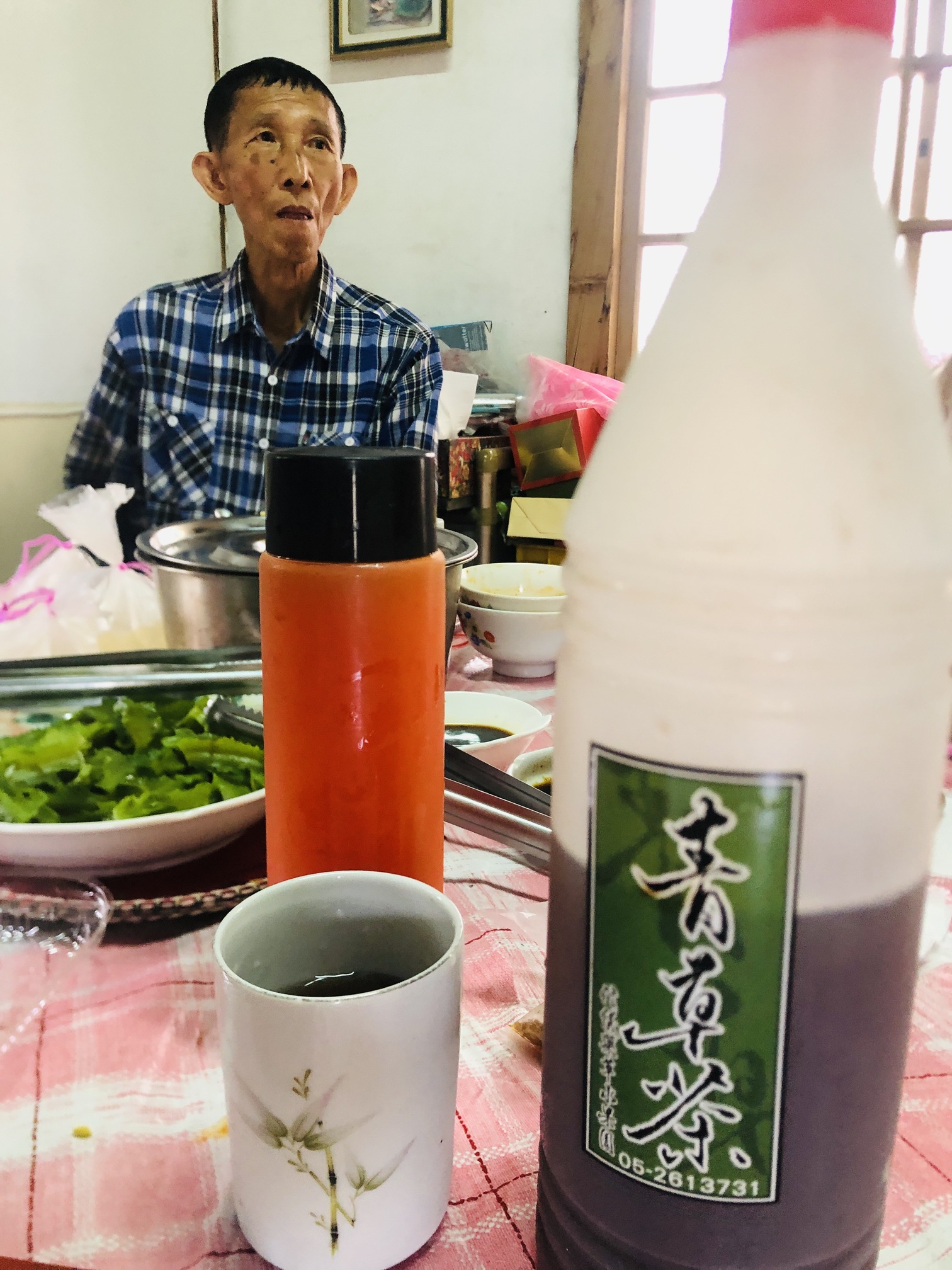
The garden holds countless herbs, including houttuynia, Qi Li Dan, white crane lingzhi grass, Indian basil, mugwort... Because Uncle Xinyi has a background in traditional Chinese medicine, he can dry these gifts of nature according to the four seasons and turn them into season-limited tea bags and foot bath packs, and simmer more than a dozen herbs together into a sweet, cooling herbal tea. For him, adopting natural organic materials and environmentally harmless growing methods in the herb garden allows people to maintain their health with natural crops all year round. He stresses that the crops he grows are not for treating illness but for wellness. Nature has energy, so the herbal tea he produces is effective without any secret recipe. Uncle Xinyi is deeply grateful to the land and works in harmony with it, finds healing in his own work, and is deeply proud of it.

First-generation organic farmer: the biggest challenge is his wife?!
Out of curiosity about what the biggest challenge was for Uncle Xinyi as a first-generation organic farmer, back when the broader environment was still unfamiliar with the concept of friendly cultivation, he said, "It's my wife! The one who could least accept it was my wife. She once said, 'If you're going to do this kind of thing with no return, you might as well not do it at all!'"
Uncle Xinyi recalls that back then his wife had to take care of both household chores and farm work, and life was hard, so she strongly disapproved of organic cultivation. Because of this, the couple argued constantly, so Uncle Xinyi turned to preaching to his four children, explaining that the original intention of persisting with organic farming was at least to protect his own and his family's health, and indirectly also to care for consumers and the environment. After the four children understood their father's mindset of "in poverty, cultivate oneself; in prosperity, cultivate the world," they jointly persuaded their mother, and her resistance eased a bit.

Auntie, who jokes that her children's words are more effective than her husband's, argued that in the early years she watched ponkan and liucheng oranges all over the mountain die, "It hurt my heart. If we still had to support a family, there really was no way to do it like this." Fortunately, at that time only the youngest son was still in school, and the other three children were already working, so thinking that the financial burden had eased a little, she went along with her husband's philosophy, "At least grow healthy food, and eat it ourselves with peace of mind."

Auntie, who once suffered pesticide poisoning, now also understands the philosophy behind her husband's insistence on his actions. And after getting past the wife hurdle, he still had to face the low returns of the early organic transition. Uncle Xinyi took the attitude of "if the crop fails, just treat it as a donation to the environment as a good deed," and with no desire one becomes strong. "When I was working, I had to do what needed to be done to support the family. Now that I'm old, I willingly do meaningful things."

Ten years of friendly cultivation restores the land's ecological balance
The most encouraging thing is that after a ten-year adaptation period, this land has gradually recovered to a state close to ecological balance. When people from the agricultural improvement station came to sample the soil and measure organic matter, the soil in Uncle Xinyi's garden received a high score of 5% organic matter, much higher than the usual 2%. "After persisting for many years, now we truly can go without any organic fertilizer." Uncle Xinyi is full of confidence in his crops, saying that the good fruit he recognizes is not fruit made sweeter or less sour with chemical fertilizers, but fruit with natural original flavor. "If I only cared about whether fruit is sweet, wouldn't I just eat sugar!" Uncle Xinyi's explanation is utterly straightforward.

In the garden, while trimming the curved winged beans snagged by vines, Uncle Xinyi said, "Kiln workers eat the chipped pieces, farmers eat the ugly vegetables. This kind of unsightly vegetable, we just eat it ourselves." Thinking of the many friendly farmer friends he cooperates with, it is probably this same feeling. The vegetables you grow yourself are like a baby you raised with your own hands. Even if they look poor, you know they are good children raised in a good environment, and even if they sell poorly, you would rather eat them than throw them away.

Handmade all year round without pause In exchange for natural, friendly food
In Xinyi Herb Fruit Garden, everything depends on manpower and handwork. The couple works from morning to night every day, and there is always endless work and endless branches to prune. Just boiling a big pot of herbal tea takes most of the day, from gathering herbs at dawn to simmering. But this herbal tea, with formulas adjusted according to seasonal harvesting and production, has already built a reputation. In addition to setting up a stall at local markets in Chiayi, there are also home delivery orders from Tzu Chi and other organizations. Partners from the Rihe Foundation also praised the herbal tea for once soothing his gum inflammation that had been painful for many days.
Related Articles