"Sun Shiitake" will shine again! Gaoshi Tribe establishes its first log-grown shiitake spawn center, lighting up a mountain village with forest understory economy
Taiwan has a long history of cultivating shiitake mushrooms on logs, but the weakening of shiitake spawn has been a persistent and difficult problem. National Pingtung University of Science and Technology (hereinafter referred to as NPUST), the Taiwan Agricultural Research Institute, and the Gaoshi Tribe of Mudan Township in Pingtung County have joined forces not only to establish the nation's first community-based log-grown shiitake spawn center, but also to root the relevant technology in the tribe. In the future, the tribe will cultivate spawn suited to local conditions on its own, developing the most localized forest understory economy and making the tribe shine.
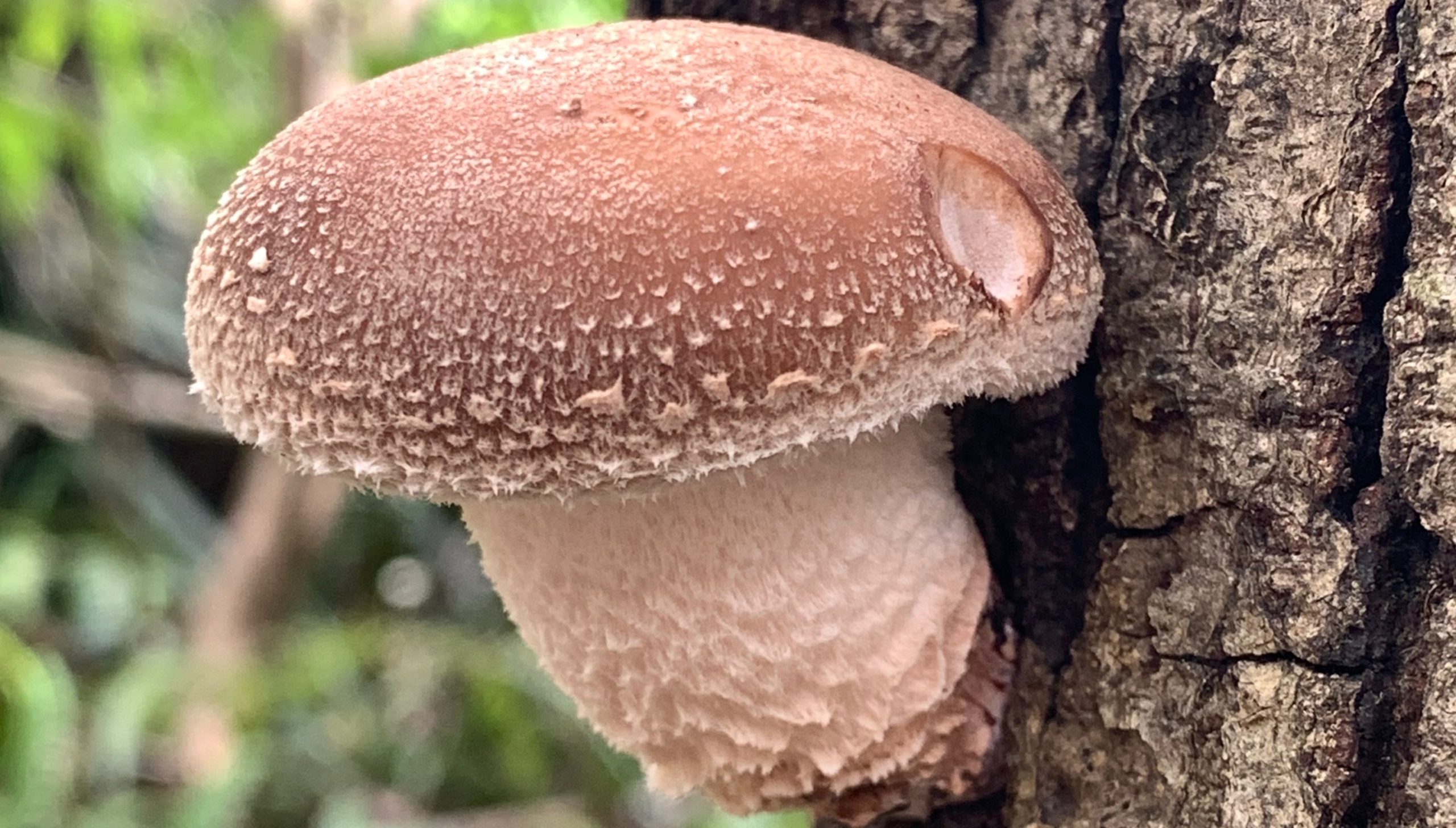
The "Sun Shiitake" once flourished, but dimmed due to spawn degradation
Mudan Township has a history of cultivating log-grown shiitake for more than half a century. In the past, it long used Indian chestnut oak (known as karuzng in the Paiwan language) as the log species, and the shiitake cultivated from it had a rich aroma and unique flavor, earning the title "Sun Shiitake." It was not only an important source of income for many tribal members, but also a local culture that townspeople took pride in.
However, in recent years, log-grown shiitake has faced problems of insufficient log supply and spawn degradation. Spawn that once had a three-year productive capacity now often produces shiitake only once, which not only wastes the logs but also causes losses in the cost of purchasing spawn.
Wu Yuting, associate professor in the Department of Forestry at NPUST, said that after holes are drilled into logs and spawn is inserted, the same hole cannot be re-inoculated. If shiitake fails to grow again in the second or third year, the log will gradually be invaded by saprophytic fungi in the environment, causing decay and making it unusable.
At the same time, companies that previously supplied shiitake spawn had long used culture machines for asexual reproduction, and the result of repeated subculturing made the spawn increasingly uniform. Purified spawn cannot cope with climate change or differences in local environments, and productivity also declines over time. This is the crisis of spawn degradation.

NPUST assists the tribe in isolating shiitake mycelium and cultivating site-adapted spawn
Now, NPUST is assisting the Gaoshi Tribe by selecting the best-performing shiitake from those grown each year and isolating their spawn for use in inoculation the following year. Such spawn can absorb nutrients from the local environment and will also be influenced by interactions with microorganisms in the environment. Over time, it can cultivate shiitake spawn with a unique flavor, create a "Gaoshi brand," and also adapt to the local climate, reducing the impact of weather.
NPUST not only isolates spawn for the tribe's use, but also trains a local team in shiitake spawn isolation and culture technology. At the same time, it plans to establish a spawn center, transferring shiitake spawn technology to the tribe step by step. Once the tribe has grown strong enough, it may even be able to resell spawn to other mountain villages or tribes in Pingtung and Taitung with similar environments, increasing income.
Diverse log tree species produce distinctive shiitake
With the spawn problem solved, there is also a possible solution to the log problem. In the past, the Gaoshi Tribe customarily used Indian chestnut oak, but the NPUST team is experimenting with five other tree species: ring-cupped oak, Elaeocarpus sylvestris, Formosan sweet gum, acacia, and Turn-in-the-wind. They are trying to understand the quality performance of shiitake cultivated on each of these logs.
Chen Meihui, professor at National Pingtung University of Science and Technology and director of the "Pingtung County Mudan Township Agricultural Production Forest Understory Economy Project," explained that these tree species are all easily obtainable locally and grow relatively quickly, providing mushroom farmers with more diverse choices. She believes that agricultural products today should develop local characteristics rather than blindly follow trends. Who knows, in the future Gaoshi's specialty might be "Sun Sweet Gum Shiitake"?
Zhang Weiyi, head of the Afforestation Production Section of the Forestry Bureau, stated that in addition to providing branches and trunks (rather than cutting down entire trees) for the tribe to produce shiitake, the Forestry Bureau also provides seedlings of the five aforementioned species to be planted in the tribe, which can become a source of logs in the future.

With professional teams leading the way, sustainable tribal management is within reach
The inauguration ceremony for the nation's first "community spawn center" of the Gaoshi Tribe was held today (the 11th) at the Forestry Bureau. Chen Meihui said that establishing a spawn center is not something one person or one village can accomplish alone. Sustainable management of mountain villages is a focus of concern for many people, and a good strategy can achieve the "three livelihoods" goals of ecology, life, and production. With 95% of Mudan Township covered by forest, the forest understory economy should be a direction vigorously promoted.
The NPUST team went to the countryside to promote the forest understory economy, vowing to work hand in hand with the tribe to create an environment of symbiosis and shared prosperity with the forest. Six briefing sessions held in rotation received support from many tribal members and townspeople. Chen Meihui said that at the beginning of the project, many tribal members hoped the government would provide subsidies for hardware facilities, but after nearly half a year of communication, tribal members came to understand that the most valuable asset is actually cooperation among industry, government, and academia, especially the process of expert teams coming to the local area to accompany everyone. She is honored to be one of the contributors, bringing various professional strengths to Mudan Township and sparking brilliant results.
In addition to log-grown shiitake, the NPUST team is also developing two distinctive production activities for Mudan Township: "forest understory beekeeping" and "mountain forest poultry chicken farming." NPUST provides bees, the tribe plants nectar-source plants, and a monitoring platform is established. Even before honey is mass-produced, orders have already been received. To create market differentiation, Mudan raises red-feathered native chickens that National Chung Hsing University has preserved for more than thirty years, while also introducing breeding technology and expert guidance. These native chickens, which are wild in nature, highly disease-resistant, firm and elastic in texture, and low in fat, paired with tribal shiitake, will surely make "shiitake chicken soup" a future signature dish of Gaoshi.
The forest understory economy paves the way for young people to return home
Pan Zhuangzhi, township mayor of Mudan Township, mentioned that Indigenous peoples are a people who live by the mountains and forests and possess much wisdom about coexisting with nature. The forest is a warehouse of food. Although the specific term "forest understory economy" did not exist in the past, shiitake has always been an important industry for the Gaoshi Tribe. Because of the difficulties of spawn degradation and reduced logs, Mudan Township once declined. Now, under the trend of "the more local, the more international," Mudan is promoting local revitalization. With the most prominent community-based spawn center and with returning young people acquiring spawn cultivation technology that can be applied to tribal log-grown shiitake cultivation, the future looks promising.
When the cultivation of local talent can be realized, the crisis of young people migrating away is reduced. Once the forest understory economy builds a brand, along with the promotion of ecotourism, there will be opportunities everywhere in the tribe. Wearing a flower wreath and traditional Paiwan clothing, Pan Zhuangzhi spoke of the tribe's vision with a smile all over his face.
Before the ceremony ended, Ljuku, a tribal elder of Mudan Township, led Paiwan people in singing ancient songs, praying that heaven would watch over them and that the spawn center would develop sustainably. These dozen or so Paiwan people traveled by tour bus from Mudan Township to Taipei at one o'clock in the middle of the night. Their harmonious melodies and lively dancing moved all attendees with the power of their homeland.
