Lessons from Abroad on Solar Energy 01"How Does Italy Fight Solar Encroachment on Farmland? An Interview with the Former Energy Director of Lecce Province: Clear Inventory, Don't Let Developers Choose Sites Freely
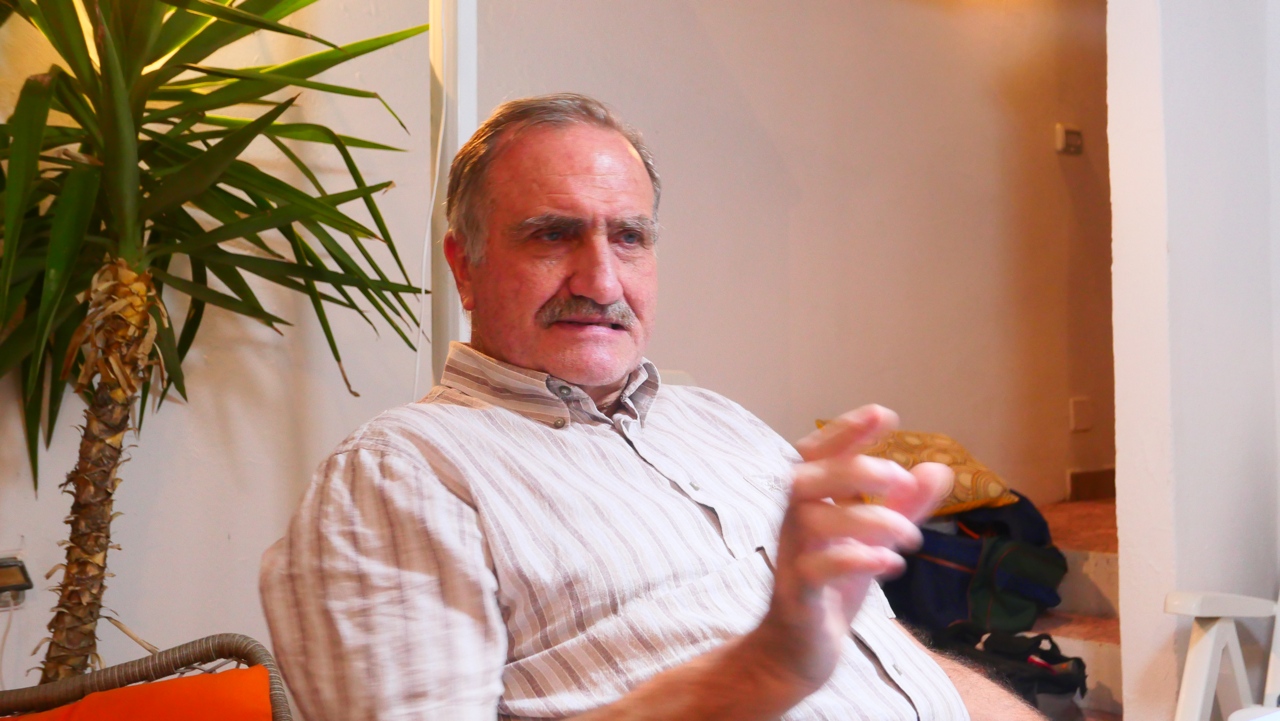
After looking at photos of the fish ponds of Qigu, the wetlands of Zhiben, the water caltrop fields of Guantian, the sunset at Linbian, the rice paddies of the shallow hills of Tongxiao, and also the leopard cat, the black-faced spoonbill, the pheasant-tailed jacana and the giant water bug, De Giorgi said to me: "Your hometown is very beautiful, with diverse environments and rich ecology."
Yet these beautiful landscapes are covered with solar panels like patent plasters, the bare hillsides look as if their scalps have been ripped off, the excavated foundations resemble one grave after another, and the lovely animals are about to be displaced.
As an engineer who has long participated in environmental movements, De Giorgi advocated energy transition early on, but he also witnessed early on how poorly planned green energy can devour the countryside. The Puglia region where he lives is located on the heel of Italy's boot, facing the sea with mountains at its back, and this vast southern plain has been a granary since ancient times. Around 2005, under policies encouraging renewable energy, one patch of pitch-black solar panels after another invaded on a large scale, occupying farmland and greedily absorbing the Mediterranean sun, replacing the plants that carry out photosynthesis.


Taiwan's solar panels are spread across farmland, coastlines and hillsides
Taiwan cuts trees for solar power and lays panels over coastal fish ponds, leaving Italian experts "wide-eyed"
Even so, he had never seen large tracts of forest cut down to install panels in Italy. Floating panels are not news, but he questioned that laying panels over coastal fish ponds would probably face the problem of high salinity, and the degree of tolerance of the installations must be carefully assessed. Seeing some weeds and vines climbing onto the panels "lush with greenery," he said, "It will be very hard to generate power this way." Because panels are very sensitive to light and shadow, even a little shade will affect power generation efficiency, and since panels usually generate power in series, if one panel in the middle cannot generate power because it is shaded by weeds, the entire installation may be as good as useless.
When De Giorgi was young, he joined the scouts, and going up mountains and across the seas made him love nature. Later he became an important member of the civic organization "Italia Nostra," defending the environment and ecology and protecting cultural heritage. In order to reduce the greenhouse effect, he supports moving toward renewable energy, but he also understands that energy policy involves enormous economic interests. If speculative behavior is allowed to run rampant across the countryside in the name of environmental protection, green energy will ultimately turn black. Fortunately, Italy's laws explicitly prohibit cutting down forests to install solar power and forbid installing panels along the coastline.
"However, this is far from enough. There must be a concrete, detailed energy plan. But many governments prefer to choose 'laissez-faire,' saying it respects market mechanisms, yet the energy industry has monopolistic or oligopolistic characteristics. The result is indulging developers in choosing sites freely. Green energy fills developers' pockets, while ordinary people get no benefit and also pay the price in landscape and ecology," said De Giorgi.
Where there are rooftops, there is electricity demand; rooftop panels come first
Behind laissez-faire energy policy is not the invisible hand of the market mechanism. Under the banner of energy transition, generous subsidies, low-interest loans, land release and other preferential policies make it very easy for the black hand of collusion between officials and business to reach into green energy.
De Giorgi once served as the energy director of the Province of Lecce. Lecce Province is located at the southernmost tip of the Puglia region, known as the capital of the Southern Renaissance, and its beautiful seaside attracts large numbers of tourists every year for vacations. Solar panels also took a liking to the southern sun. As early as twenty years ago, De Giorgi realized that the steady development of green energy required a "planned economy," carefully calculating the electricity consumption and generation of each township and planning installation locations, so that it would not become a speculative tool eroding farmland, ecology and the public interest.
He said: "With a clear plan, developers can also plan with greater peace of mind. That is better than making an investment and then facing the uncertainty of changes."

Related Articles
- How to prevent and control rabies in dogs? Timely vaccination of puppies ensures safety
- How to Explore Keelung's Fishing Port Docks? Practical Tips for Picking Fresh Seafood
- The Slow Food movement advocates that how you eat matters more than what you eat, helping you eat your way to health
- How to Identify Inferior Cooking Oil? Key Points for Quality Control from Cultivation to Purchase
- Which agricultural activities require tax payment? The ranch court case clarifies the boundary of tax exemption
- Ractopamine, a lean meat agent, is banned; scientific pig farming to increase lean meat percentage is the right path
- Horizontal Windbreak Nets for Welsh Onion Cultivation in Winter Reduce Losses
- Top Ten Fungicides Ranking Released, a Useful Reference for Farmers Choosing Products