What are the methods for controlling aphids on cockscomb?
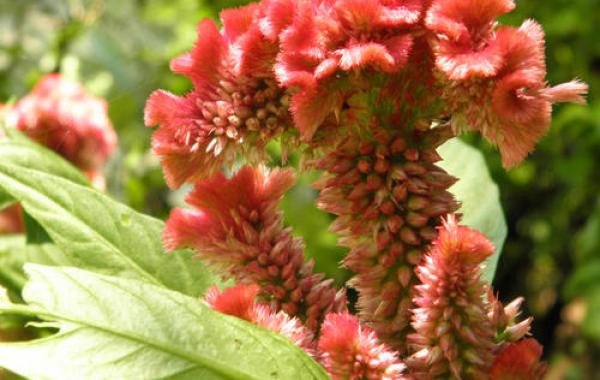
How do you control aphids on cockscomb flowers.
The aphid that harms cockscomb is mainly the cowpea aphid. It gathers in groups on the new buds, tender leaves, and petals of cockscomb, sucking sap, which affects the elongation of new shoots and the unfolding of new leaves, and causes flower buds to drop. The cowpea aphid is also called the cowpea aphid. The wingless viviparous female aphid is broadly oval, with a body length of 1.5 mm, and is blackish brown to brownish green. The winged viviparous female aphid is long oval, with a body length of about 2 mm, and is blackish brown. The nymph is covered with white wax powder. The cowpea aphid occurs for more than 10 generations a year in East China.
Control measures for aphids on cockscomb: First, when aphids harm a small number of potted cockscomb plants at home, you can use a brush dipped in water to brush them off and kill them, or spray tobacco leaf water (1 part tobacco leaf added to 40-50 parts water; soak for 1 day and night, then rub and filter before use). Second, chemical control. During the aphid damage period, spray 50% fenitrothion emulsifiable concentrate at 1000 times dilution, or 20% fenvalerate emulsifiable concentrate at 2000-2500 times dilution, 80% dichlorvos emulsifiable concentrate at 1500-2000 times dilution, and other pesticides.
Symptoms
The tobacco cutworm, also called the lotus cutworm and the striped cutworm, belongs to Lepidoptera, Noctuidae. The tobacco cutworm occurs throughout the country and is a voracious pest.
It mainly damages the whole plant as larvae; when young, they gather on the underside of leaves and feed. After the 3rd instar, they disperse to damage leaves and tender stems; older larvae can bore into and feed on fruits.
Control methods
Biological control: bacterial insecticides can be used, such as domestically produced B.t. emulsion or Qingchongjun No. 6 liquid, usually at a 500-800 times dilution concentration.
Physiological control: diflubenzuron No. 1 or diflubenzuron No. 3 20% or 25% suspension concentrate at 500-1000 times dilution, but such pesticides act slowly and usually kill the pest only when the instar changes, so they should be sprayed early. For this reason, these pesticides often use the suspension concentrate formulation; after spraying, they resist rain washing and the efficacy can last more than half a month.
Chemical control: you can choose phoxim 50% emulsifiable concentrate at 1000 times dilution, cypermethrin 20% emulsifiable concentrate at 2000-3000 times dilution, deltamethrin 2.5% emulsifiable concentrate at 3000 times dilution, Kung Fu 2.5% emulsifiable concentrate at 500 times dilution, Uranus 10% emulsifiable concentrate at 1000 times dilution, or 21% mieshabi emulsifiable concentrate at 4000 times dilution.
Pests of cockscomb: aphids
Symptoms
Aphids suck the sap of leaves and stems, and the damaged parts form dead spots. The growth rate of cockscomb decreases, and after the leaves form dead spots, they gradually shrink, turn yellow, and curl, until finally the leaves fall off. In severe cases, the entire plant will die.
The aphids' intake of sap causes the plant to lack vitality, and the aphids' saliva is also toxic to the plant.
Control methods
In the early stage, spray 50‰ dichlorvos at 800-1000 times dilution, or 40% dimethoate at 1500-2000 times dilution.
If plants severely infested by aphids are found, they should be pulled out and destroyed in time.