How to change the water for hydroponic flowers in a scientific way? A detailed guide to the correct method
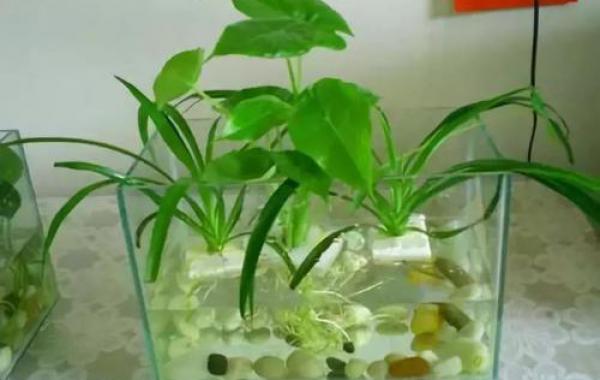
How do you change the water for hydroponic flowers in a scientific way.
Hydroponic flowers are a new generation high-tech agricultural project that uses modern bioengineering technology, applying physical, chemical and bioengineering means to domesticate ordinary plants and flowers so that they can grow in water for long periods. Whether hydroponic flowers succeed depends most critically on changing the water.
First, plants growing in water constantly consume oxygen. As the flowers grow, the oxygen in the water keeps decreasing, and when it drops to a certain level it will have a negative effect on the growth of the flowers. Although oxygen from the air is also constantly replenished into the water, the rate is fairly slow and far from sufficient to meet the oxygen uptake of the plant roots.
Second, during growth the flower roots produce mucus, and when there is a lot of mucus it affects water quality.
Third, when flowers are grown hydroponically a certain amount of nutrient solution must be added to the water. Apart from the part of the nutrient elements absorbed by the flowers, the rest remains in the water, and when the residual substances reach a certain amount they too can harm flower growth. Therefore the water of hydroponic flowers must be changed regularly.
The key to success with hydroponic flowers
Because the oxygen content of water is inversely related to temperature, that is, the higher the air and water temperature, the lower the oxygen content in the water, and the lower the air and water temperature, the higher the oxygen content in the water. In addition, plants need different amounts of oxygen at different stages, so the interval between water changes should vary with the season. In spring and autumn, although plants grow vigorously and need more oxygen, the oxygen content in the water is also relatively high, so the water can be changed about every 5-7 days. In winter the plants are dormant or growing very slowly, consume little oxygen, and the water contains plenty of oxygen, so the interval between water changes can be longer, generally every 7-10 days. In the hot summer season, plant respiration is very intense and consumes a great deal of oxygen, while at the same time the oxygen content in the water is very low, and in high temperatures microorganisms multiply rapidly, causing water quality to deteriorate. To ensure normal growth of the flowers, water changes must be stepped up, generally every 2-3 days.
At high temperatures or when fertilizer is applied too strongly, plants develop root rot. Besides promptly cutting off the rotted roots, the water must also be changed every day until the plants grow new roots and resume normal growth, after which normal water changes can be resumed.
When changing the water, rinse the flower roots with clean water and wash the mucus off the roots with your hands, and at the same time cut off aged roots and rotted roots. Flowers grown in places with fairly abundant light tend to develop algae on the container and roots, which reduces the transparency of the container, spoils the appearance of the roots, and also consumes oxygen in the water. When cleaning, scrub the algae off the container and roots thoroughly.
Plant roots also have the function of breathing oxygen from the air, so when changing the water for hydroponic flowers, never fill the water too full; leave part of the roots exposed above the water. In this way hydroponic flowers can absorb not only the oxygen in the water but also some of the oxygen in the air, which can meet the plant's oxygen demand for growth.
The water used for hydroponic flowers must be pollution-free, slightly acidic, and contain only very few microorganisms and bacteria. Tap water treated by the waterworks has its number of bacteria and microorganisms effectively controlled, so it basically meets the water requirements of hydroponic flowers.
Hydroponic flowers are a new technique that uses nutrient solution instead of soil to grow plants. Compared with traditional soil-grown flowers, substrate-grown flowers have the advantages of being clean and hygienic, easy to care for, and reusable, and are especially suitable for indoor display, making them very popular with consumers.
Management before emergence
Do a good job of clearing ditches and draining water to ensure the lily field is neither drought-stricken nor waterlogged, and is also free of low-temperature freeze damage.
Management at the seedling stage
From late April to early May, when the seedlings are about 10 cm tall, apply 25-50 kg per mu of decomposed rapeseed cake fertilizer, or 30 loads of decomposed pig manure and urine (do not apply chemical fertilizers containing fluorine or chlorine, and certainly do not apply pig manure and urine that has not been composted), applied in strips or in holes, 6-7 cm away from the lily seedlings; applying too close easily causes "seedling rot", while applying too far away makes the fertilizer prone to leaching away.
Management at the flower bud stage
Along with earthing up, carry out one intertillage to a depth of 6-7 cm, to promote a numerous and deep-reaching root system and to control the growth of the above-ground stem. Remove the flower buds promptly when they change colour but have not yet opened. At the same time, note that the removed buds must not be discarded in the field or at the field edges; they must be disposed of in a centralised way to prevent leaving a source of bacteria. Fertilization at the flower bud stage is mainly a matter of applying fertilizer skillfully; generally the timing, amount and method of the topdressing should be determined according to the weather, the soil, the amounts of base fertilizer and seedling fertilizer used, and the growth condition and appearance of the plants.
Management during the rapid bulb growth stage
At this time, prevent waterlogging in the lily field, clear ditches and drain water promptly, and on sunny days remove diseased and dead plant material and burn or bury it deeply in a centralised way. According to the field weeds and soil compaction, carry out one shallow intertillage to a depth of 3-5 cm after the flower buds have been removed. At this stage the absorptive capacity of the root system is relatively weakened; to supplement the insufficient nutrient uptake by the roots, foliar topdressing can be carried out, which has a certain effect on preventing premature senescence and improving bulb yield and quality. You can spray a 300-fold urea aqueous solution or a 300-500-fold potassium dihydrogen phosphate aqueous solution, or use 10-15 ml per mu of Le Wanjia aqueous solution diluted with water for spraying, used alternately, and spray again after ten days.