How to use water correctly for hydroponic flowers? A detailed guide to the methods
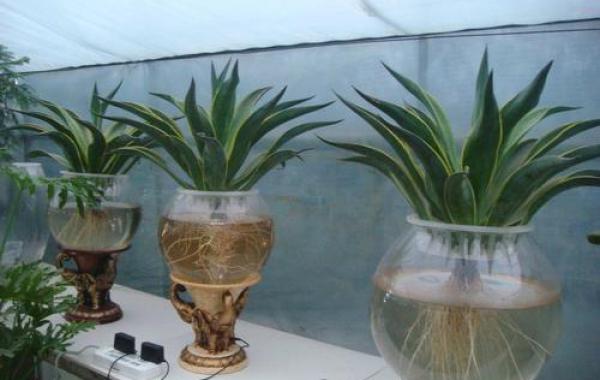
What are hydroponic flowers
A new type of cultivation method developed in recent years - hydroponics. That is, using clear water instead of soil to cultivate flowers in vessels with a certain degree of transparency, such as glass or plastic (bottles, cups, pots or boxes, etc.). This method of cultivating flowers not only simplifies management but also keeps the indoor environment clean and hygienic, without polluting the environment. Growing flowers in clear, transparent water where the bottom is visible at a glance also allows timely observation of the rooting, growth and development of ornamental plants in water. Common ornamental plants suitable for hydroponics are mostly foliage plants, such as certain flowers in the Araceae, Commelinaceae, Liliaceae and Crassulaceae families. The main ones include: Syngonium podophyllum, Monstera deliciosa, mini Monstera deliciosa, English ivy, golden pothos, Aglaonema modestum, Golden Queen, Silver King, Dieffenbachia, Zebra aglaonema, Spathiphyllum floribundum, Anthurium andraeanum, calla lily, Philodendron 'Green Giant', Philodendron 'Green Emperor', Philodendron erubescens 'Red Ruby', Alocasia, Tradescantia species, aloe, Haworthia, Sansevieria trifasciata, Agave, spider plant, lucky bamboo, Aeonium, Kalanchoe daigremontiana, cactus, Gynura aurantiaca, Cyperus alternifolius, Coleus, Begonia maculata, Nephrolepis cordifolia, bird's nest fern, Rhapis excelsa and Chamaedorea elegans, etc.
Advantages and disadvantages of hydroponic flowers.
Advantages of hydroponic flowers:
One: Highly ornamental, you can enjoy the leaves and flowers as well as the roots. It also has three-dimensional ornamental value.
Two: Easy to manage, no need to constantly worry about watering, or fear that overwatering will cause root rot and death.
Three: Fertilizing is quick, just drip nutrient solution in the right amount, no need to worry about fertilizer, or fear that over-fertilizing will cause fertilizer burn.
Four: No need to worry about pest and disease infection from the soil, just keep the water in the container clean.
Five: Elegant display, it can be seen everywhere in offices, meeting rooms and bedrooms, and there is a trend of growing popularity.
Disadvantages of hydroponic flowers:
One: Insufficient nutrients, it relies only on the supplement of nutrient solution, and cannot have as complete a nutrient source as soil-cultured flowers. It is prone to deficiencies of certain nutrients.
Two: Troublesome to change and wash, you need to change the water or clean the container every 5-7 days, and algae easily grow in the bottle water, affecting the appearance.
Three: Afraid of wind and easily blown over. It is not as firm and stable as soil-cultured flowers.
Four: Afraid of sun exposure, easily losing water after sun exposure, causing leaves to turn scorched yellow and die.
Hydroponic flowers are plants that are wholly or mostly submerged in water. Their watering methods:
(1) Water quality treatment and selection. Lake water, river water, well water, rainwater, or tap water left to settle for 24 hours can be used. Electrolyzed acidic water is best. Do not use mineral water.
(2) Watering amount. The water surface should contact the upper part of the roots at 3 cm, do not submerge too much, so as to avoid root rot and affected respiration.
(3) Water replenishment time. Change the water every 2 days in summer and every 10 days in winter; and drip 4-5 drops of nutrient solution into the water.
(4) Hydroponic timing. Try to choose spring and autumn to start hydroponic care, for better results.
Note: Several colored glass balls or pebbles can be placed in the bottle to stabilize the center of gravity and increase its beauty.
Hydroponic flowers
What are the cultivation methods for hydroponic flowers
1. Nutrient film technique cultivation. Nutrient film technique cultivation is also called NFT cultivation. This method uses a 0.5 cm shallow layer of nutrient solution flowing over the root system of the flowers and plants. Because the nutrient solution is very shallow, like a film of water, it is called nutrient film technique cultivation.
2. Deep flow hydroponics. In this hydroponic method, the layer of nutrient solution is relatively deep, the flowers are suspended above the liquid surface, their weight is supported by a planting net frame or planting board, and the roots hang down into the nutrient solution. Deep flow technique can also be divided into the dynamic floating root method, M-type, floating board capillary method, etc.
3. Mist cultivation. The root system is suspended in the inner space of the container, and the nutrient solution is sprayed directly onto the flower roots by spraying.
4. Bottle cutting propagation. This refers to cutting a section of stem or branch from the mother plant, inserting the stem into water to root, thereby forming a new hydroponic flower. This method is suitable for households and individuals cultivating hydroponic flowers.
5. Converting soil-cultured flowers to hydroponics. Choose flowers with ornamental value, robust growth, and already formed under soil cultivation (or other media cultivation), remove the soil, wash the root system, and convert them to hydroponics. When washing the roots, it is best to use running water to reduce damage to the roots, and it is easier to wash them clean. After washing, plant the flowers in a prepared vessel and pour in clear water that covers 2/3 to 1/2 of the root system. At first, change the water once a day, and at the same time wash the roots and vessel. After one week, reduce the frequency of water changes. After the cultivated flowers grow new roots in the water and adapt to the hydroponic environment, you can change the water every 7-10 days, or even longer. This method is suitable for cultivating hydroponic flowers in homes, offices, hotels and other places.
How to grow hydroponic flowers
Choosing a suitable time for water cuttings is very important, because water cuttings require an appropriate temperature. The suitable temperature for hydroponics is 20-25°C. It is usually done in late spring and early autumn; too early or too late is not suitable. This is because at low temperatures the water-cutting wound is not easy to heal, and at too high temperatures most flowers are in a dormant or semi-dormant state, and the water is prone to spoiling, which easily causes the cut to rot and makes it hard to survive. For hydroponics, choose healthy young branches free of pests and diseases. When taking water cuttings, according to the required length of the cutting, use a sharp, clean knife (or scissors) to cut from about 0.5 cm below the stem node of the branch, then cut off the leaves that would be inserted into the water, and insert it directly into a bottle or cup filled with clear water. The depth for inserting the branch into the water is generally at 1/3 or 1/4 of the cutting.