What common mistakes are easy to make when growing flowers?
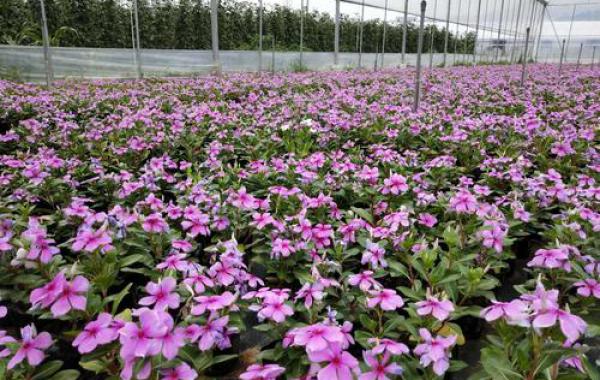
What mistakes can you make when growing flowers.
There are mistakes in growing flowers too, did you know? In fact, flowers are also very difficult to grow, and there is a lot of knowledge involved. Let me tell you about several mistakes that often come up in the process of growing flowers, hoping to help all you flower growers.
Mistake one: growing perennial flowers for three to five years without repotting.
This will cause the flowers to lack nutrients. For example, after growing for a long time, chrysanthemums will show a woody condition, and at this point you can take cuttings to rejuvenate them. You can also cut off all the plant above the base, letting the old roots send out new shoots again. When repotting, trim part of the roots by the way, which can also stimulate further root development and growth.
Mistake two: watering at a fixed interval of every few days.
The weather each day and the environment where the flowers are placed are different, so the frequency of watering should also be different. The number of waterings needs to be determined according to the specific situation.
Mistake three: the bigger the pot, the better.
When the plant's root system is relatively weak and its ability to absorb water is limited, a pot that is too large easily leads to waterlogging, and after root rot the upper part of the plant will certainly not grow well. Generally, a pot diameter about twice the diameter of the roots is about right.
Mistake four: for the sake of fertilizing, placing tea, tea leaves or eggshells directly into the flower pot.
In fact, the residual egg white in eggshells and tea leaves are organic matter that has not been fermented. They will ferment in the flower pot, attract germs and insects, and may cause the growing medium to become alkaline.
Mistake five: clay pots and porcelain pots are better.
There are many types of growing media now, and in fact you can grow flowers well in any pot. Clay pots have fairly good water permeability, so you can choose them when you first start growing flowers at home. But if the growing medium is chosen appropriately, any flower pot can achieve a good level of water permeability.
Mistake six: when the plant's leaves wilt, it means it has been watered too little.
Sometimes it is not necessarily too little watering, it may also be too much watering. For example, in winter, if you place potted plants indoors where the heating is very strong, the water in the surface soil will evaporate especially quickly, leading us to think the potting soil is already dry and to keep watering. In fact, at this time the inside of the potting soil may very likely not dry out for a long time, and too much watering easily causes waterlogging and root rot.
Mistake 1: only giving "half-hearted watering." Watering should follow the rule of "do not water when not dry, and water thoroughly when you do water," that is, do not water when the potting soil is not dry, and if you do water, water thoroughly in one go. When watering, you must water thoroughly, not just give "half-hearted watering" (that is, only wetting the surface of the potting soil), as this will leave the flower's root system with insufficient water supply, causing leaf drop or even death.
Mistake 2: being particular about the time of watering. Generally speaking, for the time of watering, in winter it is best to water at around 4 pm, and in the other seasons it is best before 10 am. Pay special attention to the fact that the temperature at noon in summer is relatively high, and at this time watering must be avoided, because watering at this time will make the soil temperature suddenly drop, slow down water absorption, lead to insufficient water supply, and cause the upper leaves of the flowers to scorch and wither.
Mistake 3: remember that water droplets are left on the leaves at night. If you have the habit of watering flowers at night, or wiping the leaves with a damp cloth, this is a wrong practice. Doing so easily causes the flower leaves to rot and induces pests and diseases. Make sure there is no water on the leaves at night, so as to facilitate the normal growth of the flowers.
Mistake 4: tea cannot supplement nutrients for flowers. Pouring leftover tea into the flower pot will raise the soil's pH, easily causing chlorosis, and may even lead to the death of the flowers. In addition, the leftover tea leaves will breed miscellaneous bacteria during the decomposition process, affect environmental hygiene, consume soil oxygen, and are not conducive to the growth of flowers.
Mistake 5: blindly applying too much fertilizer. Sick and weak plants have thin, weak branches, poor photosynthesis, and slow metabolism. At this time, it is not suitable to apply much fertilizer. Everyone has heard the phrase "a weak body cannot be toned up," and plants are the same. Never blindly chase fertilizer for sick and weak plants, so as not to achieve the opposite effect. Even when fertilizing, do not apply much; a ratio of "three parts fertilizer to seven parts water" is best.
Mistake 6: indoor flowers are not ventilated. Poor air circulation is the number one killer of flower health. It not only affects the normal respiration of the flowers, but also affects their normal growth. Doors and windows should be opened often to create good ventilation conditions, so as to ensure the normal respiration of the flowers.
Mistake 7: indoor plants are always kept indoors. Flower growers often overlook a problem, which is thinking that indoor plants just need to be kept indoors. But in fact, if potted flowers are displayed indoors for too long, they often grow poorly due to insufficient sunlight, so the potted flowers should be moved outdoors for a period of recuperation at regular intervals. However, be careful to avoid the high-temperature period in summer and the low-temperature period in winter.