What to do when bonsai and flowering plants are difficult to root? Try these methods
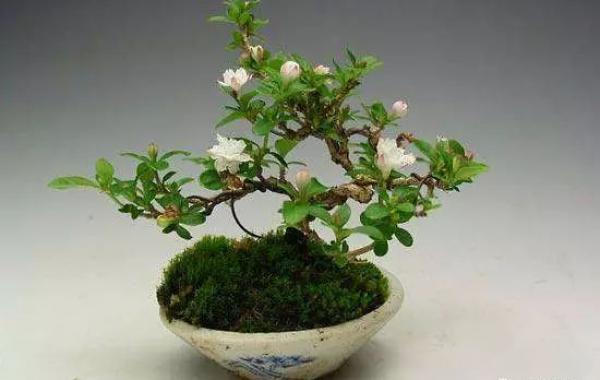
To encourage difficult-to-root flowering trees and shrubs such as Milan (Aglaia odorata), crape myrtle, honeysuckle, wintersweet, osmanthus, camellia, azalea and white magnolia to take root, besides using growth hormones such as naphthaleneacetic acid, you can also use some economical and simple methods to promote rooting.
1. Soaking in potassium permanganate solution. Immerse the base 2cm of the cutting in a 0.1%-0.5% potassium permanganate solution for 12-24 hours, then take it out and plant it as a cutting, which can promote rooting.
2. Treating cuttings with white sugar solution. The concentration of the white sugar solution varies with the type of flower. For herbaceous flowers the concentration used is 2%-5%, and for woody flowers 5%-10%. Immerse the base 2cm of the cutting in the white sugar solution for 24 hours, then take it out, rinse off the sugar solution adhering to the outside of the cutting with clean water, and then plant it as a cutting.
3. Medical vitamin B12. Dilute medical vitamin B12 injection with an equal amount of cool boiled water, immerse the base of the cutting in it, take it out after about 5 minutes, let it dry briefly, and plant it as a cutting once the liquid has been absorbed.
4. Girdling. During the growing season, girdle the base of the branch by removing a ring of bark or bind it tightly with wire or similar material, so that nutrients accumulate in large amounts at the girdled site; when dormancy comes, cut it off along the girdled site and use it as a cutting, which can promote rooting.
5. Heel cuttings. When taking cuttings from flowering trees and shrubs such as camellia, osmanthus and fig, you can leave a little of the previous year's growth at the base of the cutting, which makes rooting easier.
6. Increase the bottom temperature of the cutting bed. If cuttings are potted, in winter you can place them on a radiator or heated brick bed with a wooden board on top. Using an electrically heated hotbed for cuttings gives even better results.
If you need to promote rooting in a large number of difficult-to-root flowers, you can use ABT rooting powder mixed into a 0.005% solution to soak the base of the softwood shoots for 0.5-1 hour, then take them out and insert them into the substrate immediately. Its rooting effect is better than that of naphthaleneacetic acid and indolebutyric acid.
Roots are the foundation of tree growth; without root growth, there is no growth of other parts. Tree root growth requires a suitable temperature, with the optimum growth temperature being 15-35°C, and 25°C being the best.
Root growth generally occurs earlier than leaf growth, though there are also tree stumps whose leaves grow earlier than their roots, but such trees are weak in vigour and depend on the stump's own nutrients. Tree stumps that grow leaves before roots are relatively few, and their vigour is not as good as that of those that grow roots before leaves.
In early spring the roots are the first to awaken, stirring earlier; after absorbing nutrients they supply them to the leaves for sprouting and growth. With a firm foundation the branches flourish; with deep roots the leaves are luxuriant. After the leaves grow, they carry out photosynthesis, absorbing energy from sunlight and combining it with carbon dioxide, while using nutrients and water absorbed by the roots.
Through metabolism, energy is used for consumption and accumulation. With sufficient nutrients and abundant photosynthetic energy, a tree can grow quickly. If the root system is not sound, the above-ground part cannot flourish; if the above-ground part does not flourish, the root system will not develop well either. Root and leaf growth are interrelated, that is, the root-to-leaf ratio: many roots mean many leaves, and many leaves mean good roots. Root cultivation cannot be separated from leaf cultivation, and leaf cultivation cannot be separated from root cultivation.