What are the key points of greenhouse flower management techniques?
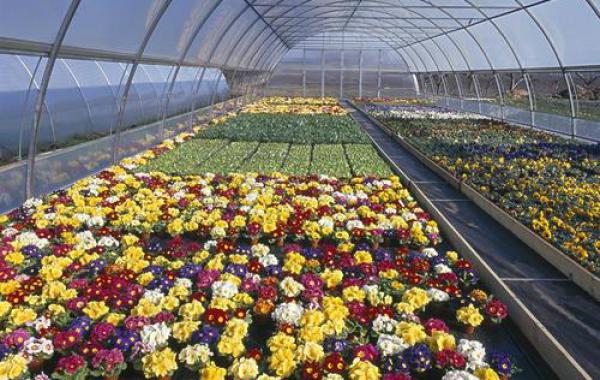
How should greenhouse flowers be managed.
Flowers are not only for appreciation but can also purify living spaces. In interpersonal communication, flowers have gradually become a medium for conveying friendship and expressing wishes, and people often use them as symbols of happiness, beauty, good fortune, and friendship. In recent years, greenhouse flower cultivation has developed rapidly, but producers have some misconceptions in the management process that need to be addressed correctly.
Excessive fertilization of greenhouse flowers
Applying too much fertilizer at once increases the concentration of the soil solution, causing reverse osmosis and root damage in flowers; partial application of chemical fertilizers, especially excessive nitrogen and phosphorus, causes an imbalance in the nutritional ratio of flowers.
Pay attention to regulating the ratio of base fertilizer to top dressing, and do not apply too much fertilizer at once. Base fertilizer should be applied adequately and top dressing appropriately; increase the use of organic fertilizer, because organic fertilizer can improve soil structure, release nutrients steadily and slowly, and also regulate soil pH; apply fertilizer in holes or furrows at a depth of more than 5 cm and keep a distance of about 10 cm from the flower roots; skillfully use high-concentration, full-element compound fertilizer or microbial compound fertilizer, which have high dissolution rates and absorption utilization rates, are suitable for drip irrigation, sprinkler irrigation, and foliar spraying, and have stable performance.
Excessive planting density of greenhouse flowers
Many flower growers believe that too sparse a density affects yield, so they are reluctant to thin out seedlings when retaining flower plants, thinking that only dense planting can achieve high yields. In fact, a reasonable planting density is beneficial to flower growth, while excessive density is not conducive to increasing yield and also affects quality and economic benefits.
Determining planting density should consider flower varieties, soil conditions, climate conditions, and cultivation techniques, following the principle of reasonable sparse planting. For dwarfed, short-branched woody flowers and herbaceous flowers, deep and fertile soil conditions, summer and autumn seasons with good light, heat, and water conditions, and relatively high greenhouse cultivation and management technical levels, the density can be appropriately higher under the above circumstances. To make full use of greenhouse space, a management approach of dense planting in the early stage, thinning plants in the middle stage, and thinning branches in the late stage can be adopted, with the standard being that branches and leaves are not crowded, to increase the overall yield and comprehensive benefits of flowers.
Excessively high temperature in the greenhouse for flowers
Many flower growers believe that building a greenhouse is for increasing and preserving temperature, and that if the temperature is high, flowers will grow faster. In fact, flowers have an upper temperature limit, generally 20°C to 25°C, with a few at 25°C to 30°C. If it exceeds 30°C, the respiration of flowers increases greatly, causing excessive vegetative growth, imbalanced growth of branches, leaves, flowers, and fruits, and benefits will instead decline.
The solution is to set up ventilation openings in the greenhouse and open and close them in a timely manner to regulate temperature; strictly follow the temperature requirements needed for different types of flowers during their growth periods, as well as the special temperature requirements of each organ during its growth period, for management, to prevent excessive temperature from causing excessive vegetative growth of branches and leaves and poor growth of flowers and fruits that affects the quality of the whole plant. It is necessary to closely combine regulating greenhouse temperature with solving ventilation and air exchange, to prevent problems such as high temperature and high humidity in the greenhouse easily breeding pests and diseases, and poor ventilation and air exchange causing the occurrence and harm of harmful gases.
Excessively vigorous growth of greenhouse flowers
Most people think that vigorous branches and vines mean flowers are good, so they water more and fertilize more to promote flower growth. They do not realize that more water and fertilizer and vigorous branches and leaves may also cause shallow roots, weak stems, and incomplete nutrition. Excessive growth makes vegetative growth too strong, which inevitably affects the strength of reproductive growth; overall yield may not rise, and overall quality may instead decline.
There are two solutions. First, lay a foundation for good root growth during the flower seedling stage, and control water, fertilizer, and plant growth, so that the underground part absorbs more than half of the photosynthetic products; in the middle and late stages of flower growth, the underground and aboveground parts each absorb about half. Second, in the early stage, plant body nutrient consumption accounts for about 60%, and reproductive growth accounts for about 40%; in the middle stage, each accounts for about 50%; in the late stage, reproductive growth accounts for 60% to 70%, and vegetative growth accounts for 30% to 40%, that is, ensure a certain assimilating leaf area in the early stage, and in the late stage control leaves to promote fruit and strengthen the plant, to increase yield and benefits.
Applying pesticides too frequently to greenhouse flowers
Many flower growers apply pesticides every few days in the middle and late stages of flower growth, believing that frequent pesticide application can prevent the breeding and spread of pests, diseases, and weeds, but the actual result is not so. If insecticides and fungicides are used too frequently, pests and diseases will develop resistance, requiring increased dosage, which easily causes pesticide damage, resurgence of pests and diseases, and environmental pollution, creating a vicious cycle.
To solve these problems: first, apply the right pesticide for the problem, choosing drugs that can kill pests and diseases while also benefiting flower growth; second, switch to efficient and low-toxicity pesticides and reduce the concentration as much as possible to avoid pesticide damage; third, improve and optimize the ecological environment of the greenhouse to promote healthy flower growth and improve resistance; fourth, do not spray pesticides under high temperature and high humidity conditions, pay attention to reasonable mixing, and avoid evaporation and loss of the pesticide solution.
Too many cropping cycles of greenhouse flowers
Many flower growers believe that building a greenhouse requires a large investment, so the land should not be left idle; therefore, they plant secondary crops after the main crop and interplant secondary crops with the main crop, resulting in too many planting cycles, but the benefits are not high.
The solutions to greenhouse flower problems include the following: first, for most annual herbaceous flowers, one overwintering main crop, one crop per year, is best; for spring and autumn crops, two crops per year is suitable; some varieties can be harvested for one more crop, and when prices are low, pull them out and let the land dry; second, leave a period of time each summer and autumn to deeply plow the soil in the greenhouse, let it be leached by rain, press down salt, and expose it to the sun for sterilization, close the greenhouse to kill insects, mature the soil, and store fertility.
I. Overwintering cultivation and management of dormant flowers
When potted camellia, azalea, palm bamboo, gardenia, banana shrub, and amaryllis are cultivated in the Yangtze River basin, they can safely overwinter in a dormant state with only slight protection. When cultivating flowers in greenhouses in the north, after entering the greenhouse in winter, ventilation must be noted on sunny days to prevent the greenhouse temperature from being too high and breaking the dormancy period of the flowers. After the dormancy period is broken, the flowers enter a growth state, and their cold resistance and disease resistance greatly decline, making them highly susceptible to frost damage. If you want to force flowering and make the flowering period earlier, you can use the method of raising the temperature to break dormancy.
II. Cultivation and management of flowers that bloom in winter or early spring
For early spring flowers such as winter jasmine, cineraria, calceolaria, calla lily, and cyclamen during overwintering, the daytime temperature in the greenhouse should be maintained at 15-20°C, and the nighttime temperature should be maintained at about 5°C. When the air temperature in the greenhouse is too high, ventilate in a timely manner; when it is too low, use methods such as flue-heated brick beds or burning liquefied petroleum gas to raise the temperature. Cover with straw mats in a timely manner in the evening to ensure that the greenhouse temperature does not fall below 0°C even during the coldest "Sanjiu" period.
III. Overwintering cultivation and management of high-temperature flowers
For warmth-loving flowers such as cactus, bromeliads, tropical orchids, croton, and dragon blood tree, overwintering requires multi-layer covering for insulation and appropriate temperature increase. A small arch shed can be built inside a plastic greenhouse soil shed, and the flowers can be placed inside the small arch shed to overwinter. The walls should be thickened, surrounded with straw mats, covered outside the greenhouse with double-layer straw mats, and reflective curtains should be used inside the greenhouse for heat increase and insulation. Note that the distance between the two layers of film of the small arch shed and the greenhouse should be properly adjusted. According to measurements, when the distance between the two layers of plastic film is about 10 cm, the "insulation effect" is best. To increase the temperature in the greenhouse, thermoelectric methods and boiler flue methods can be used. On clear daytime days, when the greenhouse temperature reaches above 25°C, ventilate in a timely manner to avoid damage.
IV. Adapt measures to the flowers and manage by category
Different flower varieties have different physiological needs. To meet the physiological and growth needs of different flowers, place them by room temperature, area, and type. Flowers of the same variety and same type should be placed in the same greenhouse. In the same area, because within one greenhouse the south side has good light, strong light, and high temperature, warmth-loving and light-loving flowers can be placed on the south side of the greenhouse; the north side has weak light and low temperature, so dormant flowers should be placed on the north side.
V. Control the greenhouse and overwinter safely
The air humidity in the greenhouse is high, and the temperature difference between day and night is large. Too high temperature and humidity can cause fungal diseases in flowers, such as black spot and powdery mildew. Too low humidity can cause flower wilting and sunburn curling of leaves. Therefore, temperature and humidity must be well controlled, and watering and fertilization should be reasonable. For dormant flowers, stop fertilization, control watering, make them "dry and wet alternately," ventilate and harden seedlings in a timely manner, and promote safe overwintering of the plants and flowering at the appropriate time.