How should the phenomenon of flowers dying in winter be prevented?
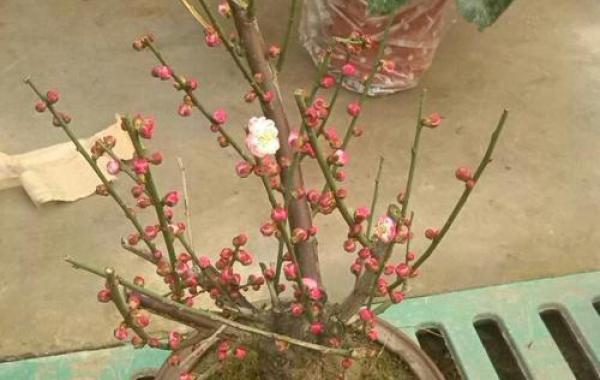
How should we prevent the phenomenon of flowers dying in winter.
In winter, because many flowers have to be brought indoors for care, the flowers are in a dormant or semi-dormant state. Under such circumstances, improper flower management can cause death. The specific preventive measures are as follows:
1. Watering must be moderate: In winter, most flowers enter dormancy and stop growing, so watering should be controlled, but this does not mean not watering at all. Because the root system of the flowers is still carrying out slow respiratory activity and still needs a certain supply of water, only in smaller amounts. In addition, evaporation and transpiration are small, so watering can be done at relatively long intervals. The principle is not to water when dry, and when watering, water thoroughly, and water at noon in winter. The water temperature and the pot temperature should not differ too much. Rainwater, well water, river water and tap water can all be used; if the water temperature differs greatly from the air temperature, the water can first be stored for a period in a container such as a water vat or bucket. Generally, watering once every 5 to 7 days is suitable.
2. Avoid low nighttime temperatures: The higher the daytime temperature of the environment where potted flowers are placed, the greater the harm that low nighttime temperatures will do to them. At night, the flowers should be moved to a place further inside, or covered with plastic film.
3. Adjust light in good time: Flowers placed in corridors, room corners and other places with insufficient light should have their position changed regularly and should often be moved to a place with ample sunlight.
4. Prevent frost damage: Flowers placed on windowsills are most susceptible to freezing damage. Therefore, on nights with low temperatures, do not place flower pots on the windowsill, and at the same time draw the curtains. If the weather forecast predicts a cold wave or frost, and the room cannot be heated, move the flower pots away from the windowsill.
5. Change the dry, hot indoor air: In winter, because of central heating or other reasons, indoor air humidity is generally low. Such environmental conditions are extremely unfavorable for the growth of many indoor flowers, and some delicate flowers may even die in such an environment.
We should frequently spray water on the flowers to increase their humidity, ensure normal flower growth, and prevent the occurrence of death.
1. Add covering materials. At night, a small tunnel should be set up inside the greenhouse and straw curtains should be added. Adding straw mats or corn stalks around the greenhouse at night can raise the temperature by 1°C to 2°C. Adding a thin mat on top of the original straw mat can raise the greenhouse temperature by 2°C to 3°C. Covering the original straw mat with a layer of film can not only block the wind, but also prevent rain and snow from wetting the straw mat, thereby reducing heat loss caused by water evaporation. For flowers planted in the ground, plastic film mulching can also be carried out, and after mulching, the soil temperature can be raised by more than 1°C.
2. Smoke around the area. Before a cold wave arrives, lighting a smoke fire around the greenhouse can prevent heat around the greenhouse from radiating to the upper air and reduce heat loss.
3. Clean the greenhouse film. Promptly and thoroughly removing dust, dirt and accumulated snow from the greenhouse film can increase light and raise the greenhouse temperature.
4. Cover with plastic film or small arched tunnels. In greenhouses using high-ridge cultivation, a layer of plastic film can be covered on the high ridges, generally raising the soil temperature by 2°C to 3°C; for flat-bed cultivation, small arched tunnels can be set up to raise the soil temperature.
5. Dig cold-proof trenches. Dig trenches on the south side outside the greenhouse and fill them with insulating materials such as horse manure, weeds and straw, which can prevent soil heat from being lost outward and raise the soil temperature in the southern part of the greenhouse.
6. Double-film covering. Build another layer of film below the anti-drip film. Because there is air between the two layers of film, the temperature inside the greenhouse can be significantly raised.
7. Water pool heat preservation. Dig a water storage pool every few meters in the center of the greenhouse, lay plastic film on the bottom of the pool, then fill it with clean water, and then cover the upper part of the pool with a layer of transparent film (to prevent water in the pool from evaporating and increasing the air humidity inside the greenhouse). Because water has a high specific heat, it can absorb heat at noon (when the temperature is high) and release heat at night.
8. Remove the mats in good time. When temperature conditions permit, uncover as early as possible and cover as late as possible to promote photosynthesis in the flowers. In deep winter, on clear days, generally remove the straw mats in the morning when sunlight spreads over the entire greenhouse surface; at this time the temperature inside the greenhouse is generally not lower than 18°C. On cloudy or overcast days, when light is weaker, the straw mats should also be removed in good time so that scattered light can enter; on the one hand this can raise the temperature, and on the other hand, because scattered light contains more blue-violet light, it is beneficial to photosynthesis. Never leave the straw mats in place for a long time, causing the greenhouse to become cold and gloomy and the temperature to drop sharply.
9. Increase fertilizer application. Apply heat-generating materials such as horse manure and chopped grass inside the greenhouse to raise the soil temperature. The decomposition of organic fertilizer can release heat. Applying an appropriate amount of additional organic fertilizer and phosphorus and potassium fertilizer can not only improve the soil aggregate structure, raise the soil temperature, and provide nutrients for the flowers, but also enhance the cold resistance of the flowers.
10. Hang reflective screens. Hanging polyester aluminized film on the north side of the greenhouse can increase light inside the greenhouse and raise the greenhouse temperature by 2°C to 3°C.
11. Heating with stoves. In extremely cold weather, a stove or heating can be added inside the greenhouse, but when using a stove fire for heating, care must be taken to prevent gas poisoning of the flowers. A chimney should be installed to discharge the gas outside the greenhouse. Be careful not to light firewood or grass inside the greenhouse to raise the temperature, because the smoke released when firewood and grass burn is extremely harmful to flowers.
12. Spread plant ash. Plant ash is grayish-black and has a strong heat-absorbing capacity. After being spread evenly on the greenhouse ground, it can generally raise the soil temperature by 1°C to 2°C.
13. Spray antifreeze solution. Before the temperature drops, spray the stems and leaves of the plants with a 400- to 700-fold dilution of antifreeze solution, which can play a role in protecting against cold and frost.