Irrigation canals run dry, fish and shrimp die, farmers resent the no-warning irrigation halt, and actual cultivators struggle to claim compensation
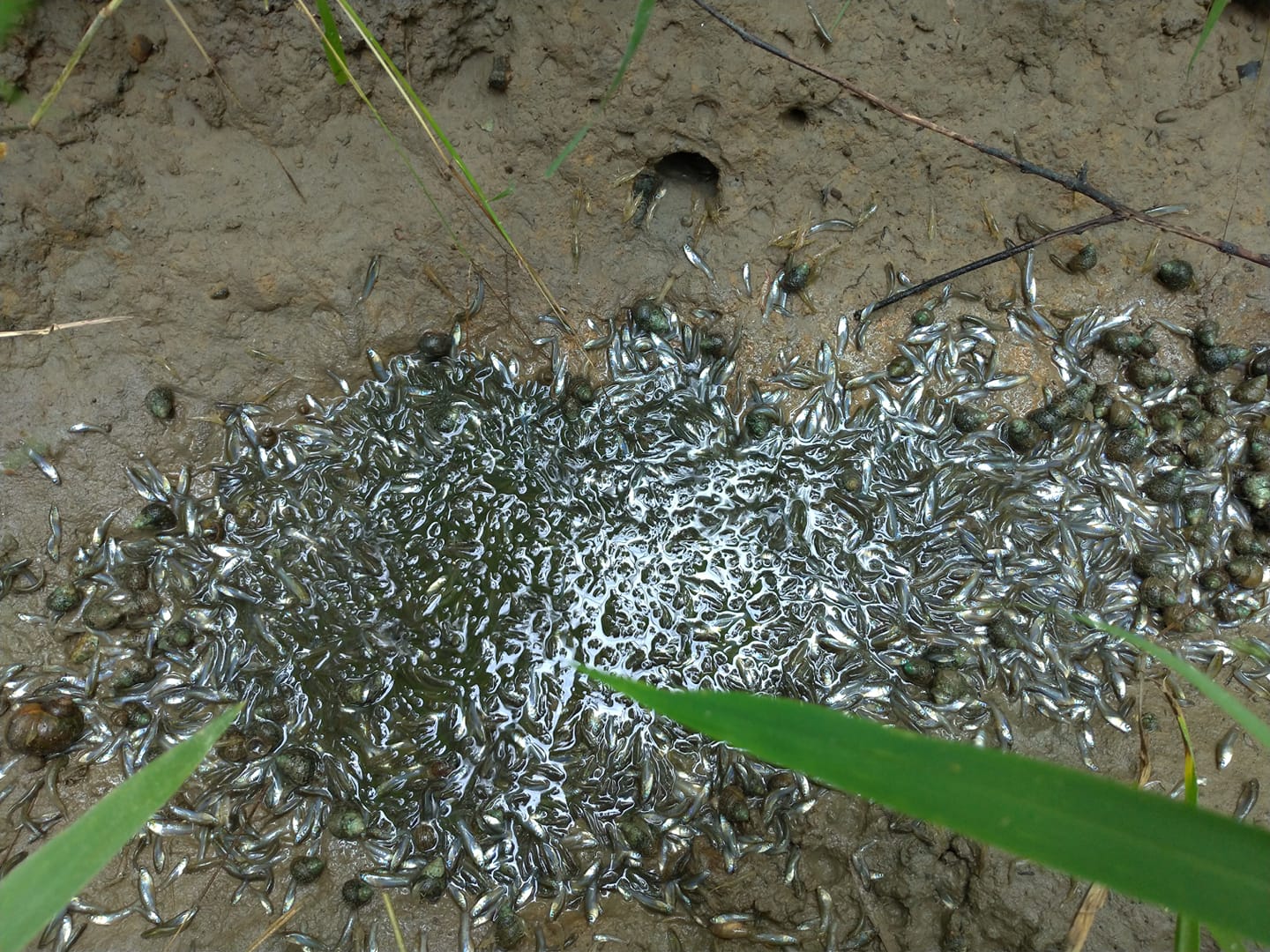
Recently Taipei to Yilan has seen continuous drizzle, but this rain failed to fall in the Taoyuan, Hsinchu and Miaoli areas that are thirsting for water. Since the Ministry of Economic Affairs announced the irrigation halt on the 15th of this month, the affected 19,000 hectares have launched a major water-grabbing operation. The scene of irrigation canals running dry, ditches parched, and fish and shrimp dying off is too tragic to bear.
At the same time, farmers accuse the government of taking no action beforehand. The Water Resources Agency claims it had implemented rotational irrigation, but this was refuted by farming friends in Taoyuan and Hsinchu. As for the compensation of 140,000 yuan per hectare, although it is paid to actual cultivators, if landowners and cultivators apply at the same time and a conflict arises, it is unclear when the determination process can be completed, and cultivators, in order to renew their land leases, are very likely to choose to give up compensation.

Young farmer's long-accumulated brand customer base collapses after irrigation halt
Regarding the rotational irrigation matter, Kuo Yi-shen, a young farmer from the well-known Hsinchu brand Liuxiang Tian, was the first to speak out. She accused the Ministry of Economic Affairs of having the most policy tools to judge water conditions, yet taking no action beforehand. Although the Council of Agriculture said rotational irrigation had long been implemented in Taoyuan, Hsinchu and Miaoli, as if farmers were slow to realize it, she said: "I don't know how rotational irrigation was notified, but at least previously we had water every day here."
What made her indignant was that the public grain warehouses still had enough rice for a year, so the Council of Agriculture agreed to the irrigation halt without any concern. However, the Zhudong Main Canal, completed in 1928, was meant to irrigate 800 hectares of farmland within a 21 km range. The government did not do a good job of scheduling water resources, and officials sitting in offices may not feel it, but what is sacrificed are the farmers they repeatedly say they want to "take care of."
Kuo Yi-shen further pointed out that government compensation can hardly make up for the losses of brand farmers. Just as online sales driven by the pandemic and new customers brought by agricultural tourism vouchers were taking off, the reputation of the Liuxiang Tian brand was fermenting. If the second rice crop cannot be supplied, consumers will quickly shift their attention, making all their previous hard work go to waste.
"For the next six months our rice will be out of stock, and sweet potatoes and corn cannot be harvested either," Kuo Yi-shen said. "It is impossible for consumers to wait for us for half a year. We can only try to come up with countermeasures, otherwise our brand may collapse."

Water grabbing causes fish and shrimp to die off, and a ten-meter-deep well may run dry
Chan Wu-lung, who promotes food and agriculture education in Hsinchu, said that as soon as the irrigation halt news came out, farmers all began grabbing water, causing fish or tadpoles in the irrigation canals to die off from lack of water. "A little bit of water is enough to let them survive temporarily. Even irrigating only once or twice a week could let the rice hold on until harvest, yet a single order left no room for discussion."
He said helplessly that the only gain was that children attending the food and agriculture education course saw creatures die from lack of water. "That sense of water scarcity is very direct, so now they all remind each other to save water."