Detailed Explanation of the Principles of Flower Forcing Cultivation and Flower Growth Inhibition Measures
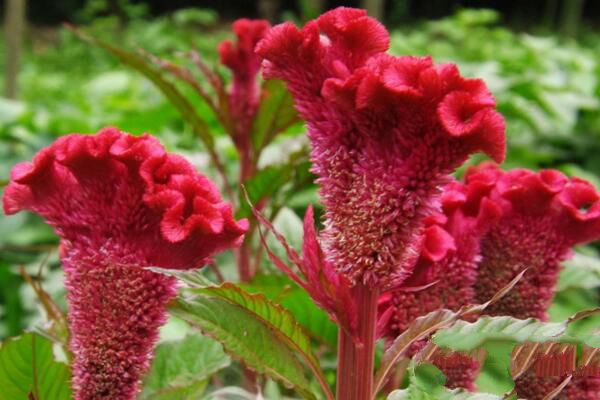
In spring and summer, flowers bloom in abundance, giving people beautiful visual enjoyment. But when the cold winter comes, open-field flowers cannot grow normally or bloom. Therefore, in order to meet the demand for fresh flowers in winter and early spring, it is necessary, on the basis of understanding the growth patterns of flowers, to use artificial environmental factors to control the surrounding environment so that flowers bloom at the desired time according to people's wishes. Today, the editor will focus on the principles of forcing and inhibition cultivation and the methods of forcing cultivation and inhibition cultivation in combination with production practice, as follows.
1 Principles of forcing and inhibition cultivation
1.1 Different growth and development stages of flowers have different requirements for light and temperature
Long-day flowers and short-day flowers differ in their requirements for sunlight and temperature, and even for the same kind of flower, due to various factors, there are great differences between the seedling stage and the development stage. If the growth and development conditions of a certain stage are artificially satisfied in advance, then the flowers will bloom earlier or be delayed in blooming.
1.2 Temperature differences throughout the four seasons cause flowers to develop a regular alternating life cycle
Most flowers have a certain period of dormancy each year, which brings certain difficulties to cultivating flowers early or making them bloom and bear fruit early. Therefore, artificial methods are needed to disrupt the dormancy characteristics of flowers so that they grow and develop earlier and bloom earlier. Thus, in the actual cultivation process, it is necessary to separately grasp the growth and development patterns of various flowers, and in production practice be good at comprehensively understanding and utilizing relationships among all aspects, so as to achieve control over flower cultivation.
2 Measures for forcing cultivation and inhibition cultivation
2.1 Light treatment
The formation of flower buds in plants is greatly affected by the length of daylight, so this characteristic must be grasped, and in this way the flowering period of flowers can be controlled. To put it simply, giving long-day treatment to short-day flowers can delay flowering, while giving short-day treatment can advance flowering. Conversely, giving long-day treatment to long-day flowers can advance flowering, while giving short-day treatment can delay flowering. At the same time, using the long-day method can delay the flowering of short-day plants. Conversely, it can make long-day plants bloom earlier.
2.2 Temperature treatment
2.2.1 Heating treatment
Increasing temperature can promote the growth and development of flowers, accelerate internal metabolism, and promote nutrient accumulation and flower bud differentiation. For flowers that have already formed flower buds and overwinter under low temperatures in winter, heating treatment measures can be used in early spring to break their dormant state and allow them to bloom earlier. If field-grown flowers are to bloom earlier, they can be potted after leaf fall in late autumn and placed in a cold room, then placed in a low-temperature room in November, and about 10 d before flowering, heated to 18°C with a night temperature of 12°C, and watered frequently, so that they can bloom at the desired time.
2.2.2 Low-temperature treatment
Low-temperature treatment, also called cold storage treatment, is used to satisfy the overwintering dormancy of plants and to inhibit the growth of flowers that have already formed flower buds and flower buds. It is mainly carried out from three aspects. First, prolong their dormancy period: all flowering trees or bulbs that need to overwinter in dormancy can use the cold storage method to delay their flowering time. Second, force early dormancy: for flowers that have already become dormant in winter and bloom in early spring, they can be made to bloom again in autumn. At present, in early spring the flower buds are removed so that they do not bloom, allowing nutrients to be concentrated for the growth of branches and leaves. After strengthening water and fertilizer management in spring and summer, flower bud formation is promoted in advance, and in late summer and early autumn less water is given and the plants are moved to a cold storage room. After about one week, the leaves gradually fall off and the plants enter dormancy. After about one month, they are taken out and placed under natural temperature, or appropriately heated by people, and can bloom a second time in late autumn. Third, inhibit flowering: for flowers that are already in bud and about to bloom, cooling can be used to delay flowering. In addition, low-temperature treatment of some flowers that bloom in winter has the effect of promoting earlier flowering. After being taken out and heated for a certain period before flowering, they can bloom earlier.
2.3 Chemical treatment
2.3.1 Gibberellin
Soaking in a 10~50 mg/L GA solution for 24 hours can break the dormancy of the seeds of many garden trees and flowers. For example, treating rhododendrons with GA3 can replace low temperature to break dormancy.
2.3.2 Auxin
Using chemicals that stimulate plant growth to treat flowers can make flowers bloom earlier or make the flowers larger. However, when using them, the concentration of the chemical must be well controlled, and light and water and fertilizer management must be strengthened, otherwise the plants are easily harmed.
3 Cultivation measure treatment
By changing measures such as the sowing period, cutting, and pruning of flowers, the flowering period can be controlled, or in cultivation techniques, drought treatment with little or no watering, or methods such as removing part of the leaves, can be used to control the flowering period so that the flowers bloom earlier or later. At the same time, leaf removal treatment is also a method of artificially forcing dormancy, and it can be combined with drought treatment to make the plants grow again and achieve the effect of a second flowering.