What to do when there is no one to care for your flowers at home? Try these practical methods
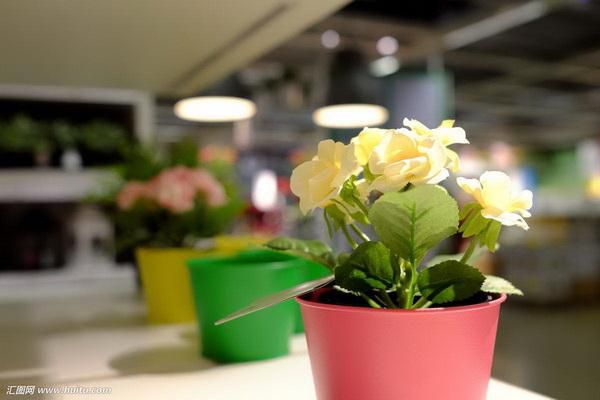
As the Spring Festival approaches, many city residents like to go and pick out potted plants to add some warmth and bright color to their homes. Ms. Chen, who lives in Gulou District, Fuzhou, bought a pot of cineraria. But these past few days she has been worrying about this potted plant: "I've only had this cineraria for a little over a week, and I've kept it on the balcony the whole time, but it has already started to wilt. During the Spring Festival holiday I'm going back to my hometown to celebrate the New Year, and this trip will last more than ten days. If no one cares for the cineraria, won't it just wither and die?"
Buying flowers is easy, but growing them is hard. With the coming Spring Festival, how can you get gorgeous flowers through a "winter vacation" safely?
Tip 1: Keep them indoors and make sure they stay warm
Professor Chen of the College of Life Sciences at Fujian Normal University says that when growing cineraria in winter, the most important thing is to keep the flowers "warm" and to pay attention to cold and frost protection. Even if residents are not at home, they should still make sure the room is ventilated and maintain a certain room temperature; a temperature of 15°C-25°C is suitable. Professor Chen reminds people that it is best to place the potted plant in a sunny spot indoors, but it should not be placed in a windy spot, nor in direct strong light. "The leaves of chrysanthemums are cold-tolerant, but the flowers are not. If they get frozen, the flowers will quickly wither."
These plants are not afraid of the cold and can be placed outdoors: wintersweet, wintersweet (Chimonanthus praecox), sasanqua camellia, bamboo, English ivy, and so on.
Tip 2: Water less and do not fertilize
Professor Chen analyzes that the reason Ms. Chen's cineraria wilted is very likely that it was watered too much, because with too much water the plant cannot absorb it, which causes wilting. There is another reason that can also cause cineraria to wilt: residual odors from home renovation, or because the space is too small, the plant cannot get fresh air, leading to insufficient nutrients. Under normal circumstances, most plants kept at home can be grown well as long as ventilation and moist soil are maintained and they are occasionally taken out to get some sun.
In addition, fertilizing flowers in winter will also "burn" them to death. Because after flowers stop their metabolism, they do not need fertilizer, so if you fertilize in winter, the fertilizer cannot be flushed away, and it thus has the opposite effect.
These aquatic plants cannot do without water: narcissus, water bamboo, moneywort, and so on.
Tip 3: After the holiday, indoor plants should not be moved outside too early
Professor Chen says that after coming back from the holiday, residents should not move the plants kept indoors outside too early, otherwise the flowers will easily die. This is because
after a winter, the plants' "constitution" has weakened and they are not cold-tolerant; generally they should only be taken out of the house after Qingming.
These flowers are suitable to buy but not to grow yourself: such as chrysanthemums, narcissus, azaleas, cyclamen, and so on. Their market price is not expensive, while growing them yourself takes time and effort; it is better to buy a few pots when the season comes and enjoy them at home. "Growing three or five pots of chrysanthemums yourself takes half a year, and they still won't grow as well as those grown on a large scale by flower farmers. It takes too much effort and is not worth it," Professor Chen adds.
Tip 4: When no one is home, you can make your own device to water the flowers
In winter, flowers need to be watered appropriately, and when it comes to some aquatic plants, water is indispensable. During the holiday, if residents are not at home, what should they do?
Master Lan from the flower market in Jianxin Town, Fuzhou, gives the following suggestions:
First, residents can use gauze, dip it in a little water, and wrap it around the flower pot;
Second, use a drip device like the one used for IV drips, dripping water onto the base of the plant's stem so that the water continuously seeps and spreads into the soil to be absorbed by the roots. The dripping speed should be adjusted according to the type and size of the flower or tree. This method works well, but it is only feasible if you have a drip device;
Third, use a lamp wick or a strip of cloth, with one end placed on the pot soil and the other end placed in a container full of water; the water level in the container must be higher than the position of the pot soil. In this way, through the plant's capillary action, water can be continuously supplied to the pot soil;
Fourth, after watering the plant thoroughly first, cover the entire plant with a plastic bag and tie it onto the pot. Because it is covered with a plastic bag, water vapor can be retained inside. If water droplets form on the plastic, the droplets can drip back into the pot soil again, and the plastic bag can retain moisture for as long as two to three weeks. When residents put on the plastic bag, it is best to insert three or four thin sticks into the soil at the edge of the pot; the inserted sticks must be taller than the plant. It is important to note that when covering with the plastic bag, the leaves should not touch the plastic bag, and the flower pot covered with the plastic bag should not be placed in a spot with direct sunlight.