Offshore wind farm vs. fishing ground conflict erupts again: respecting coexistence and guaranteeing the right to begin construction become the focal points
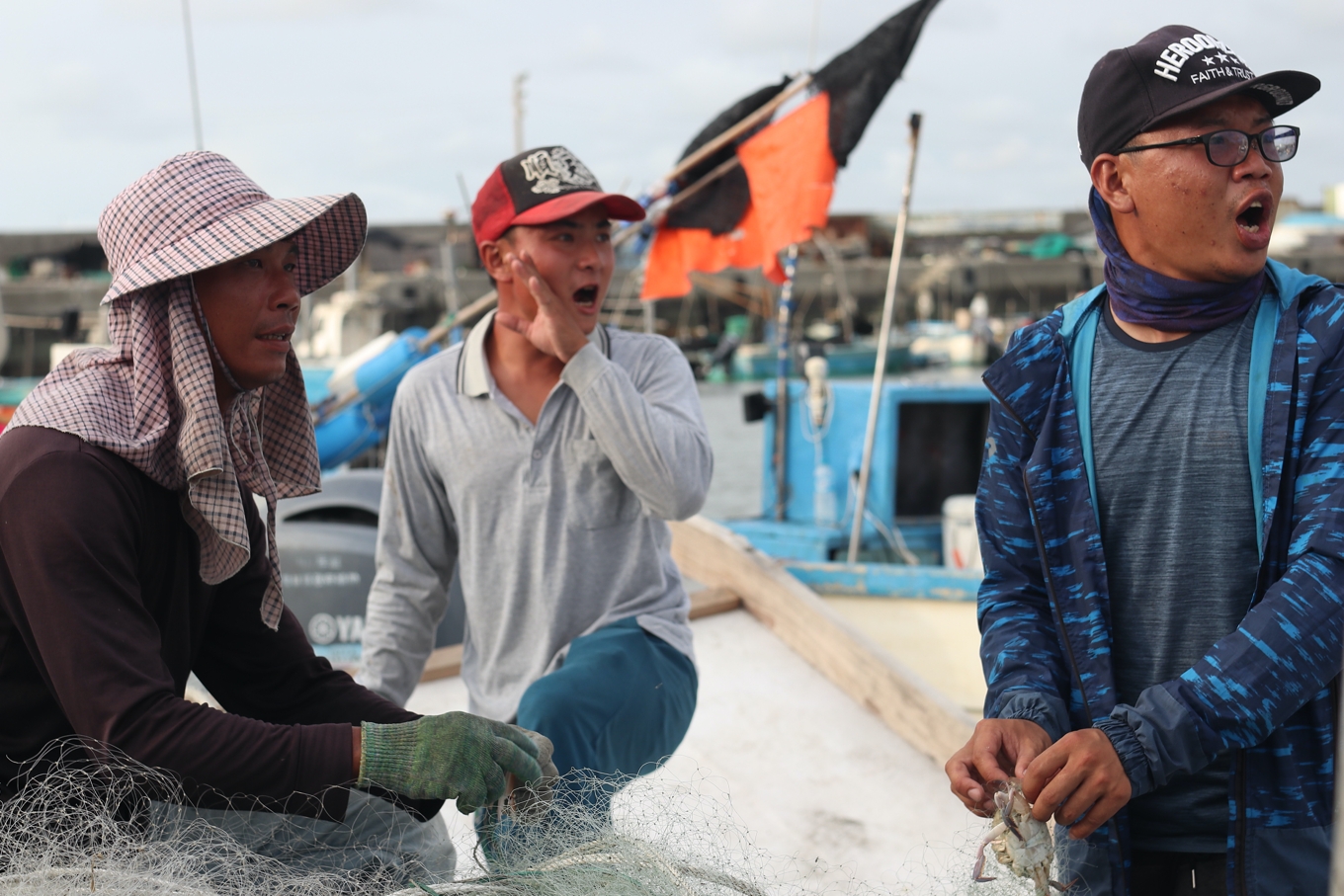
Conflict between offshore wind farms and fishing grounds erupts again! Recently, the German company Wpd carried out wind farm drilling (HDD) operations in the waters off Yunlin, and was accused by coastal fishermen of destroying the fishing ground ecosystem. The two sides remain deadlocked, and in June alone there were four confrontations between fishing boats at sea. The developer's representatives had promised to suspend work before any agreement was reached, but in the early hours of July 27, fishermen discovered that the "zhaoqi" flags marking the location of fishing nets at sea had been cut down, and Wpd's vessels had once again entered the fishing ground. The fishermen sailed out in anger to block them, and the two sides once again chased each other across the sea, in a dangerous and explosive scene.
Li Pingshun, one of the fishermen leading the protest, stressed: "Fishermen are the affected victims, not holdout households. The catch the fishing ground gives us is far greater than the compensation from the developer." He believes the wind power operators do not understand the symbiotic relationship between this sea and the fishermen, and have failed to fulfill their obligations to inform and communicate before and after construction. Even if green energy construction is national policy, it should not come at the expense of fishermen.
Chen Junli, special assistant to the general manager of Honghua Construction, a representative of the developer, believes that the conditions demanded by the fishermen are too high for consensus to be reached, and that if the fishermen do not show sincerity in negotiations, they will request public authorities to intervene to protect the developer's legal right to begin construction.

Elder: Yunlin's coastal fishing villages declined because of the Sixth Naphtha Cracker, yet Taizi Port rose against the trend, full of vitality and prosperity
The four coastal townships of Yunlin, Mailiao, Taixi, Sihu and Kouhu, have relied on fishing and aquaculture for their livelihood since ancient times. However, after the Sixth Naphtha Cracker was established at the mouth of the Zhuoshui River, coastal fishing space was greatly squeezed, and the offshore industrial zone also changed ocean currents and drifting sand. South of the Sixth Naphtha Cracker, Wutiaogang Port, Taixi Port, Sanjiaolun Port and Boziliao Port gradually declined due to severe siltation.
Compared with the severe siltation of the fishing ports on the northern side of the coast, Taizi Port on the southern side became one of the few fishing ports still able to operate normally, and thus rose against the trend to become the most active fishing port along Yunlin's coast today, with nearly four hundred fishing boats currently moored in the port. Lin Wenqin, an elder of Taizi Port who has fished for half a century, witnessed that after the Sixth Naphtha Cracker plant was built after the 75th year of the Republic of China, Taizi Port at the southernmost end was least affected and thus gained its opportunity.
"In Yunlin, it is only a little over forty kilometers from Penghu, the narrowest part of the Taiwan Strait. In the middle is the Black Ditch with extremely fast currents and tremendous pressure, yet along the Yunlin coast there are shallow flats built up by river sand, making it an important sea area where fish gather." Lin Wenqin explained the symbiotic relationship between what fishermen call the "rice jar land" and the prosperity of Taizi Port: "Although Taizi Port mostly has small speedboats, they are fast, highly mobile, low-cost and bring in large catches. Most importantly, they are close to excellent fishing grounds, and only this could create today's prosperity."

From fishing and oyster farming to coastal aquaculture, three industries enrich Taizi Port
"Fishermen of Taizi Port can go out to sea to fish, they can also farm oysters on the sandbars in the inner sea, and if they are unwilling to go to sea, they can also do coastal aquaculture. These three industries support one another." Lin explained that in the whole village, from the old, weak, women and children, from eight years old to eighty, everyone can do aquaculture on shore and shuck oysters for processing. The fishing village industry chain benefits hundreds of households in villages along the coast, including Shuilin, Jinhu and Yiwu.
"The impact of the Sixth Naphtha Cracker has not ended even now, and now offshore wind power has come to stir things up again. Underwater construction has damaged the fishing grounds, not only affecting inshore fishing, but possibly causing Taizi Port fishing village to head toward extinction." What young people look at is daily life, what the middle generation considers is the family livelihood, but what Lin Wenqin, who has made his living from the sea for half a century, worries about is the fate of the coastal fishing villages.
Wind turbine operations change ocean current vortices, occupy rich fishing grounds, and alter the ecosystem
Li Quanfa, chairman of Tiantai Temple, the center of faith in Taizi Port, explained the fishermen's worries: "More than eighty wind turbines have occupied the entire fishing zone. We rely on rules of experience to predict the tides, and when we set down our nets we know when and where to haul them in, but once the wind turbine operations begin, the ocean current vortices all change. We won't even know where the nets we set down will drift. How are fishermen supposed to set nets in the future?"
"The seabed has high and low terrain and landforms, with food chains and living zones, what people who make their living from the sea call fish hollows. But the consortium's work vessels, in order to lay submarine cables, turned the seabed over again." Li Quanfa raised the fishermen's core question: "What has happened to our fishing grounds? They did not tell us, nor let us know. Throughout the entire offshore wind power development, not a single forum or briefing session was held for the fishermen."
Middle-generation fisherman Li Jiahong added: "This concerns the question of how fishermen will survive in the future. The construction area of the 80 wind turbines is four nautical miles east to west and ten nautical miles north to south. It happens to occupy the most fertile fishing grounds. The more than one hundred fishing boats still operating and catching fish in the construction area and the oyster-farming boats along the coastal sandbars simply cannot be lumped together, yet they are treated as one and the same."
Li also asked: "Whenever the seasons change and cold and heat alternate, heavy fog easily forms at sea and visibility is limited. If the satellite signal is lost and a boat hits an offshore wind turbine, how will compensation be handled if an accident or dispute occurs?" For fishermen, neither the government nor the wind power companies ever consulted the fishermen who rely on the ocean for their livelihood during the process.

Environmental impact report: the disturbance of the seabed by offshore wind turbine operations is local and temporary; fishermen disagree
As to whether the impact of fishing ground destruction has been assessed, the person in charge at the Yunlin County Government Environmental Protection Bureau said that wind turbine development projects fall under central government plans and are beyond the authority of local government, and believes that the development impact assessment of offshore wind turbines and its consequences should be borne and coordinated by the central government.
Looking through the publicly available document from the Environmental Protection Administration, the "Environmental Impact Statement for the Yunlin Offshore Wind Power Plant Construction Project," Chapter 7 states that disturbance of the seabed by offshore wind turbine seabed operations is unavoidable, but is local and temporary. However, contradictorily, the text also points out that submarine cables must be buried in the seabed, and before construction the seabed must be excavated, which will disturb the seabed and cause deterioration of water quality. Pile-driving operations also drive away seabed organisms, and larval and juvenile fish that cannot migrate can hardly escape injury or death.
The "Statement" also emphasizes that local trawler operations damage the seabed, and that after offshore wind turbines are installed, they can protect the seabed by "preventing bottom trawling, this destructive fishing method that damages seabed habitats, is non-selective regardless of fish size, and is unsustainable." That is, the inconvenience caused to fishing operations can make offshore wind turbines into conservation zones for the reproduction and habitation of marine resources.

On the claim that bottom-layer fishermen are the destroyers of ecology, fishermen say: "Sincere hearts get a heartless response"
Regarding the wind power development argument of "destroy first, conserve later," fishermen expressed strong dissatisfaction. "When work vessels operate on the seabed, a layer of dead fish floats up on the surface. So-called marine resources have brought no benefit at all, only harm first." Li Pingshun stressed that if fishermen do not stand up to defend the fishing grounds, even more serious ecological catastrophe may follow: "After the seabed terrain and landforms are destroyed, how will fish populations and the ecology be restored? And the promised construction environmental monitoring has still not appeared to this day, nor has any unit come forward to take responsibility."
Li Pingshun believes that the depletion of marine resources is a shared fault of humanity, caused by many factors, and that responsibility should not be pinned on the disadvantaged group of fishermen: "Fishermen relying on fishing to make a living is an inescapable original sin. Yunlin long ago restricted trawlers that destroy the seabed. Most of the bottom trawlers that intrude are boats from elsewhere. Most coastal fishermen operate according to the regulations. Criticizing fishermen for harming the ocean can be described as 'sincere hearts get a heartless response.'"
Li Pingshun stressed with grief and indignation: "This sea area is the traditional fishing ground that Yunlin fishermen have relied on for generations. It does not belong to any individual or consortium. If the consortium wants to take it by force, fishermen will also use fishermen's ways to defend the fishing grounds and their right to survive."

Related Articles
- How to prevent and control rabies in dogs? Timely vaccination of puppies ensures safety
- How to Explore Keelung's Fishing Port Docks? Practical Tips for Picking Fresh Seafood
- The Slow Food movement advocates that how you eat matters more than what you eat, helping you eat your way to health
- How to Identify Inferior Cooking Oil? Key Points for Quality Control from Cultivation to Purchase
- Which agricultural activities require tax payment? The ranch court case clarifies the boundary of tax exemption
- Ractopamine, a lean meat agent, is banned; scientific pig farming to increase lean meat percentage is the right path
- Horizontal Windbreak Nets for Welsh Onion Cultivation in Winter Reduce Losses
- Top Ten Fungicides Ranking Released, a Useful Reference for Farmers Choosing Products