CP's lavish spending proves futile, Amis youth Lisin Haluwey stirs up a massive wave against CP, insisting the chicken farm must get out
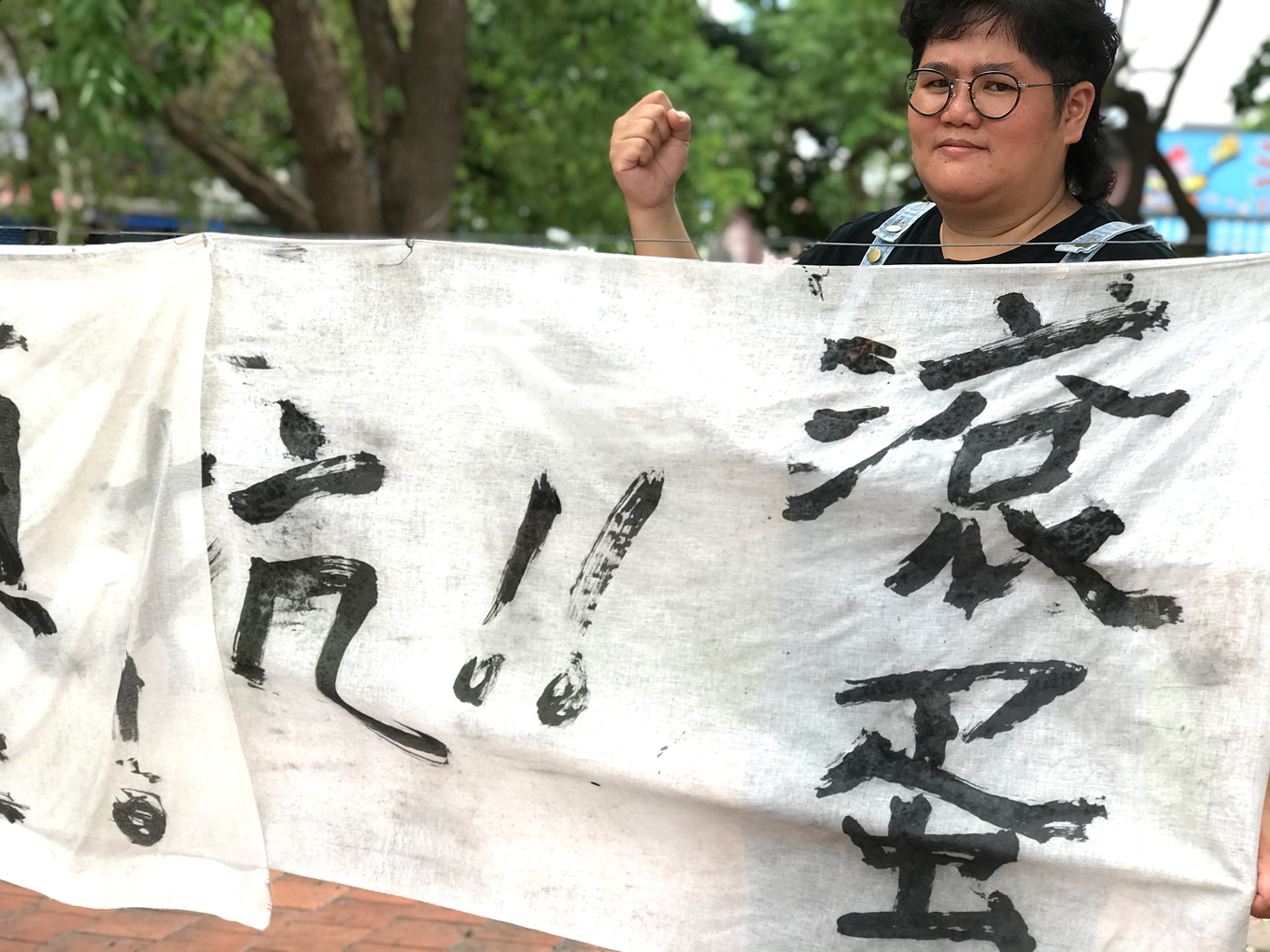
Fenglin, a central town in Hualien County, is the first township nationwide and the only one in eastern Taiwan to receive international Cittaslow certification. Yet recently, stepping out of Fenglin Railway Station, one immediately sees protest banners that clash completely with the "slow living" image, with angry strokes forcefully writing the two big characters "Get Out." The banners flap loudly in the wind, like the unceasing protests of Fenglin residents.
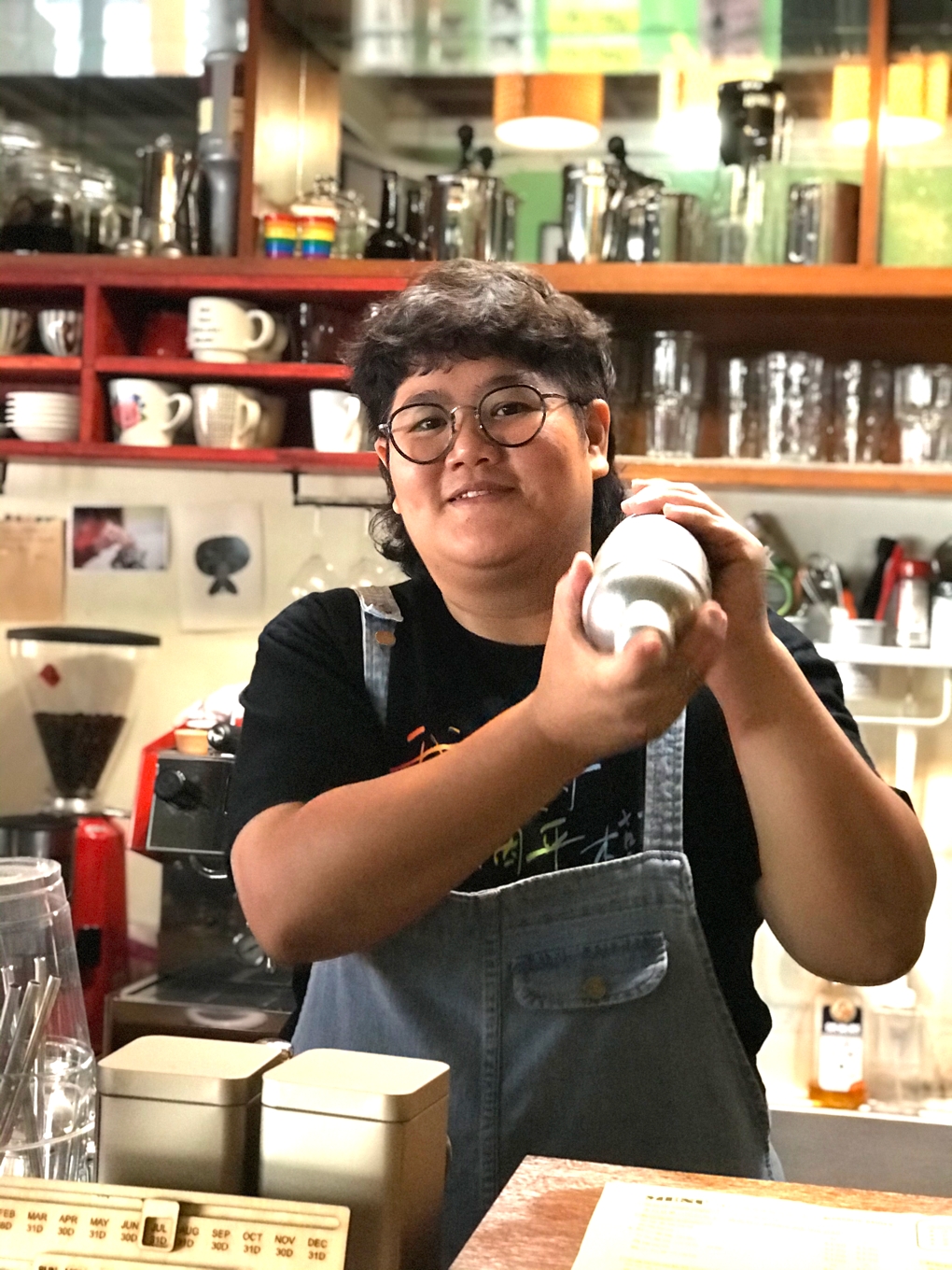
What enrages the Cittaslow residents is the impending invasion of three CP chicken farms into Fenglin. Over ninety percent of Fenglin Township's residents contributed money and effort, surrounding the township office and county government, demanding County Magistrate Hsu Chen-wei immediately revoke CP's factory permits and for the chicken farms to "get out." The headquarters organizing this series of protests is "Red Coffee," less than one hundred meters from the railway station, and the self-rescue association's vice president is the shop owner, Lisin Haluwey.
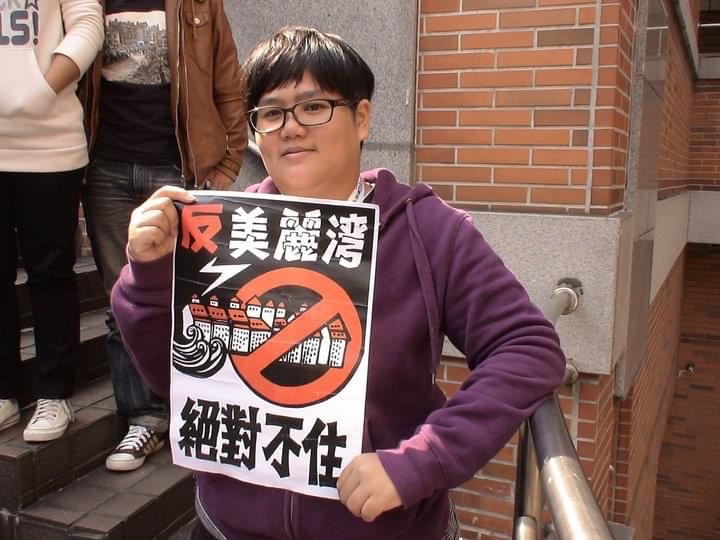
From the confusion about her identity in youth to reclaiming her Amis name in university, Lisin seemed to be reborn, and from then on threw herself into social movements, from participating in the "Amis Guardian Alliance" and opposing "Miramar" to the recent "anti-CP" incident, Lisin pursues justice in her heart and defends her matrilineal hometown.
Indigenous identity from a working-class family, witnessing class inequality from childhood
"Being a minority" is probably a feeling and label Lisin could never shed from childhood to adulthood. Although she is a pangcah from the Mataian tribe, after moving with her father to the Meilun area where Hualien Port was built, Lisin and her two younger brothers did not grow up in the tribe, but lived mixed in a Han community, where "indigenous" became a label others constantly reminded her of, rather than a self-identity.
For example, the school would broadcast with extreme insensitivity: "Indigenous students please go to the General Affairs Office to collect publicly funded stationery." Classmates would often question: "My family is also working-class, why can only you indigenous people receive subsidies?" Another example: Lisin clearly got into Hualien Girls' Senior High School on her own merit, yet classmates believed she was admitted only through bonus points. School education never explained the multiple and deep harms of settler colonialism on indigenous peoples, causing indigenous students to face various discriminations and prejudices alone on campus.
Besides her indigenous identity, Lisin came from a working-class family, and this multiply marginalized social position let her see the situation of class inequality. When Lisin was in junior high school, her father participated in the Xueshan Tunnel project, not only long absent from home but also frequently injured; moreover, because the tunnel was delayed by water seepage, contractors could not claim payments from the government and went bankrupt one after another, her father could not get his wages, and had nowhere to turn for help. Watching all these little by little, Lisin felt an indescribable heartache.
Only in university was her "third eye opened," finding the answer to "who am I"
It was just that although the educational approach at the time affirmed her efforts through grades, it failed to let her understand the hegemonic violence of social structures. She swung between self-doubt and confidence, social values like a fog over her head, and she was lost, not knowing where the exit of life was. At this time she heard that National Dong Hwa University had established a Department of Ethnic Relations and Cultures, so she applied through admission and was successfully accepted.
In Lisin's own words, studying at Dong Hwa gave her the chance to "open her third eye" and clear the fog. Through courses in sociology, political science, and anthropology, many of life's doubts were answered. The treatment she and her people received, why her father could only do dangerous construction work, the destruction of indigenous traditional territories - each and every one actually had historical context to trace. With critical thinking as her driftwood, Lisin swam in the ocean of knowledge, slowly answering the big question of "who am I."
Throwing herself into social movements, pursuing justice in her heart
Beyond classes, Lisin was also a member of the Amis Student Association at Dong Hwa. Through interactions with indigenous college student clubs from other counties and cities, she came into contact with issues of the Sanying and Xizhou tribes, participated in the anti-Suhua Expressway movement, organized youth clubs to discuss imaginings of local development together, and also joined companions in supporting the Losheng parade.
Because of these diverse stimuli, a map slowly grew in Lisin's mind. It turned out that injustice happened all over Taiwan, Taiwan, China - here indigenous people were persecuted, there land justice was trampled, wronged women, trapped LGBT people, endangered culture, class that was hard to escape. Lisin stroked that wounded map, the speckled blood on her fingertips burning her youth into churning like fireworks.
Reclaiming her tribal name like rebirth, deciding to stay away from politics after seeing through the nature of power
In her sophomore year, Lisin watched documentary director Mayaw Biho's series "Excuse Me, What's Your Aboriginal Name?", and felt she had met a kindred spirit, tears streaming down her face. Mayaw used images to delicately pour out the subtle sorrows of indigenous people, that suffering of "wandering on your own land," stirring up memories of Lisin's twenty years of life. She was immediately convinced by the reasoning in the images and resolved to reclaim her tribal name.
Lisin, together with her parents and two younger brothers, all reclaimed their names; she changed from Lai Wan-er to Lisin Haluwey. Lisin inherited the name from her maternal grandmother; in the pangcah language it means festival, and it is a relatively gender-neutral name. Lisin said that after reclaiming her name, she felt she had taken back her identification with her maternal culture, and also connected with her matrilineal family, giving her a feeling of rebirth.
Because she had long served as a leader in various activities, people early on saw Lisin's personal charisma, and all agreed she should engage in political work to make more contributions in the right position. At first Lisin did not object; her political debut was helping Mayaw Biho campaign for the Legislative Yuan seat in the plains indigenous constituency. Running through many tribes, Lisin quickly understood that politics is actually the result of negotiation and balance; to "do the right thing" requires cooperation from all sides and also not rejecting words because of the person. Although elders warned her that people in political work should not have political purism, young Lisin could not accept the advice and often was unwilling to humbly seek guidance.
On the other hand, working within the core of power, Lisin also discovered she was easily tempted by power. After reflection, she admitted her understanding of political work was too shallow, and understood her experience was insufficient, so she decided to bid farewell to political work, return to Hualien, plant her feet on the land, and continue the voyage for Hualien's future.

"Red Coffee" is an issue dissemination station and also a petri dish for thought
Located on Zhongshan Road in Fenglin Township, "Red Coffee" is a space jointly run by Kawah and Lisin. The two have similar upbringing backgrounds and both experienced discrimination during their student years. Kawah is a pangcah born in Fenglin; during her upbringing she was only required to focus on studies, with no opportunity to understand her own background or care about the life around her, which she deeply regrets. When opening the cafe, she naturally wanted to run this space as an issue dissemination station and a petri dish for the next generation's independent thinking.
Lisin said that Fenglin was originally Amis traditional territory; it was only during the Japanese occupation era that, due to the development of the tobacco and sugar industries, more Hakka and Minnan immigrants arrived, and the town became an administrative center, in turn treating the tribe as a marginal zone. In addition, many social service groups in remote areas have religious backgrounds; during the "Love the Family referendum," the church led children to ask Fenglin's grandparents to participate in the petition, and all everyone could hear was the Coalition for the Family's line.
So after "Red Coffee" opened, it advocated breaking ethnic barriers and gender rigidity. Kawah has documentary expertise and mainly plans the shop's film activities, while Lisin is responsible for issue lectures, concerts, and book clubs. The shop has many books on film, gender, society, and literature available for borrowing, hoping to become a friendly space for teenagers' self-exploration. But because the lectures and film screenings were too distinctive, there were clashes in the early days; for example, in the first year of opening, the anti-nuclear flag posted outside the shop was torn away, and someone even taunted, "Then you all should stop using air conditioning." This made the two even more determined that the plan must proceed.