How to water flowering plants? These key points you need to master
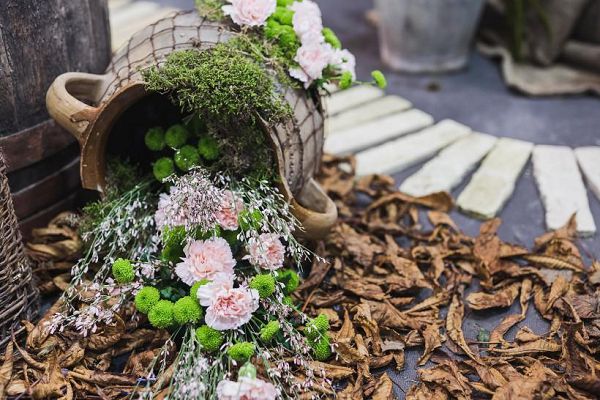
The reason why the leaves of flowers and plants are so verdant and dripping with green, why the flowers are so fresh and charming, and why the plants are so strong and upright is that water is one of the main contributors. The growth of flowers and trees cannot do without water, but too much water can harm them. Therefore, watering must be done reasonably according to the needs of the flowers and trees.
I. How to determine whether flowers and trees lack water
Judging whether water is lacking from the cultivation soil: Tap the flower pot lightly with a finger or a wooden stick. If the sound produced is relatively crisp, it means the potting soil is already rather dry and needs watering; if the sound is low and dull, it means the potting soil is moist and does not need watering. Observe the color of the potting soil surface with your eyes. If the color becomes lighter or appears grayish-white, it means the potting soil is dry and needs watering; if the color is darker, it means the potting soil is moist and does not need watering. Insert a finger gently into the potting soil to check the soil. If it feels dry or rough and hard, it means the potting soil is dry and needs watering; if it feels moist, fine, and soft, it means the potting soil is moist and does not need watering. Pinch the potting soil with your fingers. If the soil becomes powdery, it means the potting soil is dry and needs watering; if the soil forms flakes or clumps, it means the potting soil is moist and does not need watering. Using two or more of the above methods to judge will give more accurate results. Through repeated experience, judging by the weight of the flower pot can also tell whether water is lacking.
Judging whether water is lacking from the flowers and trees themselves: When flowers lack water, the whole plant looks lifeless, mainly shown by drooping and wilting branch tips and leaves, and even withered yellow leaves, with the leaves losing their luster. If water is lacking during the flowering and fruiting periods, the flowers and fruits will also wilt and even drop.
II. Principles of watering
Different flowers and plants have different sensitivity to moisture. Some are tolerant of moisture and waterlogging, while others are drought-tolerant. In particular, potted flowers and plants have stricter water requirements than those planted in the ground. Generally speaking, when watering flowers and trees, especially potted flowers and trees, one should grasp the principles of "see dry, see wet" and "water thoroughly when completely dry." "See dry, see wet" is suitable for most flowers that like moisture but cannot tolerate drought, such as rhododendrons, Chinese rose, and gardenia. It means that after watering once, wait until the soil surface turns white and the surface soil is dry, then water a second time, and when watering, it must be watered thoroughly until water is seen seeping from the drainage hole at the bottom of the pot. For flowers and trees that like dryness and fear waterlogging, such as wintersweet, hydrangea, and plum blossom, attention should be paid to "water thoroughly when completely dry," which means letting the potting soil dry fully, but when there are not yet cracks between the potting soil and the flower pot or between the potting soil and the potting soil, water thoroughly in one go, also until water is seen coming out of the drainage hole. In addition, for some drought-tolerant flowers and trees with thick, fleshy, and juicy tissues, one should grasp the principle of "rather dry than wet," and absolutely no water accumulation is allowed. For waterlogging-tolerant flowers and trees such as Monstera deliciosa, one should grasp the principle of "rather wet than dry," and the potting soil should be kept moist at all times and must not be dehydrated.
III. Water with suitable water
People usually come into contact with many kinds of water. Different waters have different qualities and different effects on flowers and plants. For watering flowers and trees, soft water such as lake water, river water, and pond water is best. Well water is mostly hard water and contains more inorganic salts such as calcium and magnesium, which is not conducive to the normal growth of flowers and trees and is not suitable for use. Among natural waters, rainwater and snow water are the most ideal, followed by pond water. When using tap water to water flowers, because it contains more chloride ions, which is not conducive to plant growth, it should be exposed in the air for 1~2 days until the chlorine gas dissipates before use. Never use stagnant water containing many pathogens, soapy water used for laundry, or oily dishwashing water to water flowers and trees.
IV. Water the settling-root water well
The first watering after planting is called settling-root water. The settling-root water must be watered sufficiently and thoroughly, because the newly planted soil has not completely settled, and there are many gaps in the soil. Only after watering thoroughly can the soil and root system fully combine. Generally, after planting, it should be watered continuously twice. After the first watering drains off and water is seen flowing out from the bottom hole of the pot, water again. Only in this way can it be ensured that the soil absorbs fully and comes into close contact with the root system.
V. Water at the appropriate time
Water temperature differs in different seasons and at different times, and water temperature has a direct effect on the physiological activities of the root system of flowers. If the difference between water temperature and soil temperature exceeds 5°C, watering will cause a sudden change in soil temperature and damage the root system, thereby affecting the root system's absorption of water and causing physiological drought. Therefore, it is better to water when the water temperature is close to the soil temperature, especially in winter and summer. In winter, it is best to first store the water indoors for a period of time, or add a little warm water, so that the water temperature rises to 15~20°C, and then water. In summer, avoid watering under the scorching sun and during the high temperatures at noon. Generally speaking, around 10 a.m. and after 4 p.m. are suitable times for watering flowers.
VI. Methods of watering
When watering, most flowers use the spray-watering method, which can both increase air humidity and wash dust off the leaf surface. However, for flowers with fuzzy leaves or those currently in bloom, do not spray water. Instead, place the flower pot in a basin of water and use the hole at the bottom of the pot to seep water so that the potting soil becomes moist. If you forget to water for many days, causing the plant to become dry and wilted, do not rush to pour a large amount of water. First move the potted flower to a cool, ventilated place, spray the leaves with a watering can 2-3 times, and after the leaves recover, water a small amount, and after the root system regains its water-absorbing function, water thoroughly.
VII. Water reasonably according to different growth stages
1. Seedling stage
The potting soil should be on the dry side. As the saying goes, "dry grows roots, wet grows leaves." Only when the soil is on the dry side is it easy to grow roots and strong seedlings. Too much water will cause the seedlings to grow leggy.
2. Stem and leaf growth stage
Only with sufficient watering can the branches and leaves flourish; otherwise the plant grows slowly. However, one should not blindly water too much and cause water accumulation in the potting soil and root rot. The general watering principle is that the potting soil should be see dry, see wet, alternating dry and wet, with the principle of keeping the soil below the surface moist. The "dry" mentioned here does not mean that the potting soil has no moisture at all. The saying of watering thoroughly when completely dry until water is seen flowing from the bottom hole is unscientific. Because when the soil is completely dry, cracks will form between the pot and the soil. When watering, water will quickly run off in large amounts along the cracks, and obviously it cannot be watered thoroughly. In this case, loosen the soil first and then water, or directly use the immersion method to supply water.
3. Flowering growth stage
When flowers transition from vegetative growth to flower bud differentiation, if there is too much water or too much nitrogen fertilizer is applied, the already formed flower buds will also turn into leaf buds. Therefore, during the flower bud differentiation period, the method of withholding water (controlling watering) can be used to inhibit excessive growth of branches and leaves and promote flower bud formation. For example, for Bougainvillea, plum blossom, ornamental peach, and magnolia, control water 2~3 times respectively in June~July, and water again after the branch tips and leaves wilt, which can effectively increase the flowering rate.
4. Flowering and fruiting stage
Once flowers enter the stage of bud formation and flowering and fruiting, they consume the most water. Water must not be lacking, and the branch tips and leaves must not be allowed to wilt; otherwise, the flowering period will become shorter and flowering will be poor. However, it should also not be too much, especially no water accumulation. Long-term water accumulation will cause flowers and fruits to drop.
VIII. Water according to the habits and growth conditions of the flowers
Some flowers that fear heat (such as Cyclamen persicum, Fuchsia hybrida, etc.) and flowers that like shade and humidity (such as rhododendron, orchid, Camellia japonica, etc.) need frequent spraying of water on the leaf surface and the surrounding environment of the plant, so that the air also maintains considerable humidity, which is very beneficial to their growth and development. Tropical orchids, Araceae, Bromeliaceae flowers, and ferns also need frequent spraying. Some flowers are very sensitive to water, such as Sinningia speciosa and Calceolaria, whose leaf surfaces have relatively thick fuzz. After water falls on them, it is not easy to evaporate and can easily cause leaf rot. In short, moisture-loving flowers can be watered more; drought-tolerant flowers should be watered less; flowers with large, soft leaves should be watered more; flowers with small, waxy leaves should be watered less; herbaceous flowers should be watered more; woody flowers should be watered less; seedlings and delicate flowers, as well as newly potted cuttings that have not yet rooted, should all be sprayed with a suitable amount of more water.