What are the precautions for growing flowers in a greenhouse in winter?
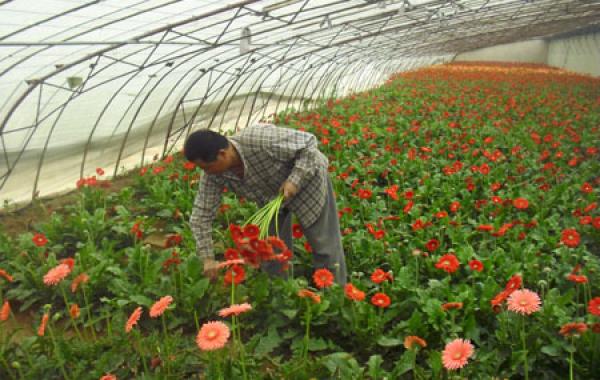
Adjust the appropriate temperature according to different flowers. For flowers that like high temperatures, such as poinsettias, African impatiens, begonias and cactus-like succulent flowers, the pots should be placed indoors in a sunny, warmer spot (between 20°C and 25°C) as much as possible, and the lowest temperature must not be below 10°C. For flowers that like moderate temperatures, the suitable winter temperature is 18°C to 22°C, and the lowest temperature must not be below 6°C. For flowers that like low temperatures, the winter temperature should be kept between 12°C and 15°C, and the lowest temperature must not be below 2°C.
Flowers that bloom in winter and spring like light and should be placed on a windowsill or in a sunny spot near a windowsill. Evergreen flowering shrubs that like sunlight but can tolerate low temperatures, or flowers in a dormant state, can be placed in a cool spot with scattered light. Flowers that generally have no strict light requirements can be placed in a shaded spot without light.
Fertilizing: In winter, most flowers enter a dormant period, so fertilizing should be minimized or stopped. The main selection method for indoor ornamental plants is indoor flowers that do not go dormant in winter, such as evergreen flowers like broadleaf lady palm and golden pothos. When the room temperature is around 5°C, they basically have no demand for fertilizer, so no additional fertilizing is needed. If fertilized when the temperature is relatively low, root rot is likely to occur. The main reason is that in winter the root growth of plants is slow, and the fertilizer applied cannot be absorbed by the roots; instead, it hinders normal root absorption, and in severe cases causes root rot. If the room temperature is relatively high (above 20°C) and the flowers bloom in winter, then a thin organic liquid fertilizer should be applied once every half month, and a small amount of compound chemical fertilizer can also be applied. For growing potted flowers at home, it is best to use odorless flower fertilizer tablets, or fermented rice washing water, to prevent the fertilizer smell from polluting the indoor environment.
Watering: In winter, because the temperature is low, the water used for watering flowers should be stored in a container or left to stand, and tap water must not be used directly to water flowers, to prevent too large a temperature difference from damaging the roots. Because the temperature keeps dropping after the beginning of winter, the metabolism of flowers slows down, or they enter a dormant state, so potted flowers should generally have fertilizer and water strictly controlled. If the potting soil is not too dry, do not water; especially for shade-tolerant flowers, even more care should be taken to avoid root rot and leaf drop caused by overwatering. The two main methods of fertilizing flowers: generally, the appropriate watering time should be around noon. For some evergreen flowers that like shade and moisture, water close to room temperature should often be used to spray and wash the leaves, cleaning off dust to facilitate photosynthesis.
Pest and disease control: In winter, because indoor ventilation is poor, some flowers often suffer from powdery mildew, sooty mold, aphids, red spider mites and other pests and diseases. When spraying pesticides, it is best to move the flower pots outdoors, or insecticide tablets can be buried in the soil. In addition, indoor ventilation should be noted; throughout winter, windows should be opened for ventilation at noon on clear days, to reduce the occurrence of pests and diseases, which is also beneficial for the healthy growth of flowers.