Environmental guardian Shih Yueh-ying has protected Changhua for 16 years, unafraid of gang threats, never compromising
On the bank of the Lukang River at three in the afternoon, the blazing sun bakes the earth into a 37°C iron plate. Shih Yueh-ying, secretary-general of the Changhua Environmental Protection Union, briskly pulls on sun sleeves, dons a sun hat and sunglasses, holds a camera in one hand to gather evidence and a phone in the other to livestream. Together with a tree doctor and the construction and regulatory authorities, she is conducting an on-site inspection of the improper transplanting of more than three hundred green trees during the riverbank improvement project. Under the tree doctor's guidance, Shih Yueh-ying points her livestream camera at the authorities and demands they commit to the quality of follow-up work.
In the conference room of the Environmental Protection Administration, at an expert consultation meeting on the "Environmental Heavy Metal Investigation and Monitoring Plan for Areas Adjacent to the Petrochemical Industrial Zone in Changhua and Yunlin Counties," Shih Yueh-ying directly accuses the companies of whitewashing the Sixth Naphtha Cracker and complains that they play games with professional jargon. Likewise, the entire meeting is livestreamed and uploaded, safeguarding the public's right to know. She does not yield a single step.
To Shih Yueh-ying, the public are the true stakeholders in every environmental issue. Awakening public awareness through livestreaming is the commitment she upholds in her environmental work. Standing on the pages of the land, Shih Yueh-ying and her fellow townspeople are writing the chapter of Changhua.

Intolerant of injustice and wrongdoing: the ever-present environmental tigress Shih Yueh-ying
As a frontline environmental warrior, Shih Yueh-ying has always given people a tough impression. Whether it was the ghost makeup she wore to protest the third phase of the Central Taiwan Science Park, or shouting at the chairman for banning livestreaming during the protest against the Environmental Protection Administration's "Erlin Precision Machinery Special Task Force Meeting," or leading crowds to petition in front of the Changhua County Government against the Kuokuang Petrochemical project, her figure holding a megaphone with a yellow cloth band tied around her head has never been absent from Changhua's environmental scene for nearly the past dozen years.
Professor Chuang Ping-chieh of the Department of Environmental Engineering at National Chung Hsing University and old partner Tsai Chia-yang of the Environmental Protection Union both confirm this impression. In unison, the two describe this environmental tigress in eight characters: fierce firepower, present at every battle. Having devoted herself to environmental protection for sixteen years, the reason Shih Yueh-ying has never retreated and never looks weary is that her feelings for her hometown are like the tides of the sea, endless and unceasing.

A Lukang native, Shih Yueh-ying is a child raised in the intertidal zone at the mouth of the Zhuoshui River. Thirty or forty years ago, her father caught shrimp monkeys (the common name for "mud shrimp") in the intertidal zone for her mother to sell in front of the Mazu Temple, and in this way they raised seven children. That stretch of sea needed no irrigation and no fertilizer; you only had to bend down and reach out, and the sea generously gave them abundance.
But that intertidal zone was reclaimed from the sea and turned into the Changhua Coastal Industrial Park. This development project, billed as the largest industrial zone in the country, was originally scheduled for completion in 2000, but progress currently stands at only 45%. Among its sections, the Lunwei area, having long lain abandoned with no companies moving in, has become the largest solar photovoltaic plant in the country. Children of the future will never again be able to set foot on that intertidal zone and walk their silhouettes into the role of tide-chasers under the setting sun. When Shih Yueh-ying brings up this past, she curses: "The ecology has already been sacrificed, and yet it isn't even put to good use. This kind of injustice and wrongdoing is what enrages me most."

She wanted to be a shepherdess and most wanted to care for nature
Shih Yueh-ying loved animals and plants from childhood. When choosing her field in vocational high school, she racked her brains over whether to study horticulture or animal science. In the end she entered the animal science department, where caring for cattle, sheep, pigs and chickens brought her immense joy. At graduation she even won first place in the ranch internship award -- the first female student ever to win it.
After graduating from vocational high school, Shih Yueh-ying was admitted by recommendation to the Department of Animal Husbandry at Chiayi Agricultural College. Because she had her heart set on herding sheep, after graduation her teacher referred her to a ranch to raise sheep. But after only two weeks on the job she wanted to quit: the sheep were penned in stalls and mechanically milked, which was nothing like what a "ranch" should be. The reason Shih Yueh-ying left this job would repeat itself throughout her career: in her heart there was a kind of gentle softness toward nature, but the reality of work demanded she harden her heart.
For example, at the Taishan Enterprise pig farm she raised the survival rate from just over 70% to over 90%. But keeping the piglets clean and white was for the purpose of sending them to the slaughterhouse, and she could never get past that in her heart. Another example: testing drugs at a biotech company, she had to inject antigens into rabbits' backs, more than sixty injections at a time. Watching the rabbits suffer in agony left her deeply uneasy.
She switched to ecological surveys, only to find she had to endorse development projects, so she resolved to enter the environmental field
Meanwhile, a classmate working at an ecological survey company invited her to go birdwatching. Shih Yueh-ying went to Hanbao Wetland, and the colorful world of wild birds opened its doors before her. Every day she carried a field guide and binoculars, going birdwatching as soon as she got off work, wishing she could know every bird relative living on the same land and every migratory bird friend passing through, and taking every bit of bird business to heart. Seeing how diligent she was, her classmate's boss poached her into the ecological survey line of work. Shih Yueh-ying thought: as long as nature is well cared for, all the animals and plants in nature will thrive along with it. Ecological surveying is the work of caring for nature. This time, at last, she did not have to harden her heart.
The thing is, ecological surveys are supposed to comprehensively understand the ecology of a development area in order to devise a development approach with the least ecological impact, or to conclude that development should not proceed. Yet her boss mentioned that the area they surveyed had protected salamanders, but this could not be written into the report, otherwise the survey project would not receive its final payment. After several such episodes, Shih Yueh-ying understood that ecological surveys were not really about protecting the environment, but about endorsing development projects -- just "going through the motions." On top of that, around that time she lost her camera and had her driver's license revoked, giving her the feeling that wrongdoers attract bad luck. As soon as she learned the Changhua Environmental Protection Union was hiring, she switched tracks, first serving as a researcher, and before long taking over as secretary-general, a post she holds to this day.
Protecting the environment requires more knowledge, so she entered Providence University to study ecology and learn the craft
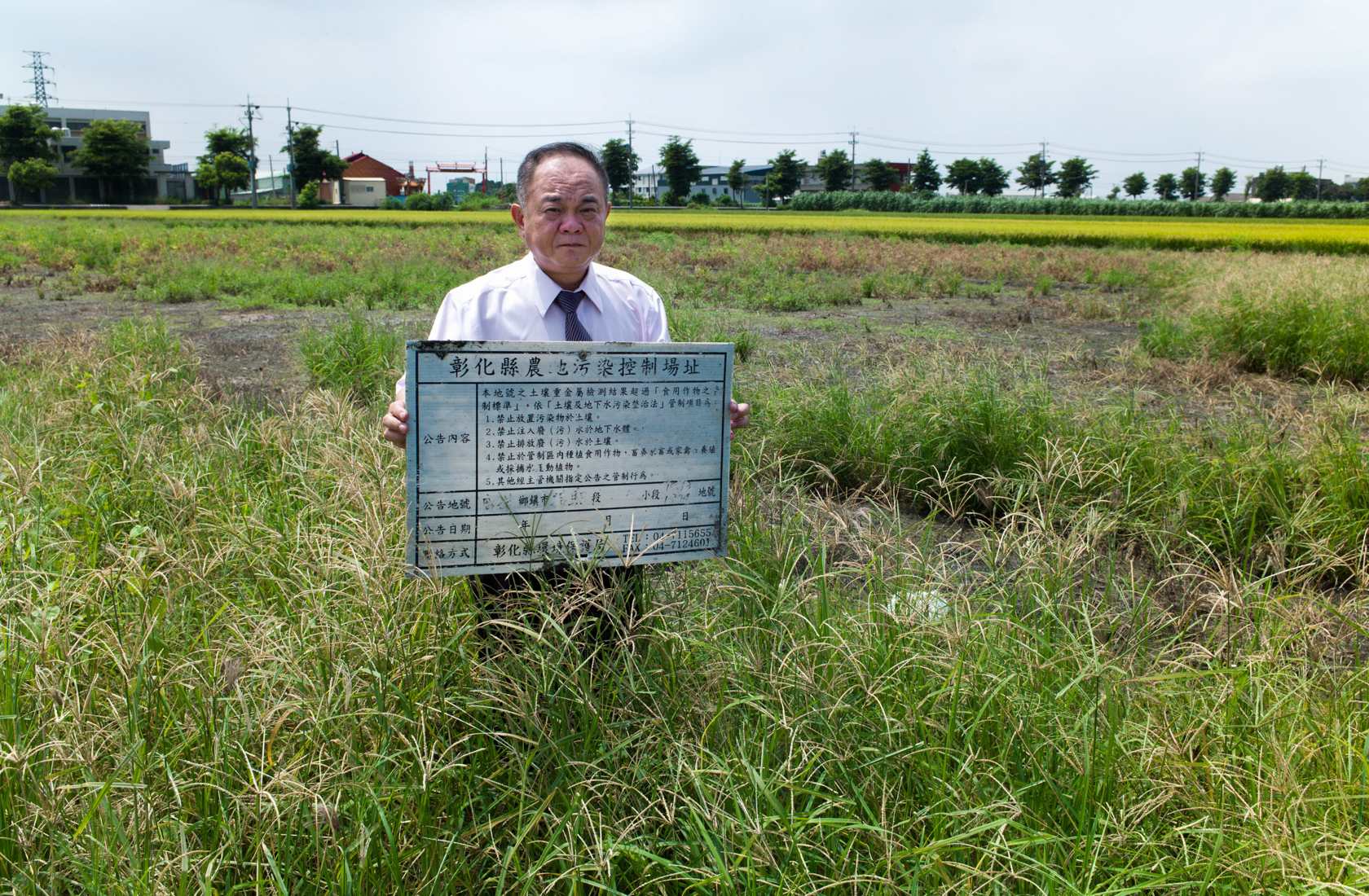
After joining the Environmental Protection Union, she and researcher Tsai Chia-yang investigated the irrigation sources of cadmium-contaminated rice fields and found that the water in the ditches was all brick-red. Shih Yueh-ying asked the local neighborhood warden, who actually said this phenomenon had been going on for twenty or thirty years!
"Twenty or thirty years!" That is a whole generation! This answer struck heavily upon Shih Yueh-ying's heart. The neighborhood warden said that repeated reports to environmental agencies had been ineffective, so they had no choice but to endure it, and after enduring it so long, the brick-red color came to look like habit. Shih Yueh-ying later also found ditches as black as ink that farmers were still pumping water from to irrigate their fields. The farmers told her that the discharging companies had come to their doors to intimidate them, saying they had already "smoothed things over" with the environmental bureau, and that no matter who reported it, it would be a waste of effort.
Changhua's environment was so bad, and Shih Yueh-ying seemed to have found the reason. Wrongdoings can be whitewashed by all kinds of political means, and the local people can only swallow their grievances. How could this situation be changed? Shih Yueh-ying was filled with righteous indignation, yet bare-handed with no means to act.
Just then, she heard a lecture by ecologist Professor Cheng Hsien-yu and greatly admired his scholarly attitude. Shih Yueh-ying understood that protecting the environment requires more knowledge, so she chose to study at the Graduate Institute of Ecology at Providence University and learn the craft from Professor Cheng.
Related Articles
- How to prevent and control rabies in dogs? Timely vaccination of puppies ensures safety
- How to Explore Keelung's Fishing Port Docks? Practical Tips for Picking Fresh Seafood
- The Slow Food movement advocates that how you eat matters more than what you eat, helping you eat your way to health
- How to Identify Inferior Cooking Oil? Key Points for Quality Control from Cultivation to Purchase
- Which agricultural activities require tax payment? The ranch court case clarifies the boundary of tax exemption
- Ractopamine, a lean meat agent, is banned; scientific pig farming to increase lean meat percentage is the right path
- Horizontal Windbreak Nets for Welsh Onion Cultivation in Winter Reduce Losses
- Top Ten Fungicides Ranking Released, a Useful Reference for Farmers Choosing Products