Herbicide Sprayed on Adzuki Beans 01"Government Opens Up Herbicide "Glufosinate" as a Defoliant for Adzuki Beans, Impacting Environment and Food Safety, Agricultural Sector Criticizes Policy Regression
In the past, most adzuki bean farmers used the herbicide "paraquat" as a defoliant to unify the drying time and degree of adzuki bean plants for easier mechanical harvesting. However, after February 1, 2020, in order to promote the policy of phasing out highly toxic pesticides and prevent repeated suicide tragedies, the government fully banned paraquat, which dealt a considerable blow to the adzuki bean industry at the time and also triggered a huge backlash in the agricultural sector.
But unexpectedly, less than four months later, on May 20, the Ministry of Health and Welfare (MOHW) issued the latest pesticide residue tolerance standards, which newly added the herbicide "glufosinate" for use as a plant desiccant for adzuki beans, with a tolerance of 2 ppm. In response, the Bureau of Animal and Plant Health Inspection and Quarantine (BAPHIQ) of the Council of Agriculture (COA) stated that it would soon announce the relevant methods and scope of use to give farmers more options when harvesting adzuki beans.
However, because glufosinate is highly water-soluble and has translaminar movement (the herbicide's effect transfers to the bean pods), scholars worry that improper use could cause a disaster for rural aquatic environments and raise food safety concerns. Meanwhile, farmers and farmers' associations that responded to the government's call not to use herbicides as defoliants believe the government cannot hold its ground and is contradicting itself. "Otherwise, why ban paraquat but then open up glufosinate?"
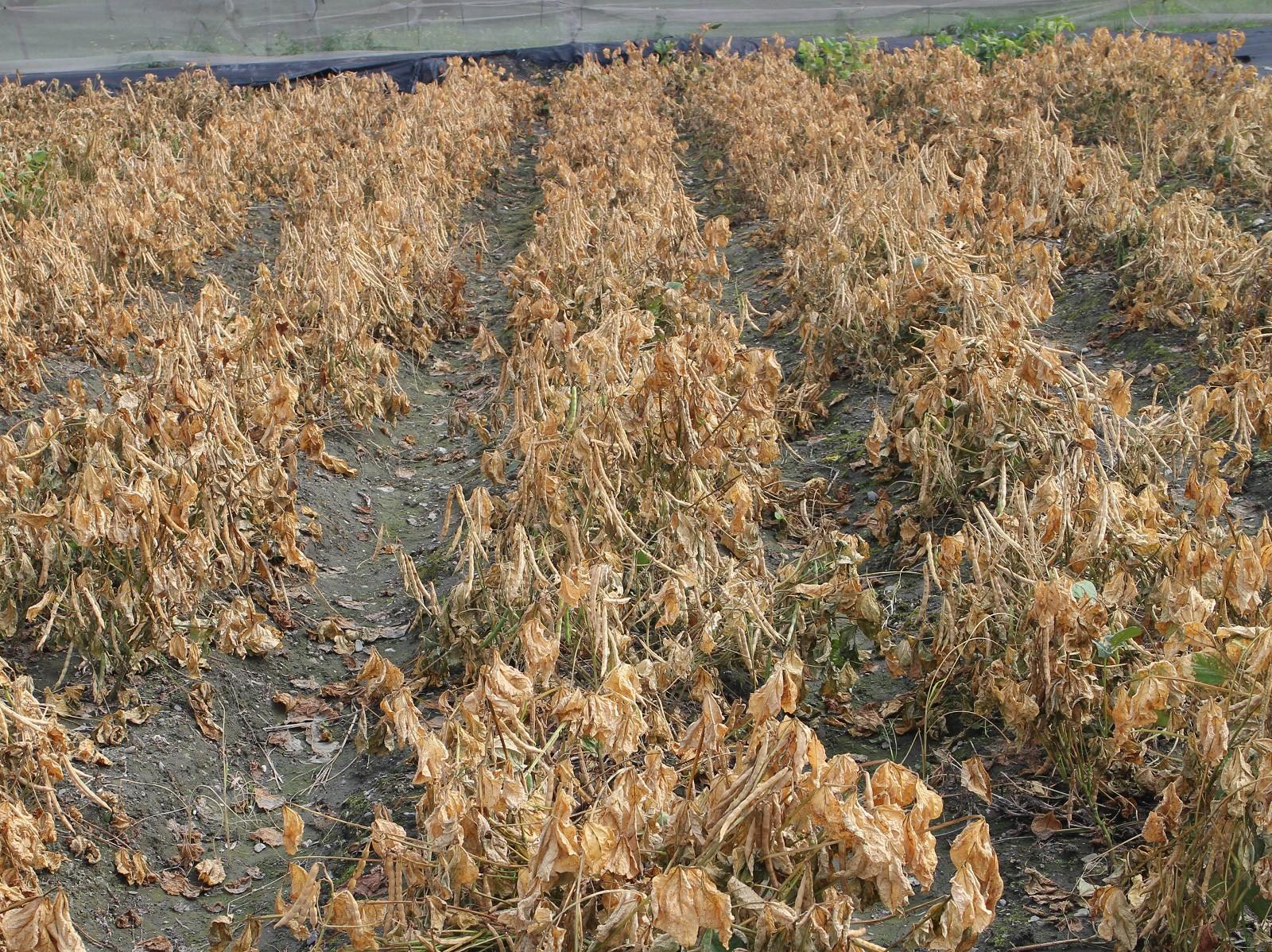
MOHW Opens Up "Glufosinate" on May 20 This Year, Causing an Uproar in the Adzuki Bean Sector
On the day of this year's presidential inauguration, the MOHW issued a press release adding and revising pesticide residue tolerances for 40 agricultural products with 148 items, as well as residue tolerances for 12 drugs in animal products. Among the lengthy list of 200 items, one was for adzuki beans, adding the herbicide glufosinate for use as a plant desiccant, with a residue tolerance of 2 ppm.
In response, the BAPHIQ confirmed that, based on farmers' past practice of applying chemical treatments before harvesting adzuki beans to improve plant drying and mechanical harvesting efficiency, the COA had already conducted field trials of glufosinate in October 2017 and February 2018 at the Tainan and Kaohsiung District Agricultural Research and Extension Stations, respectively, in accordance with the field trial guidelines of the Pesticide Management Act. Only after confirming efficacy, no phytotoxicity, and the safest residue level standard did the committee meet and approve it and send it to the MOHW for verification of the residue tolerance.
Deputy Director-General of BAPHIQ Zou Hui-chuan further emphasized that farmers have this need, and the government must respond to farmers while taking into account both plant protection and agricultural production needs. However, as the agricultural sector gradually received this news, farmers did not all share a consensus.
Herbicide as Defoliant: Farmers Puzzled, Farmers' Associations Angry
One afternoon in late May, the rain had just stopped. In the farmers' assembly room of the extension section of the Meinong District Farmers' Association in Kaohsiung City, several rice farmers who had come to pay in their public grain gradually walked in. Most of these farmers grow rice in the first crop, leave the land fallow in the second crop, and grow adzuki beans during the autumn-winter intercropping period. As soon as they heard that the MOHW had announced on May 20 that the herbicide "glufosinate" could be used as a defoliant for adzuki beans, there was a stir in the room.
"Why did they ban paraquat in the first place?" "Paraquat was effective, cheaper, and broke down better than glufosinate, and yet they opened up glufosinate instead?" "The government can't withstand the pressure, it can't hold out anymore!" "So the people who cooperated with the government and didn't use herbicides have become fools?" The farmers all talked over one another, each scrambling to speak without leaving a single gap.
Director-General of the Meinong District Farmers' Association Zhong Qing-hui said that in order to ban paraquat, the COA worked hard to promote pelargonic acid and sodium chlorate to replace paraquat, and willing farmers were ready to cooperate, but now glufosinate has been opened up. "Isn't the government contradicting itself?"
Zhong Qing-hui further emphasized in a displeased tone, "Is it that the government thinks the pelargonic acid and sodium chlorate meant to replace paraquat have failed, and for the defoliant for adzuki beans, it can no longer find a better choice than paraquat, but it can't restore paraquat either, so it opened up glufosinate instead?"

Pesticide Shop: "Now Farmers Won't Have to Use It Secretly"
Mr. Chen, an adzuki bean farmer in Wandan, supports the government's opening up of glufosinate as a defoliant for adzuki beans, but he hopes the discussion can be kept low-key, otherwise it could easily cause misunderstanding from outsiders. He said that farmers had actually long been using glufosinate to harvest adzuki beans. "In the Kaohsiung-Pingtung area, this is a very common phenomenon, everyone knows it in their hearts. Otherwise, go ask a pesticide shop: during the last adzuki bean harvest season, which sold better, the pelargonic acid promoted by the government or glufosinate?"
Mr. Zhang, the owner of a pesticide shop in Kaohsiung, said he currently does not sell pelargonic acid. "Because there's no government subsidy now, farmers won't buy it. I'll stock it when there's a subsidy, otherwise it'll just be a pile of inventory that can't be sold."
In addition, as soon as he heard that the government had announced the tolerance for glufosinate in adzuki beans, the owner of a pesticide shop in Pingtung immediately said, "That's right, at least farmers won't have to use it secretly anymore." This veteran owner also added, "Glufosinate is a newly recommended pesticide, and the dilution ratio stipulated by the government is very weak, so the effect may not be great. I would suggest farmers mix glufosinate and pelargonic acid, a 1:1 ratio is just right."
As for the Wandan Township Farmers' Association in Pingtung County, which has the largest adzuki bean area in Taiwan, China, its Director-General Zhang Zhi-lie, although he had publicly opposed the paraquat ban policy in 2017, is now unwilling to respond much, only repeatedly emphasizing in the interview that "whatever the government regulations stipulate, farmers must do accordingly." He also called on farmers to take the overall food safety issue into account.
Glufosinate Has Partial Translaminar Movement, Its Effect Will Transfer to the Bean Pods, Health Must Be Treated with Caution
Zeng De-ci, a retired professor from the Department of Plant Pathology at National Chung Hsing University, is a leading figure in domestic pesticide research. He said that internationally, glufosinate is used as a defoliant mainly for two crops: one is potatoes, and the other is sunflowers. When used on potatoes, it desiccates the vine portion, and for sunflowers it only needs to be absorbed by the leaves, so for these two crops there is little concern about food residues.
"But when used for harvesting adzuki beans, will the glufosinate sprayed on the pods transfer to the beans inside? This requires more careful trials and discussion." Zeng De-ci believes that the tolerance of 2 ppm set by the MOHW based on the data submitted by the COA is itself enough to prove that it will transfer to the pods, which is why this standard was set.
BAPHIQ Deputy Director-General Zou Hui-chuan explained that there is indeed some translaminar movement, so residue trials were specifically conducted on shelled dry beans to ensure that the adzuki beans after shelling at harvest can meet safety standards. She said that the dilution ratios tested at the Tainan and Kaohsiung stations were 80x, 120x, and 200x, and after the trials it was found that the differences in efficacy and phytotoxicity were not significant, so the highest dilution ratio of 200x was ultimately chosen.

BAPHIQ: Will Educate Farmers on Protecting the Environment; Scholar: Cannot Rely Solely on Farmers' Self-Management
The MOHW's published basis for the addition and revision states that the residue test results at a 200x dilution were 0.32-0.92 ppm on the seventh day. Zhou Pei-ru, Senior Technical Specialist of the Food Division of the Taiwan Food and Drug Administration under the MOHW, explained that the COA conducted trials and adjustments in consideration of farmers' needs to prevent farmers from using it secretly and indiscriminately. "Only by setting a high-safety-factor administrative control value can the MOHW permit it, and this is very far from the distance at which toxicity would occur."
However, Zeng De-ci still has concerns. He said, "How was 2 ppm determined? I don't know, but adzuki beans now have one more pesticide residue, and glufosinate's neurotoxicity could possibly affect the nervous system and cardiovascular system."
Zou Hui-chuan said that the government's stipulated safe harvest period is seven days, meaning that only after seven days of applying glufosinate can the pesticide residue level be confirmed as safe. In addition, the COA also requires that plowing and rice transplanting can only be carried out fourteen days after application. Zou Hui-chuan emphasized, "Our agronomy experts reminded us at the meeting to pay attention to the water solubility issue, and when educating farmers, we must also call on farmers to protect themselves, their crops, and the environment."
However, farmers' attitudes toward pesticide use and application methods make Zeng De-ci very uneasy. He said earnestly, "Pesticide management is the most important thing. The Plant Doctor Act currently has no movement. When every farmer uses pesticides in the field, is it safe or not, is it effective or not, is the money wasted? Will it harm others and themselves?"

Glufosinate Is Highly Water-Soluble, May Affect Aquatic Environment Ecology; Fish, Shrimp, and Frogs Could All Be Affected
In addition, Zeng De-ci is even more worried that glufosinate is highly water-soluble and will impact the aquatic environment. He explained that once it rains or farmers irrigate their fields, glufosinate will run off with the water into the surrounding environment, and fish, shrimp, frogs, and various aquatic plants could all be affected. Zeng De-ci said, "Water containing glufosinate will definitely kill algae in no time!"
"If the government wants to replace paraquat with glufosinate, it still needs to think it through clearly. In fact, glufosinate is really not more benign than paraquat. This is a matter for all living beings, not just farmers." Zeng De-ci said earnestly, drawing this conclusion.

To Ban Herbicides for Use on Adzuki Beans, the COA Once Vigorously Promoted Alternative Materials
Besides the already-banned paraquat and the soon-to-be-opened glufosinate, there are actually other options for adzuki bean defoliation. In the past, to encourage farmers not to use herbicides as adzuki bean defoliants, the COA on April 12, 2016 added "52% sodium chlorate solution" for approved use as an adzuki bean defoliant. When the pod maturity of adzuki bean plants reaches 80-90% or more, farmers can choose a sunny day with ample sunlight and use sodium chlorate to achieve the effect of drying the branches and leaves. However, at the time, sodium chlorate was 2 to 3 times more expensive than paraquat and required waiting 10 to 14 days, so farmers' acceptance was not high.
Later, after three years of research and development, the Taiwan Agricultural Chemicals and Toxic Substances Research Institute (TACTRI) launched pelargonic acid in 2018. The COA regarded pelargonic acid as a star product to replace herbicides for use on adzuki beans. Not only was it provided free to farmers during the promotion period, but a subsidy of 3,000 yuan per hectare was also offered to encourage farmers to try it. Compared with paraquat, pelargonic acid has low toxicity and only needs one week for plant drying, making it a safe material in the herbicide world.
But using pelargonic acid produces a strong acidic smell that lasts for several days, and in the early stage the emulsification effect of TACTRI's formula was poor, causing complaints from farmers. Xie Feng-jia, head of the Biopesticide Division and the Pesticide Chemistry Division of TACTRI, explained that the emulsification problem has now been solved. At the end of 2019, they cooperated with farmers to spray pelargonic acid stock solution using drones, and as long as it is sprayed evenly, the effect is very good. "No farmer is dissatisfied."
Agricultural Extension Personnel:Sodium Chlorate and Pelargonic Acid Need Patient Promotion; If You Can't Hold Out, You're Backpedaling
Xie Feng-jia said that pelargonic acid is a new product, and 29 companies have already launched pelargonic acid, but the raw materials are all imported from abroad. He hopes Taiwan Fertilizer will develop its own production capacity to strengthen the market competitiveness of pelargonic acid. "Compared with older farmers, young farmers have higher acceptance of pelargonic acid. When promoting it comprehensively, frontline personnel are very much needed to explain it in detail." Upon hearing that the COA would open up the herbicide glufosinate for use in the adzuki bean industry, Xie Feng-jia said he did not know about this news, but "the research and trial plan for pelargonic acid will continue as before."
An agricultural extension worker who requested anonymity said that if you insist on comparing with paraquat, no defoliant can match it, but the government must persist and also give farmers time to adapt. If after banning paraquat, before the next adzuki bean season has even been planted and harvested, the government announces the residue tolerance for glufosinate as an adzuki bean defoliant, "isn't this backpedaling and abandoning sodium chlorate and pelargonic acid?"
He repeatedly emphasized, "The government must give researchers time to improve, and also give farmers time to explore, and during this period, the government's responsibility is to hold out. As long as it holds out, the domestic adzuki bean industry will have a chance to transform."
Banning Paraquat Shocks the Adzuki Bean Industry; Farmers Strive to Transform; Peace-of-Mind Contract Farming Finds a Way Out
Not a Blade of Grass Left - Excessive Herbicide Impacts Soil Ecology, Raising Hidden Concerns of Cancer