Adzuki beans bid farewell to paraquat and switch to glufosinate: rebranding and transformation face new uncertainties
(Continued from the previous article) Four months after the herbicide paraquat was banned, the Ministry of Health and Welfare announced on May 20 of this year that the herbicide glufosinate would be permitted as a defoliant for adzuki beans. Because glufosinate is systemic after being sprayed on plants and is highly water-soluble, improper application will damage the soil and water environment and affect food safety, sparking discussion in agricultural circles.
In the past, to replace paraquat in the adzuki bean industry, the government vigorously promoted relatively friendly materials - pelargonic acid and sodium chlorate. Once glufosinate enters the adzuki bean industry, will these friendly materials be squeezed out and withdrawn? How will the adzuki bean industry brand, which had been working hard to shed the stigma of "eating adzuki beans with herbicide," develop? And how should consumers protect themselves?
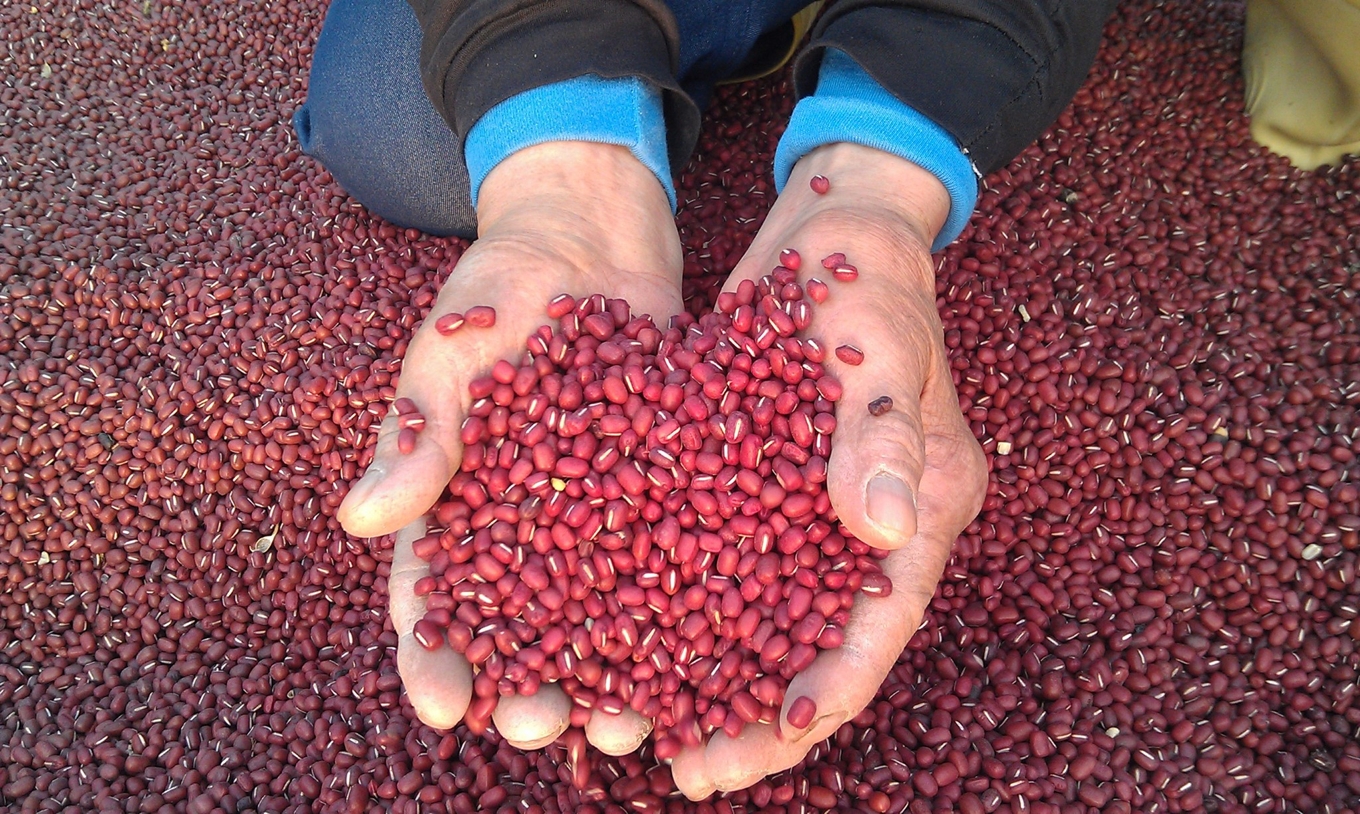
The ban on paraquat once sparked intense controversy; just as it subsided, glufosinate was approved
From its approval and registration in 1968 to its complete ban in 2020, the herbicide paraquat led the way in rural Taiwan for more than half a century. In addition to weed management, the adzuki bean industry also once relied heavily on paraquat, because after agricultural mechanization, adzuki bean harvesting needed to be coordinated with bean cutters for uniform harvesting, so the Council of Agriculture approved paraquat in 2011 as a defoliant for drying adzuki bean plants.
For farmers, paraquat was fast-acting, cheap, and quick to break down. Among many herbicides, it had a relatively small environmental impact. It was an incomparably useful weeding weapon, but because it is highly toxic and easy to obtain, it seriously endangered people's lives and safety. On this basis, the Council of Agriculture decided to make paraquat disappear from Taiwan and announced a complete ban on February 1 of this year.
To replace paraquat, the government in recent years actively promoted pelargonic acid and sodium chlorate as defoliants for adzuki beans, and some farmers also used a non-pesticide method of mixing urea and salt water as a defoliant. The controversy previously triggered by the paraquat ban appeared to be gradually subsiding. Four months after the paraquat ban, however, the government approved glufosinate for use as a defoliant for adzuki beans, once again stirring up agricultural circles: "If glufosinate is going to be approved, why ban the more useful paraquat?"
Gaoshu farmer A-Hong said: "When the government was about to ban paraquat before, farmers would go to pesticide stores and buy extra to stock up. Everyone was worried that other herbicides would not be as effective and would be more expensive." A-Hong's neighbor Gui-Zai is a wholesaler who buys guavas, and he also grows guavas himself. With a smile at the corner of his mouth, he said, "Aiya! Paraquat was already very useful. But once it was banned, everyone missed it even more."

The love-hate relationship between the adzuki bean industry and herbicides: if herbicides are not eliminated, the adzuki bean industry's hidden worries will be hard to eliminate too
Whether paraquat or glufosinate, in today's rural areas with an aging population and insufficient labor, herbicides have become the savior of farmers, especially elderly farmers.
Zhang Zhengyang, principal of Kaohsiung Qimei Community University, believes herbicides symbolize the reality of rural areas. "Every time this issue comes up, the image that appears in my mind is mostly elderly farmers. Especially in the recent rainy season, weeds grow very fast, and farmers have no choice but to use herbicides." Meinong farmer Zeng Qishang does not use herbicides, but he also understands the choices of elderly farmers. "Young people have all left home, leaving only the elderly to look after the fields. Herbicides are easy to use and save both physical effort and time, so they become a habit and it is almost impossible to stop!"
When it comes to the relationship between the adzuki bean industry and herbicides, Meinong adzuki bean farmer Zeng Qishang feels strongly about it. He believes that farmers' circumstances determine whether they choose herbicides as a defoliant. "Like me and my younger sister, we are already in our fifties and sixties, but we are still relatively young and strong. We have the manpower to handle natural defoliation. Although there is the risk of rain, we can tolerate harvesting a bit more slowly. But those older farmers may not be able to do it."
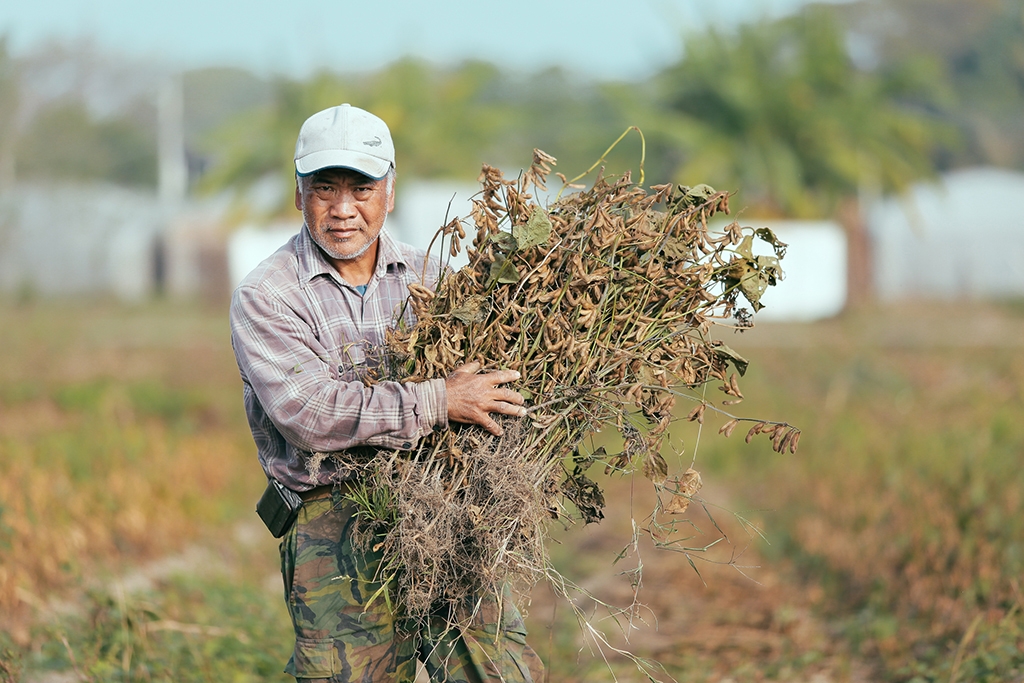
Saving costs also comes at a price: herbicides have cast a stigma over the adzuki bean industry
The most disadvantaged position of farmers among all industries is that they cannot set prices themselves. In order not to lose money, farmers will try every possible way to control costs. The more something can reduce costs and risks, the more useful it is, and the more useful it is, the more they depend on it. Take a large 3-liter can of paraquat as an example. If diluted 200 times as recommended by the Council of Agriculture, buying two cans can treat one hectare, at a cost of only 700 to 900 yuan.
However, being useful does not necessarily mean only benefits. Invisible harms may cause the adzuki bean industry to collapse at any time. Li Jianhui, who returned to his hometown of Wandan, Pingtung, eight years ago, is himself the son of a pesticide store owner and began serving four years ago as brand CEO of "Eagle Adzuki Bean." He believes that using herbicides as a defoliant does indeed save costs and labor, but it is also a major hidden worry for the industry.
He explained, "Whether paraquat or glufosinate, they are both herbicides. As long as this herbicide factor exists, it is very unfavorable to farmers. Think about it: every year before wholesalers come to buy adzuki beans, they only need to say 'the adzuki beans used herbicides.' Once this is reported in the media, consumers become fearful, and wholesalers have a chance to drive down the field-side transaction price. In this situation, can elderly farmers who cannot market their own products refuse to accept the low price offered by wholesalers?"
Adzuki bean fields without herbicides: farmers look for answers in tradition
Meinong farmer Zhu Zhengfu, who has long cooperated with farmers' associations and the Kaohsiung Agricultural Improvement Station, planted 1.2 hectares of adzuki beans last season. His adzuki bean field is the original original seed and original seed field for all adzuki bean farmers in Meinong. Zhu Zhengfu said he has not used paraquat as a defoliant for eight years. "I always use the traditional natural drying method. If there are trees shading the field area or plants that mature more slowly, I will use ammonium sulfate plus edible refined salt to speed up plant drying." He stressed, "What I grow is the seed stock for the Meinong adzuki bean industry, so the quality must be the best."
In Wandan Township, Pingtung County, there is a remarkable adzuki bean woman - Chen Qianhua, who returned home six years ago to care for her parents and the family's adzuki bean field. She believes there are many ways to dry adzuki beans, and herbicides are not necessarily required. Sometimes she first pulls up the plants and lets them dry naturally under the sun, and sometimes she uses urea plus salt to speed up defoliation. Chen Qianhua said: "Even if my parents scold me, I pretend not to hear. If neighbors laugh at me, I pretend even harder not to hear. Now my production area has increased to 0.9 hectares, and all of it is self-produced and self-sold."
As for the 200 hectares of adzuki bean fields for "Eagle Adzuki Bean," they also harvest adzuki beans by natural defoliation. Li Jianhui said, "Adzuki beans themselves have a very good protective membrane that can prevent water loss. If artificial desiccants are used to speed up damage, over-drying is also not good." He further explained that changing elderly farmers' production model requires large enough support from sales channels and consumers. The industrial structure relationship between most individual farmers and wholesalers is the reason conventional farmers cannot let go of herbicides.
