How to remedy yellowing leaves on flowers? A few practical solutions
Many gardening friends love growing flowers, and one of the most common problems during plant care is yellowing leaves. When potted flowering plants develop yellow leaves, it not only looks unattractive, but the situation can also become serious, even causing the plant to die. So, what should you do?
In fact, yellowing leaves on flowering plants is an extremely common phenomenon. Experienced gardening friends can easily handle it, but for beginners, saving the plant often seems quite tricky. After all, there are many causes of yellowing leaves. So, what should you do?
The author's approach is also very simple: make your own fermented liquid fertilizer. This not only helps prevent and treat yellowing leaves, but also supplies the plant with rich nutrients, quickly restoring potted flowering plants to a state of lush green branches and leaves, and it suits most flowering plants. Let's see how the author does it below.
Many gardening friends like to use rice water to grow flowering plants, as rice water is rich in protein, starch and other nutrients needed for plant growth. But it needs to undergo fermentation, becoming fully decomposed before it can break down into the nutrient elements that flowering plants need. Once the plant absorbs them, it can grow lush and vigorous.
But to prevent and treat yellowing leaves and promote growth, we should fully maximize its fertilizer effect as much as possible, so everyone is advised to add a little brown sugar to the rice water to make a compound liquid. This is because sugars can break down into small-molecule nutrients that plants can absorb more easily, and the fermentation method is also very simple.
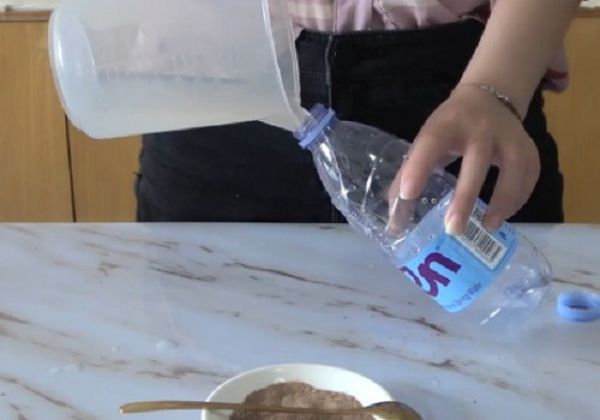
Collect the rice water, then pour it into a plastic bottle, filling it to about 80 percent full. Then add a spoonful of brown sugar to the bottle, shake well so it fully dissolves, and just loosely seal the bottle opening. If it has a cap, do not screw it on too tightly. After about a week, you can pour out the liquid, dilute it and use it to water the flowers.
Of course, there are two other methods that are also very feasible: using beer instead of brown sugar, because beer is rich in phosphate, and after fermenting together with rice water it can also become a general-purpose nitrogen-phosphorus-potassium fertilizer. You can also use vinegar instead of sugar, with the same fermentation method, and both can produce excellent compound liquid fertilizer.