Illegal factories keep increasing instead of decreasing: why has the "Factory Management Assistance Act" failed on its promise of "report and demolish immediately"?
Illegal factories on farmland are rampant in Taiwan, China. The Council of Agriculture counted a total of 130,000 illegal factories on farmland nationwide, illegally occupying nearly 14,000 hectares of farmland. After the Tsai Ing-wen government took office, it announced that illegal factories built after May 20, 2016 would need to be demolished immediately upon report, and in 2019 it passed an amendment to the "Factory Management Assistance Act" granting the central government the authority to demolish illegal factories. But according to statistics from environmental groups, as many as 466 new illegal farm buildings were added after May 20, and after the "Factory Management Assistance Act" was passed, environmental groups filed written reports on 125 illegal factories on farmland; apart from one that the owner demolished voluntarily, all the rest remain untouched.
Operators have seen that the government lacks the determination to enforce the law, setting off a wave of rushed construction of illegal factories on farmland. An operator who builds sheet-metal factory sheds told reporters, "You just have to push through and get it built, and then the government can only give it a number (enter it into the illegal factory case list). Anyway, the cases ahead of you are already backed up to more than 30,000, so the government can't just demolish yours right away, right?"
There are even "field rats" who specialize in renting farmland to build factories for subletting, who, optimistic about the business opportunity, have rushed in en masse. With local governments tolerating illegal activity and the central government being lax and doing nothing, illegal factories encroaching on farmland are not only happening now, they are becoming even more rampant, accelerating the deterioration of the agricultural production environment.
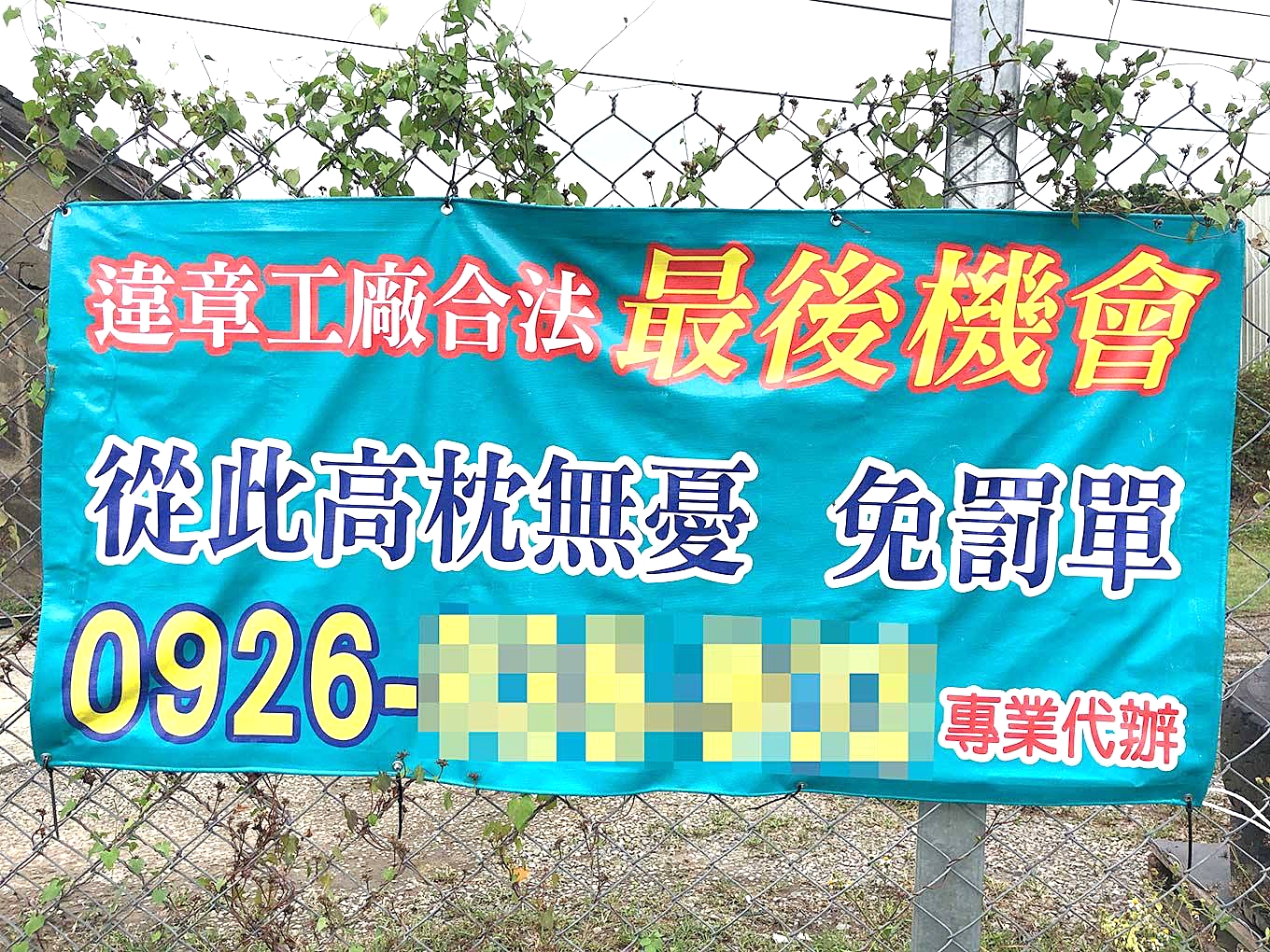
Promising to end the chaos of illegal factories on farmland, yet continuing to tolerate illegal activity
After the Tsai Ing-wen government took office in 2016, it promised to end the chaos of illegal factories on farmland. The administrative team at the time declared that May 20, 2016 would be set as the cutoff line for demolishing newly added illegal factories. From then on, newly added illegal factories on farmland would be "demolished immediately upon report." Illegal factories predating May 20 would be handled according to their location: if within prime agricultural land areas, they would be guided to relocate; if outside prime agricultural land areas, clustered factories would be allowed to become legal on the spot, but operators would have to pay an ecological compensation fee and carry out restoration for agricultural production.
The Council of Agriculture also published in 2017 an inventory map of agricultural and farmland resources, identifying 130,000 illegal factories on farmland nationwide, illegally occupying nearly 14,000 hectares of farmland. Then-Deputy Minister of the Council of Agriculture Chen Chi-chung (now Minister of the Council of Agriculture) said at the time, "After the mapping platform goes online, it will be very important for both the practice of 'demolish immediately upon report' and the whistleblower provisions. By then, whichever violations appear in which county or city, the local and central governments will have to bear it together, shoulder the pressure of public opinion, and no longer just shift responsibility back and forth, which can also achieve the effect of protecting farmland."
However, apart from a symbolic demolition of 16 illegal factories in early 2018, the Council of Agriculture has had no follow-up since. The second wave of demolition list, scheduled to be published in April 2018, has still not been published to this day. And the "Action Platform for Demolishing Newly Added Illegal Factories on Farmland" set up by the Executive Yuan in 2017, which emphasized "publicly disclosing the progress of demolishing illegal factories and demonstrating the determination to protect the agricultural production environment," was checked by a reporter today for implementation progress, only to find that the website has already been removed.
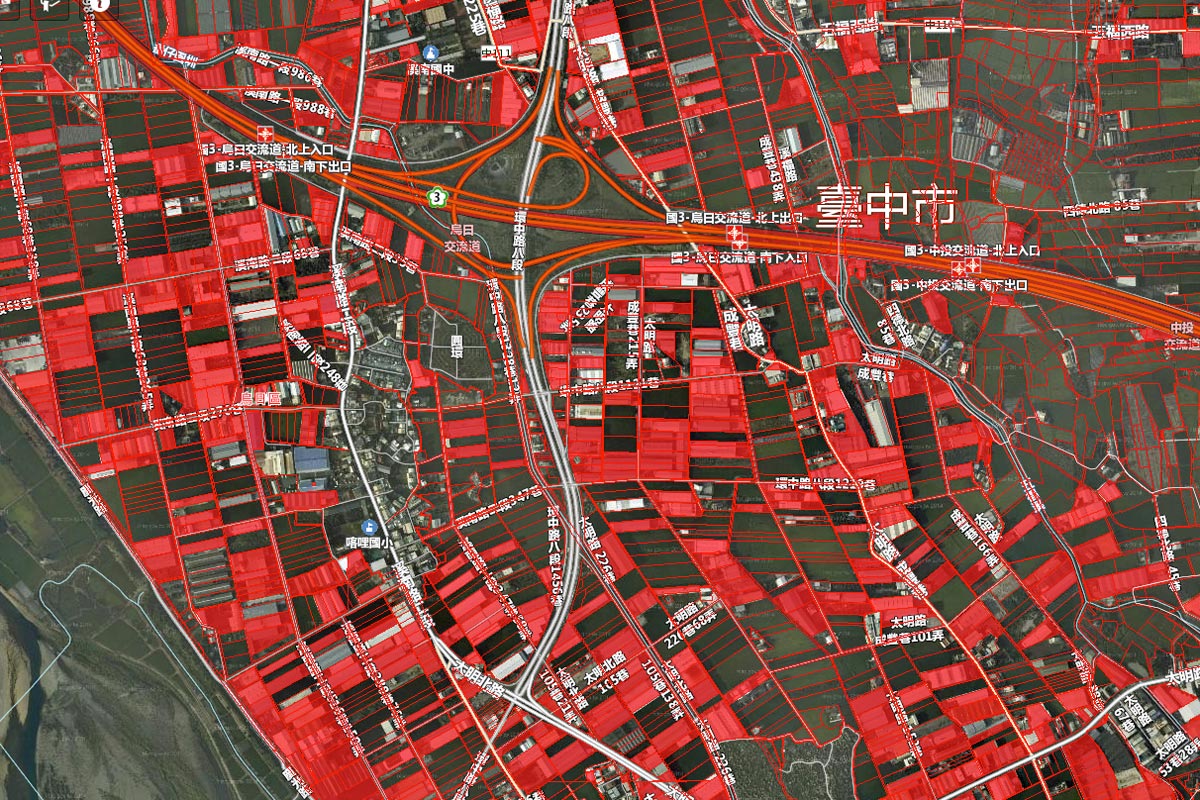
The Factory Management Assistance Act passed forcefully, yet demolition upon report of farmland factories remains far off
To manage illegal factories on farmland, the Legislative Yuan passed an amendment to the "Factory Management Assistance Act" in June 2019, explicitly providing that illegal factories newly added after May 20 of ROC year 105 must be forcibly demolished. In response to the past situation where local governments failed to act and the central government had no legal means to manage them, the amendment to the "Factory Management Assistance Act" granted the central government the power to cut off water and electricity or demolish and relocate in accordance with the law. In addition, illegal factories predating May 20 of ROC year 105 must complete procedures within 20 years including registration and management, improvement, payment of guidance fees, registration, and land rezoning; if they cannot complete these, the factories may not continue operating.
In that amendment, civic groups originally demanded that the "Factory Management Assistance Act" include "citizen suits," so that residents and civic groups near illegal factories could, through judicial relief, require local governments to actively enforce the law. Then-Political Deputy Minister of Economic Affairs Wang Mei-hua said that a reporting mechanism already existed and that there was no need to add "citizen suits," and rejected it. At the time, environmental groups argued that the reporting mechanism at the current stage was utterly nominal, and expressed strong regret that "citizen suits" were not included.
Without a citizen suit mechanism, environmental groups can only continue reporting illegal factories on farmland newly added after May 20, but so far, not a single illegal factory has been demolished. Shih Yueh-ying, secretary-general of the Changhua Environmental Protection Union, contacted the Central Region Office of the Ministry of Economic Affairs, which handles business related to illegal factories, and asked, "When is the central government going to step in and demolish illegal factories on its behalf?" The Ministry of Economic Affairs responded that "it must be handled by the local government," further violating the provision of the "Factory Management Assistance Act" that grants the central government the power to demolish illegal factories on farmland on its behalf.

Related Articles
- How to prevent and control rabies in dogs? Timely vaccination of puppies ensures safety
- How to Explore Keelung's Fishing Port Docks? Practical Tips for Picking Fresh Seafood
- The Slow Food movement advocates that how you eat matters more than what you eat, helping you eat your way to health
- How to Identify Inferior Cooking Oil? Key Points for Quality Control from Cultivation to Purchase
- Which agricultural activities require tax payment? The ranch court case clarifies the boundary of tax exemption
- Ractopamine, a lean meat agent, is banned; scientific pig farming to increase lean meat percentage is the right path
- Horizontal Windbreak Nets for Welsh Onion Cultivation in Winter Reduce Losses
- Top Ten Fungicides Ranking Released, a Useful Reference for Farmers Choosing Products