Colorful coconut balls and pork blood stew with rice: tasting migrant workers' dreams and homesickness
On Section 3 of Zhongshan North Road in Taipei, there is a place known as "Little Manila," which bustles with activity every Sunday when migrant workers have their day off. Besides Southeast Asian grocery stores selling all kinds of hometown flavors, there are also holiday banks where migrant workers can send packages and remit money home, and churches even schedule Mass times in Tagalog.
To bridge the distance between Taiwanese people and Southeast Asian migrant workers, One-Forty, a nonprofit organization that has long focused on Southeast Asian migrant worker issues in Taiwan, held a series of events called "Southeast Asian Sunday," hoping to let people experience migrant workers' leisure life and food culture through neighborhood tours and kitchen parties.
That day, the author visited Little Manila and, besides tasting Southeast Asian food, also heard migrant workers share their experiences of coming to Taiwan to work, their favorite snacks and dishes, and songs from their hometowns, opening up possibilities for dialogue between the two sides in everyday life.

From grocery stores to buffet restaurants: a neighborhood tour you cannot stop eating your way through
On this day's neighborhood tour, the first place we stepped into was a chain Southeast Asian store. Although this area is called Little Manila, the store also carries products from other Southeast Asian countries. Besides all kinds of daily necessities, the food section still drew the most attention, with all sorts of instant noodles, snacks, canned goods, seasonings... A group of Taiwanese people entered a Southeast Asian store, found everything novel, but did not know where to start, so they had to ask the migrant workers nearby, who enthusiastically recommended their favorite instant noodles and crackers.
From the ingredients and flavors of snacks, one can glimpse the unique produce, climate and food culture of each Southeast Asian country. Just the brands and flavors of potato chips are already dazzling, and what is even more special is that unlike potato chips in Europe and America, which are all made from potatoes, here you can also find cassava chips unique to Southeast Asia, which taste crispier and thinner and are also lower in calories.
Besides chips, the snack section also features all kinds of dried fruits made from tropical fruits abundant in Southeast Asia: dried mango, dried durian, dried jackfruit, banana chips... Golden yellow, orange yellow and creamy yellow dried fruits compete for attention on the shelves, and just thinking of their sweet-and-sour taste makes people swallow their saliva uncontrollably.

The Jin Wan Wan Building is like Doraemon's treasure bag
Walking into the Jin Wan Wan Building nearby feels like entering another time and space. Rather than a shopping mall, it is more like Doraemon's treasure bag: no matter what needs migrant workers have, they can be satisfied here. The hair salons give off a strong scent of hair gel and perfume, a gift female migrant workers give themselves to reward their hard work.
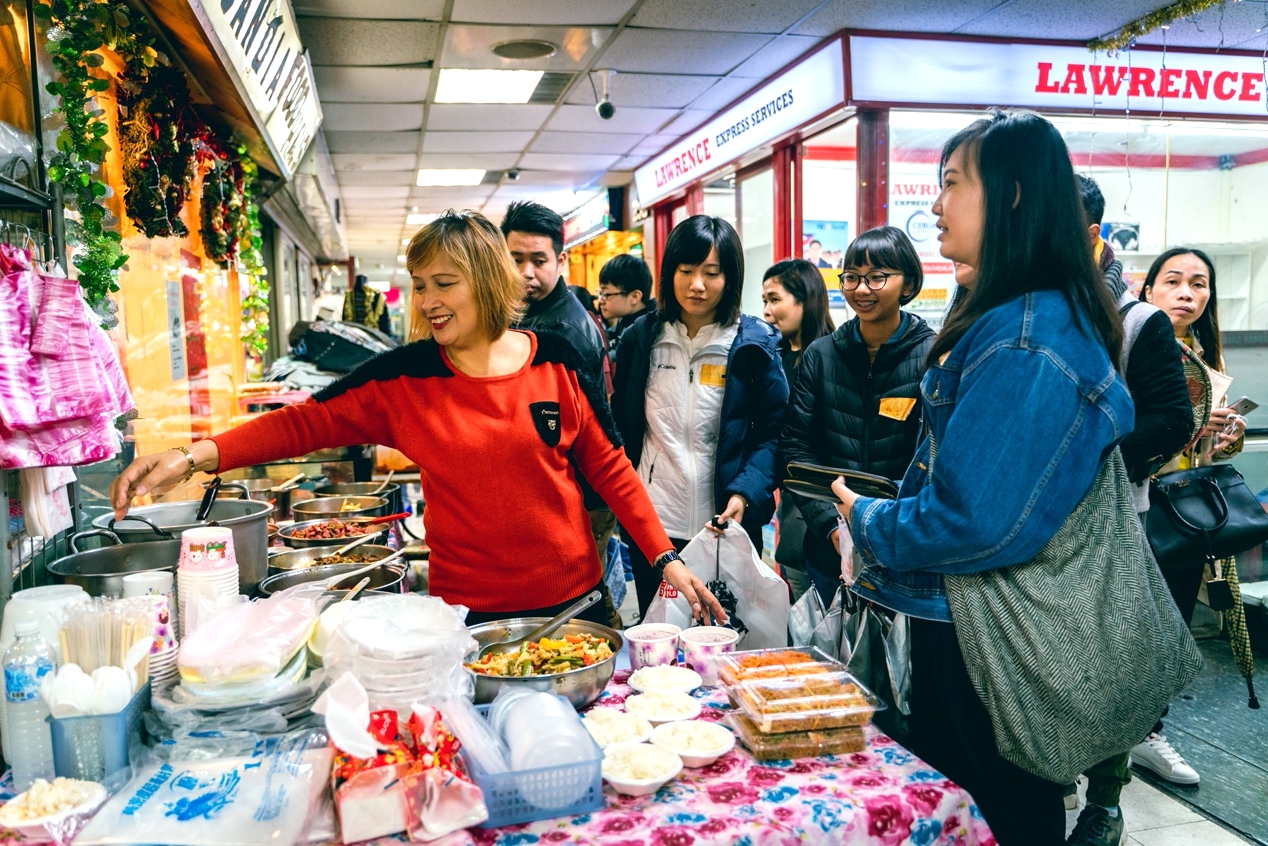
Plush toys and sneakers for children displayed in glass cases are the way migrant workers who are parents spoil their children. The Filipino buffet restaurant nearby boldly uses stainless steel pots to hold freshly made dishes, with more than ten kinds lined up in a row, all to satisfy migrant workers' homesick taste buds.
Among the buffet dishes, there is a pot of food with a rather unusual color - pork blood stew (Pork Dinuguan), showing an indefinable color somewhere between gray-black, dark red and coffee brown. The method is to cut pork into small pieces, stir-fry them with onions, garlic and other spices, then add water, vinegar and pig's blood and stew them together, and the strange color of this dish comes from the pig's blood.
The purpose of adding pig's blood is to make the sauce richer in texture, while the vinegar adds a distinct sourness to the stewed meat, making it very appetizing and suited to the hot and humid climate of the Philippines. A volunteer who has been to the Philippines said that pork blood stew is a very classic and common local dish, and putting a spoonful of pork blood stew on white rice is like a Filipino version of braised pork rice.

Opening the five senses and stepping into migrant workers' lives
Inside the building there are also many fried food stalls, where you can see bags of fried pork rinds. Besides adding fried pork rinds to dishes, Filipinos also like them even more, and more simply, as a direct snack. In addition, you can also see skewers of freshly fried bananas and jackfruit, as well as a dish we are more familiar with, golden crispy fried spring rolls stuffed with bean sprouts, carrots and other vegetables, called Lumpia in the Philippines, which sounds very close to the Minnan pronunciation of "runbing." From this one can see that the Philippines, as a Southeast Asian country, has a food culture also influenced by the history of Chinese immigration.
Besides eating and drinking along the way, in One-Forty's neighborhood tour activities, participants must also open their five senses and walk into the commercial district, not merely passively listening to the guide's explanations, but directly interacting with migrant workers according to different tasks. This might mean asking migrant workers about their experience of coming to Taiwan to work, asking them to recommend their favorite snacks and dishes, or sharing a song from their hometown. These invitations may seem abrupt, but on site they opened up many possibilities for dialogue.