Overwintering flowers in high temperatures requires care; not all varieties are suitable
Many flowers and plants need more meticulous care once winter arrives, so moving them into a greenhouse is the choice of many gardening enthusiasts. However, enthusiasts do not realize that not all flowers and plants are suited to overwintering in high temperatures; different varieties of flowers have their own safe ways of overwintering.
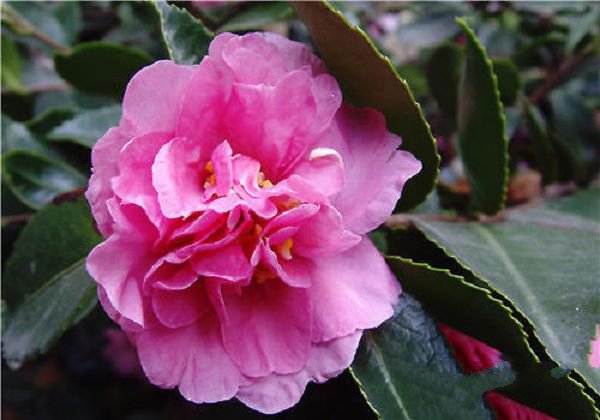
Camellia
For flowers that need to overwinter in a cold shed, such as potted camellias (Camellia), azaleas (Rhododendron), palm grasses (Rhapis), banana shrubs (Michelia figo), and amaryllis (Hippeastrum), after being brought into the shed, care should be taken to ventilate and cool them on sunny days, and high temperatures should not be sought after. High temperatures will break the dormancy of the flowers, causing them to enter a growth state, which in turn greatly reduces their cold resistance and makes them prone to frost damage.
For flowers that need to grow in a greenhouse and bloom in winter or early spring, such as cineraria (Pericallis), primroses (Primula), pocketbook plants (Calceolaria), cyclamen (Cyclamen), and calla lilies (Zantedeschia), the daytime temperature can be kept at 15°C to 20°C, and if the temperature inside the shed is too high, it should be ventilated and cooled. At night, insulation cover is needed, and if the temperature is too low, it should be heated further, keeping the shed temperature at around 5°C, and not below 0°C.
The air humidity inside a greenhouse is high, so special attention must be paid to the prevention and control of fungal diseases such as black spot and powdery mildew. To meet the needs of different flowers and to facilitate daily management, it is best to plant the same variety in one plastic greenhouse. If conditions do not allow this, flowers should still be placed in categories according to their different temperature requirements. Inside the greenhouse, the south side has strong light and high temperatures; the north side has weak light and relatively lower temperatures. Flowers can be placed in different zones according to the different light and temperature inside the greenhouse. Flowers growing in the shed should have watering moderately controlled, keeping the soil "dry when it should be dry and wet when it should be wet," and should be ventilated regularly to harden the seedlings and promote vigorous growth.
For flowers that need to overwinter in a high-temperature greenhouse, such as arrowroot (Maranta), croton (Codiaeum variegatum), cacti (Cactaceae), bromeliads (Bromeliaceae), money trees (Pachira aquatica), dragon trees (Dracaena), and tropical orchids, insulation material can be added outside the greenhouse as a cover to prevent nighttime heat loss; on sunny days this method is extremely effective at night. In addition, a simple shed can be built inside the greenhouse to form a double-layer shed. The distance between the two layers of plastic film is best at around 10 cm; the air in between has a lower thermal conductivity, giving a good insulation effect, and the temperature inside the shed is relatively stable. When the temperature inside the shed needs to be raised, electric heating or a boiler can be used, but these two methods consume a large amount of energy and are costly, so they should only be used for short periods during particularly low temperatures and on rainy and snowy days. Flowers that like high temperatures and overwinter in dormancy should have fertilization stopped, and watering controlled, keeping the soil in a semi-arid state to prevent root rot and seedling death. On clear days, when the temperature inside the shed reaches 25°C, it should be ventilated to remove moisture.