Why must potted flowers be grown in soil, and what kind of soil should be chosen?
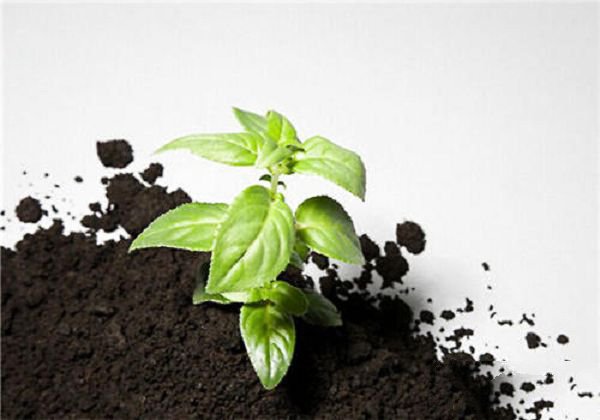
Most people have grown flowers at some point, and we all know that flowers are almost always cultivated in soil, but many flower lovers do not understand the role of soil for flowering plants or the question of how to choose soil for growing flowers. Below we explain the topic of this article in detail.
1. What are the roles of soil for flowering plants?
Soil is an important substrate for cultivating flowers, the material basis on which flowers depend for survival, and the main source of the water, nutrients, air and heat needed for flower growth and development. This is because soil is composed of minerals, organic matter, soil water and soil air. Minerals are the most basic substances making up soil and can provide the various nutrient elements flowers need. Organic matter not only supplies nutrients for flower growth, but also plays an important role in improving the physical and chemical properties of soil and soil aggregate structure, as well as in retaining water, supplying water, aerating and stabilizing temperature.
Soil water is an indispensable material condition for flower growth. Soil air is the source of oxygen needed for root absorption by flowers and for the life activities of microorganisms, and is also an important condition for the further weathering of soil minerals and the transformation of organic matter to release nutrients.
Scientific experiments have proven that, in soil suitable for plant growth, by volume minerals account for about 38%, organic matter about 12%, and soil air and soil water each about 15%-35%. According to some sources, the most suitable water content for the growth of ordinary flowering plants is 25% of soil volume, and air also accounts for 25%.
Because some people do not understand the above principles, when cultivating potted flowers they do not repot or change the soil for a long time, causing the physical and chemical properties of the soil to deteriorate, poor aeration and water permeability, and a lack of nutrient elements, which leads to poor flower growth, yellowing leaves, few flowers or even no flowers. Therefore, to grow potted flowers well, attention must be paid to repotting and changing the soil at the right time.
Soil for flowering plants
2. What kind of soil is good for potted flowers?
For potted flowers, because their root systems can only spread within a very small soil area, their soil requirements are stricter than those for open-ground flowers. On the one hand, nutrients should be as complete as possible, so that the limited potting soil contains the nutrients needed for flower growth; on the other hand, good physical and chemical properties are required, that is, the structure should be loose, the water-holding capacity should be strong, the pH should be suitable, and the fertilizer-retention capacity should be good. For this very reason, when growing flowers one should choose as far as possible a neutral or slightly acidic soil with good aggregate structure, loose and fertile, with good water retention and drainage, and rich in humus. This kind of soil is light in weight, has large pores, circulates air well and is rich in nutrients, which benefits flower root development and robust plant growth.
If flowers are planted in heavy clay soil with poor aeration and water permeability, or in pure sandy soil that lacks nutrients and has poor water and fertilizer retention, or in alkaline soil, then for the vast majority of flowers this easily causes weak growth or even death. However, the soil conditions mentioned above are not possessed by any natural soil.
Therefore, for potted flowers the soil used needs to be artificially prepared potting soil. This kind of potting soil is made by mixing two or more kinds of soil or other substrate materials in a certain proportion according to the different growth habits of flowering plants, so as to meet the growth needs of different flowers.
Since some flowering plants prefer acidic soil, some prefer alkaline soil, and of course some flowers prefer neutral soil, to grow flowers well you must first clearly understand their growth habits, and then choose suitable soil. In this way the job is basically done.