What are the common signs of nutrient deficiency in flowering plants
Flowering plants need fertilizer during cultivation, and if you want them to grow well, fertilizing is an essential step. If flowering plants lack nutrients, they will show various different signs. The editor has put together several signs of nutrient deficiency in flowering plants for you, and flower lovers who are interested can learn about them together.
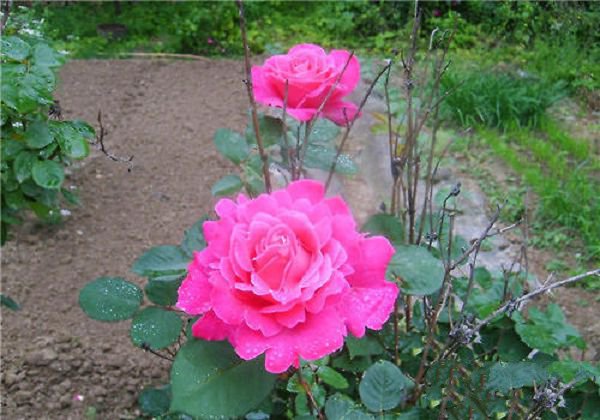
Chinese rose
1. Nitrogen deficiency: growth is stunted, leaves are small and pale, foliage is sparse and drops easily, which affects photosynthesis and thus leads to poor growth, smaller plants, fewer branches, and small, few fruits.
2. Phosphorus deficiency: growth is inhibited, plants are stunted, leaves turn dark green, dull gray and lusterless, with purple spots, and finally wither and drop off.
3. Potassium deficiency: brown spots appear on the leaves, abnormal wrinkles develop, leaf margins curl, and finally the leaves scorch and look as if they have been burned by fire.
4. Calcium deficiency: root growth is inhibited, roots are numerous but short, cell walls become mucilaginous, and root tip cells are damaged, leading to rot.
5. Magnesium deficiency: causes chlorosis, yellowing disease and white flower disease. In flowering plants lacking magnesium, chlorosis usually starts from the lower leaves, which turn yellow, and gradually spreads to the upper leaves; at first the veins remain green, then the veins turn yellow, and soon the lower leaves turn brown until they die.
6. Iron deficiency: when iron is lacking, the young leaves at the upper part of the shoots are affected, while the older lower leaves remain green; with mild iron deficiency, the mesophyll tissue of the flowering plant is light green and the veins remain green; in severe cases, the young leaves all turn yellowish white, and necrotic spots appear and they gradually scorch and drop off.
7. Manganese deficiency: when flowering plants lack manganese, the leaves first turn pale with some gray, then brown spots appear at the leaf tips, gradually spreading to other parts of the leaf, and finally the leaves wither rapidly, plant growth weakens, and flowers cannot form.
8. Zinc deficiency: auxin in the flowering plant is disrupted, plant growth is inhibited and disease occurs. Good zinc nutrition can enhance a plant's resistance to fungal diseases.
9. Sulfur deficiency: causes chlorosis, the veins of the flowering plant turn yellow, but the mesophyll tissue still remains green, which can be used to distinguish it from the symptoms of magnesium and iron deficiency. With sulfur deficiency, red necrotic spots first appear starting from the base of the leaf; usually the top leaves of the flowering plant are affected early, the leaves are firm and thick, and the branches are thin and lignified.
10. Micronutrient deficiency: the growth and development of flowering plants require relatively large amounts of nitrogen, phosphorus, potassium, calcium, magnesium and sulfur, and relatively small amounts of iron, manganese, zinc, copper, boron, selenium, molybdenum, etc. But a lack of micronutrients is likewise harmful to the growth and development of flowering plants. Therefore, appropriate application of micronutrient fertilizer is needed to ensure that the flowers bloom brightly all the time.