How to Eat During a Pandemic
Text and photos / Sun Liang-Hui
The car turned into the familiar parking lot. I parked, put on the mask I keep in the car, and got out. I entered under the wide-open roll-up metal door of the warehouse. Now there is a table set up there, with a bottle of disinfecting alcohol, a bell, and a handwritten sign: please do not enter the warehouse without permission; ring the bell and someone will come out to help you.
This is the Adaptations warehouse, the place I have come to every two weeks for the past 5 years to pick up the fresh produce I ordered. In the past, I would just open the door and walk straight into the Adaptations big cold storage, find the box with my name on it, grab it, and go.

The COVID-19 global pandemic has changed everyone's life. Daily life in Taiwan still follows its usual routine, forming two parallel universes with the 80% of the world's people who are under stay-at-home orders. Last week, the Hawaii governor extended the stay-at-home order to the end of May, but opened beaches and parks so residents can go out to exercise, though they cannot linger or gather. For children, the whole semester just disappeared like that. This year's graduates have no graduation ceremony. Many parents are working from home while also filling up their children's schedules. There is an unprecedented wave of unemployment. In society, only the so-called essential industries can keep operating.
This week my box had kale, cabbage, tomatoes, king oyster mushrooms, beets, cherry radishes, bok choy, asparagus bean shoots, eggplant, green onions, plus half a dozen fresh duck eggs, goat cheese from a ranch on the east side of the Big Island, and sourdough bread fresh out of the oven that same morning. Everything came from local small farmers on the Big Island.

Adaptations is a local Food Hub on the Big Island, a food distribution center. It is an important part of America's push for food localization. They are an intermediary between food producers and food consumers, somewhat similar to the role of a local farmers' association in Taiwan, but they are a private organization. They buy fresh fruits and vegetables produced by local small farmers and resell them to local restaurants, hotels, and supermarkets. You could say they handle the first half of the work of getting food from production to distribution to marketing.
They also provide CSA to ordinary household consumers like us. Adaptations' Fresh Feast CSA ordering method is very flexible; you can choose to pick up once a week, or once every two weeks; the premise is that you first put some money in the account, and each week's order is deducted from it, and you must maintain a minimum balance.
Every Thursday I receive an e-mail notice that the online store is open, and I can go online to choose the vegetables and fruits offered that week, or other kinds of local agricultural products. Below the agricultural products it also indicates which farm they came from. The online store stays open until Sunday morning. If you place an order during this period, you can pick up your Fresh Feast box at the designated place on Tuesday. This new type of customized-order CSA is very well suited to life on our Big Island, where everyone has a yard, and every yard has a few fruit trees and a vegetable plot. When the avocado and mango trees at home are producing abundantly, who wants to receive extra avocados and mangoes? I believe anyone with experience can feel the pressure of having too much food.

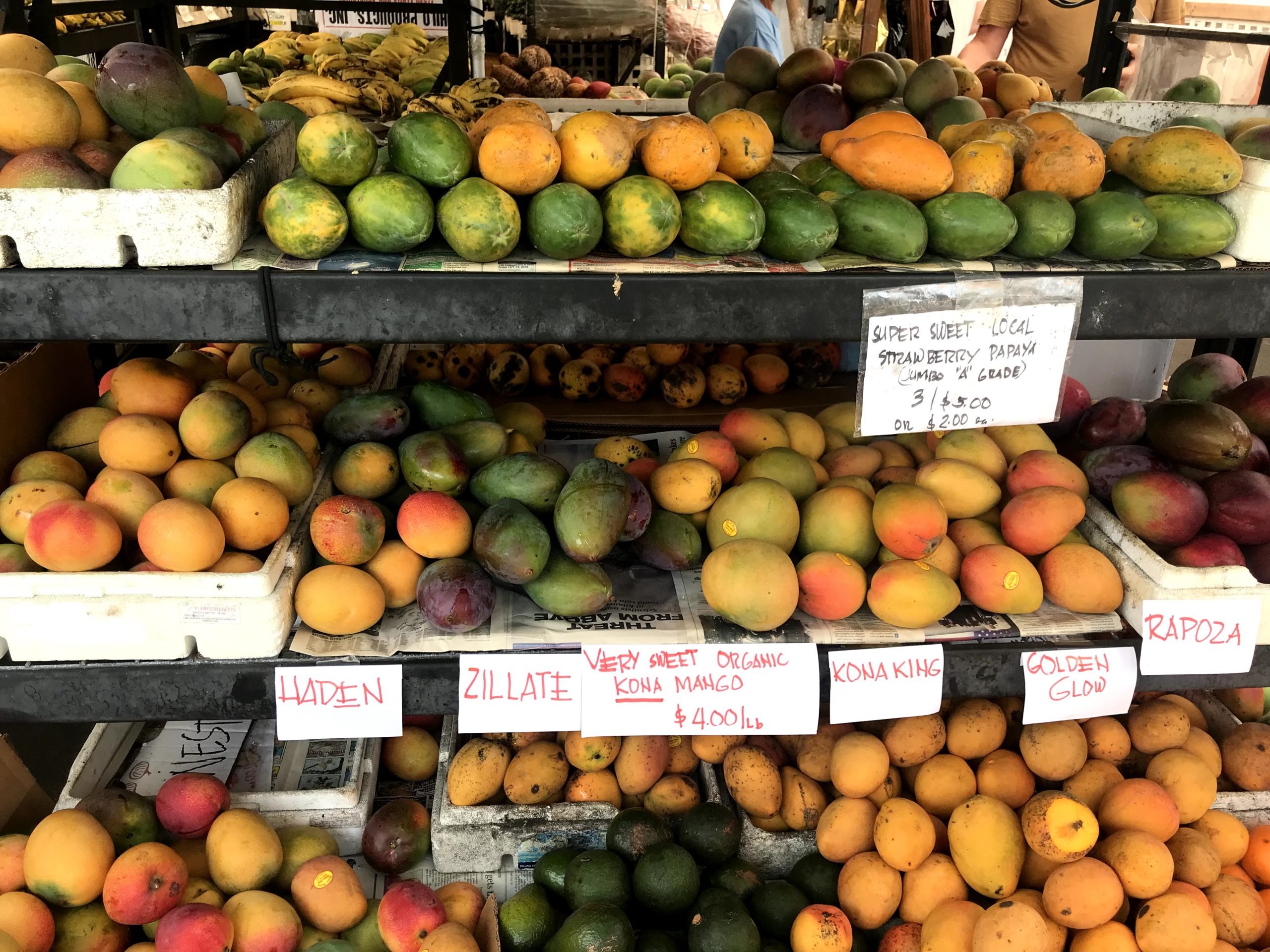

CSA is short for Community Supported Agriculture, which can be called "community-supported agriculture" in Chinese.The concept of CSA began in Europe and Japan in the 1960s, and gradually became more common in the United States in the 1980s. The initial occasion was that crops began to be grown on a large economic scale, which made people begin to care about food safety and the urbanization of farmland.
Simply put, CSA is mutual aid and commitment between producers and consumers. Consumers regularly order agricultural products from farmers over the long term, and farmers regularly deliver seasonal fresh agricultural products into consumers' hands. Knowing where the agricultural products on your table come from, and even knowing which farmer grew them, gives you a more ceremonial gratitude for food when you eat it. It is also a kind of respect and trust toward farmers. No wonder some people describe CSA as allowing you to"know your food, your farmer, and your land. Through sharing and cooperation, consumers and producers are connected to each other, treating the land in a friendlier way, and we can live more healthily, coexisting with nature."。


The stay-at-home order also changed ordinary people's grocery shopping habits. Going out for nonessential reasons was no longer possible; people went out to buy groceries only when they had to. In the past, they browsed the supermarket once every few days; if they ran out of rice, they bought rice; if they ran out of green onions, they got in the car and rushed out to buy them; going to the farmers' market was a must-do weekend outing. Now they go to the supermarket only once a week or even once every two weeks, and the shopping list has become a necessity. I found that cooking also became a major test during the pandemic. People try to avoid dishes that require overly complicated ingredients. Home cooks began emptying their food storage cabinets, looking at the ingredients in the refrigerator every day, and thinking hard about the next meal's dishes. Kitchen scraps from before could be reused as ingredients for the next meal. Every meal became a clean-out-the-fridge meal.
For example, put the root ends of the white parts of green onions left over from cutting vegetables into a water bottle, and the green onion roots slowly grow, with green shoots also emerging from the top. When you need green onions, just snip some off. This kind of small, seemingly effortless everyday act became very popular among people who had been shut in at home for more than a month. Everyone put their green onions growing on the kitchen windowsill toward the sunlight every day and posted photos on social media, calling this a little "windowsill victory"; the term comes from "victory garden," which refers to people starting to grow vegetables and raise chickens in their yards during World War I to feed themselves and their relatives and friends. This coincided with another trend during this period: everyone started sowing seeds and growing vegetables. In the United States, where most people have yards, this was not difficult, and demand for seeds increased greatly. Making your own yeast and baking sourdough bread was another little kitchen happiness that became popular during the stay-at-home order.

Related Articles
- How to prevent and control rabies in dogs? Timely vaccination of puppies ensures safety
- How to Explore Keelung's Fishing Port Docks? Practical Tips for Picking Fresh Seafood
- The Slow Food movement advocates that how you eat matters more than what you eat, helping you eat your way to health
- How to Identify Inferior Cooking Oil? Key Points for Quality Control from Cultivation to Purchase
- Which agricultural activities require tax payment? The ranch court case clarifies the boundary of tax exemption
- Ractopamine, a lean meat agent, is banned; scientific pig farming to increase lean meat percentage is the right path
- Horizontal Windbreak Nets for Welsh Onion Cultivation in Winter Reduce Losses
- Top Ten Fungicides Ranking Released, a Useful Reference for Farmers Choosing Products