Methods and key points for watering potted flowers
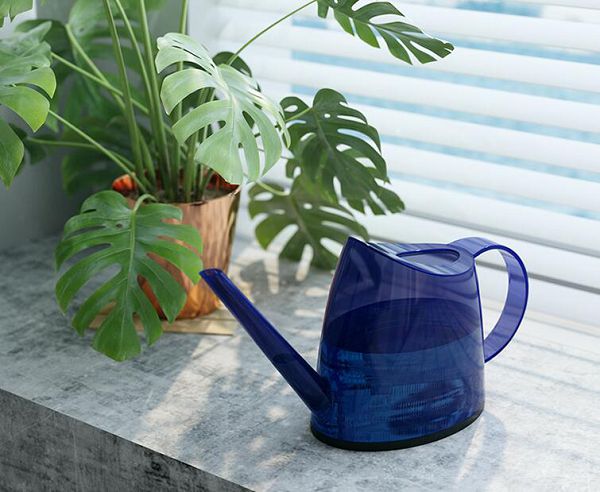
Watering potted flowers should be done just right. First, you need to understand the natural habits of different flower varieties and how much water they need at each stage of growth and development; you also need to consider whether the weather is cloudy or clear, the temperature and humidity levels, the type of flowerpot, the size of the plant, and the texture of the potting soil. Watering potted flowers generally involves the following situations and methods.
1. Water quality
It is best to water with soft water, because the calcium, magnesium and other inorganic salts contained in hard water often harm the normal physiological activities of flowers. Rainwater, river water, lake water, pond water and the like are called soft water, generally weakly acidic or neutral, and are suitable for watering flowers. At present, tap water and deep well water are commonly used. These two types of water are mostly hard water and often contain chloride ions, which are unfavorable for flower growth. If conditions permit, tap water should be poured into a vat and stored for 5-7 days before use.
2. Water temperature
The temperature of the water used for watering should not differ too much from the air temperature at the time. If water with a large temperature difference is suddenly used for irrigation, the temperature of the root system and soil will suddenly drop or rise, which will hinder the normal physiological activities of the root system, weaken water absorption, and cause physiological drought. Therefore, in summer, avoid watering at noon, and watering in the early morning and evening is advisable; in winter, watering at noon is advisable. In winter, the temperature of tap water is often lower than room temperature, so some warm water can be added when using it.
3. Appropriate amount
Master the principle of "see wet, see dry"; for woody flowers and cacti, master the principle of "dry thoroughly, wet thoroughly". In spring, most plants grow vigorously and evaporate a lot, so they should be watered more. In summer, indoor flowers should be watered once every 2-3 days, while outdoor flowers should be watered once a day. The amount of watering for different flower varieties should be treated differently. Generally, herbaceous flowers need more water than woody flowers, so they should be watered more; southern flowers need more water than flowers native to arid regions; flowers with large leaves, soft texture, and smooth, hairless surfaces evaporate more and need more water, while flowers with small, leathery leaves need less water. In autumn and winter, for flowers in a dormant or semi-dormant state, it is better to control watering and keep the potting soil often on the dry side.
4. Method
Most flowers like spray watering. Spraying water can lower the air temperature, increase environmental humidity, reduce plant evaporation, wash dust off the leaf surface, and improve photosynthesis. Flowers that are often spray-watered have clean branches and leaves, which can improve the ornamental value of the plants, but fully blooming flowers and flowers with more fine hairs are not suitable for spraying water.