Dong Shirui/From Sweetheart Ranch to Zhongqi Zone: Becoming a Key Case under the Organic Agriculture Promotion Act, Can It Protect Organic Agriculture?
Text/Dong Shirui (Vice Dean of the College of Agriculture and Natural Resources, National Chung Hsing University; Chief Executive Officer of the Organic Agriculture Promotion Center)
In recent months, two land expropriation disputes related to organic farms have drawn attention from all sides. One is the land conflict between Sweetheart Ranch in Tainan and the Tainan City Government's Green Energy Industrial Park; the other is the Zhongqi Organic Agriculture Zone in Kaohsiung facing off against the Qiaotou Science Park planned by the Kaohsiung City Government. What the two incidents have in common is that both local governments and organic farmers stand at opposite ends of their respective interests, each seeking lawful use rights to public land, and in both cases the landowner is Taiwan Sugar Corporation.
In the process, both sides in these two debates have fought hard to argue their cases, and at present neither appears to have an absolute victory. The debates have also entered a phase of legal combat centered on regulations, with the most frequently cited law by both sides being the "Organic Agriculture Promotion Act." However, because each side inevitably picks what it needs from individual provisions and insists on its own interpretation, the debate sometimes descends into taking passages out of context or distorting the meaning of the law. In addition, a small number of people who do not understand the matter have offered fragmentary interpretations and misunderstandings of the definition of organic agriculture, not only manipulating the issue of "real versus fake organic" to blur the focus, but also undermining the positive value of the Promotion Act's passage.
The author attempts in this article to clarify the distortions of organic regulations in the recent debates, and at the same time to offer personal humble views on resolving the deadlock. It is hoped that conflict can be turned into an opportunity and a possible win-win situation created, with the greatest beneficiaries being the environment and the future of the next generation.

1. Obtaining organic transition period certification already conforms to the fact of operating an organic farm
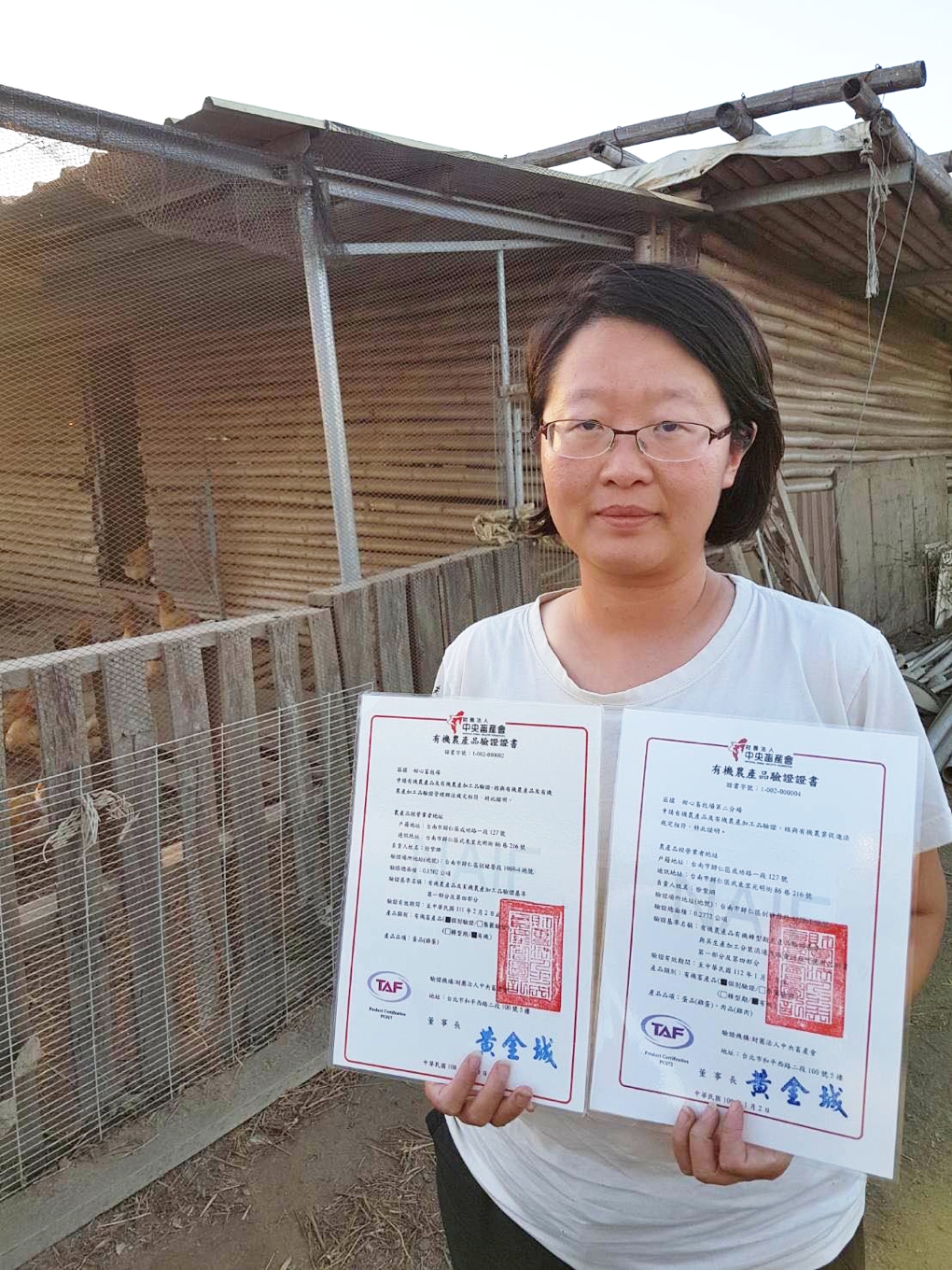
Looking at the Sweetheart Ranch case, two recent incidents invoking the "Organic Agriculture Promotion Act" have drawn attention. One is an official document sent to the ranch by the Economic Development Bureau of the Tainan City Government, which specifically states: "Your ranch has leased Taiwan Sugar Corporation's Gangqian Farm land since April of Year 108 (2019) to cultivate organic crops, but as of now has only obtained organic transition period certification. Under the Organic Agriculture Promotion Act passed in May of Year 107 (2018), the land has not yet obtained organic certification, which is clearly inconsistent with the facts..."
In short, the Tainan City Government believes that although Sweetheart Ranch has obtained organic transition period certification, under the Organic Agriculture Promotion Act it does not have the fact of operating an organic farm. This argument actually runs counter to the provisions of the Organic Agriculture Promotion Act, and may even be said to conflict with the law's norms.
The Organic Agriculture Promotion Act can generally be classified as a kind of basic law. Apart from the first two articles, which state its purpose and competent authority, its elements related to organic agriculture are all listed in Article 3. Article 3 of the Act lists eleven items related to the elements and definitions of organic agriculture, and it is very clear that "certification is the most important procedure in the determination of organic agriculture," which is also a common feature of organic legislation worldwide.
Item 11 states that certification "refers to the process in which a certification body and an agricultural product operator agree by private law contract that the certification body shall review whether the production, processing, packaging, and distribution processes of specific agricultural products conform to the provisions of this Act." Therefore, the certification process is basically aimed at agricultural products, and Item 6 of that article also states: "Organic transition period agricultural products: refers to agricultural products whose production, processing, packaging, and distribution processes, during the period of transition to organic agricultural products, conform to the certification standards set by the central competent authority and have passed certification in accordance with this Act."
Therefore, based on the content of Article 3, it is clearly pointed out that all agricultural products that pass the certification standards set under this Act count as products of organic agriculture in the broad sense. Since organic transition period agricultural products are to be certified according to the existing organic agricultural product certification standards, they are of course included within the scope of organic.
In addition, Article 4, Paragraph 2 of the Organic Agriculture Promotion Act also mentions that "the organic agriculture that the competent authority in the preceding paragraph shall promote includes environmentally friendly cultivation that has not been certified under Article 3, Item 11." It can be seen that this Act recognizes two kinds of organic agriculture: one that has been certified, and the other that has not been certified (that is, environmentally friendly cultivation). Therefore, there is no doubt that certified organic transition period agricultural products are classified as products of organic operation.
Related Articles
- How to prevent and control rabies in dogs? Timely vaccination of puppies ensures safety
- How to Explore Keelung's Fishing Port Docks? Practical Tips for Picking Fresh Seafood
- The Slow Food movement advocates that how you eat matters more than what you eat, helping you eat your way to health
- How to Identify Inferior Cooking Oil? Key Points for Quality Control from Cultivation to Purchase
- Which agricultural activities require tax payment? The ranch court case clarifies the boundary of tax exemption
- Ractopamine, a lean meat agent, is banned; scientific pig farming to increase lean meat percentage is the right path
- Horizontal Windbreak Nets for Welsh Onion Cultivation in Winter Reduce Losses
- Top Ten Fungicides Ranking Released, a Useful Reference for Farmers Choosing Products