Flower planting guide for May, these care tips you need to master
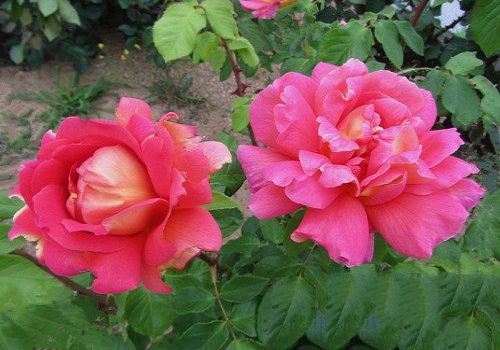
Climate characteristics of May: temperatures continue to rise, rainfall gradually increases from south to north across our country, and after each rainfall the temperature rises noticeably, with many long stretches of spring rain. By the time the spring rains end at Xiaoman, the weather turns muggy, marking the imminent arrival of summer. Therefore, May, at the turn of spring and summer, is a key period for planting and caring for
flowers, and it plays an important role in laying the foundation for the summer and autumn growth of potted flowers. From south to north, flower care in May mainly includes the following items:
I. Flower propagation
1. Sowing
The flowers and flowering shrubs that can be sown immediately after harvest in May mainly include: fairy primrose, Japanese aralia, leatherleaf mahonia, loquat, and so on. When sowing and raising seedlings in May, pay attention to the following three points: first, keep the sowing seedbed moist, neither waterlogged nor too dry and dehydrated; second, cover the sowing seedbed with grass to retain moisture, to prevent sudden changes between wet and dry in the seedbed that cause seeds to sprout back; third, after seedlings emerge, remove the covering grass in several sessions, and promptly build a shade frame, so as not to scorch the young seedlings.
At the end of May, the ripe blue-black fruits can be picked, mixed with sand and rubbed to remove the flesh, rinsed clean, and then stored in moist, clean fine sand, where they can be kept until February of the following year. Only when the seeds crack and the tip of the radicle is exposed can they be sown in the ground. During storage, be careful to prevent rodents from stealing and eating them, and keep the sand moist.
For loquat sowing, the soil cover should not be too deep, generally no more than 2 to 3 cm.
2. Cuttage
The flower species suitable for cuttage propagation in May include: scarlet sage (pink, purple, white), globe amaranth (white), marigold, French marigold, dragon's mouth flower, Impatiens hawkeri, coleus, autumn varieties, sulfur cosmos, , , dahlia, fuchsia, coral flower, poinsettia, geranium, bougainvillea, Chinese hibiscus, coral tree, nasturtium, Jasminum molle, jasmine, Chloranthus, red mulberry, deutzia, hydrangea, kerria, pomegranate, , butterfly bush, Chinese trumpet creeper, gardenia, night-blooming cereus, Rhaphidophora, Epiphyllum, jade plant, gem stone plant, Oyama magnolia, Magnolia biondii, Chaenomeles speciosa, umbrella plant, lantana, red-back eupatorium, shrimp plant, gold-bracted flower, bleeding heart vine, Chinese evergreen, Cordyline, pothos, Schefflera, oleander types, firethorn, mahonia, and Buddha-belly bamboo with aerial roots, etc.
3. Grafting
In May, use potted 1- to 2-year-old purple magnolia seedlings or cuttage seedlings for cleft grafting to propagate white orchid and laughing flower; use 1- to 2-year-old seedlings for bud grafting to propagate , laceleaf maple, cloak maple, etc.; use vigorous 2- to 3-year-old hairy azalea cuttage seedlings for cleft grafting to propagate Western ; use wild as rootstock for bud grafting to propagate fine varieties of flower; use yellow wormwood as rootstock for grafting to propagate fine varieties of chrysanthemum; use 2-year-old seedling wintersweet as rootstock; softwood grafting of fine varieties of wintersweet, and potted rootstocks can also be used for cleft grafting. In addition, cactus and triangular cactus can be used as rootstocks for grafting to propagate Christmas cactus.
4. Layering
The flowering shrubs that can be propagated by air layering in May include: white orchid, rubber tree, Aglaia, Western azalea, camellia, croton, laughing flower, etc.; those that can be propagated by ground layering include: plum blossom, wintersweet, , gardenia, , , Chinese trumpet creeper, etc.
May flower planting methods
II. Potting and transplanting
1. Potting
For potted flowers used for street decoration during National Day, most varieties must be potted and planted in May. After 3 to 4 months of careful care, they can bloom on time by late September and early October, thereby creating a joyful, enthusiastic, and colorful holiday atmosphere. The main varieties include: scarlet sage (pink, white, purple), globe amaranth (white), cockscomb, crape myrtle, sulfur cosmos, China aster, Kochia scoparia, marigold, dragon's mouth flower, asparagus fern, Impatiens hawkeri, coleus, autumn , etc.
2. Transplanting
At the end of April and the beginning of May, transplanting after flowers fade and just before buds sprout and leaves unfold gives the highest survival rate. Some flowering shrubs that sprout later and are easy to transplant can also be transplanted and planted with a soil ball in early May, such as , , , pomegranate, "class="blacklink_line">, etc.
III. Flower management
1. Watering
As temperatures continue to rise, the water demand of potted ornamental plants will also gradually increase. Besides combining root watering with foliar spraying, attention must also be paid to the quality of water used for irrigation and spraying. It is best not to use tap water directly, especially not tap water directly treated with bleaching powder. For this purpose, tap water can first be poured into a water tank or small vat, and then an appropriate amount of acidifying substance can be added to increase the acidity of the water, such as ferrous sulfate, with the concentration kept between 0.1% and 0.2%. The potted flower types suitable for acidic water mainly include: camellia, sasanqua, plum blossom, , rhododendron, gardenia, daphne, clivia, chrysanthemum, types, red-flowered camellia, etc.; foliage types include: sago palm, Philodendron bipinnatifidum, Monstera deliciosa, rhapis palm, rubber tree, ferns, , croton, red (green) gem, giant taro, green emperor, Syngonium, arrowroot, bromeliads, Brazil wood, money tree, Schefflera, etc.; fruit-viewing types include: bitter orange, firethorn, kumquat, Buddha's hand, lemon, , winter coral, Ardisia crenata, etc.
2. Pruning and bud pinching
(1) Pruning When pruning back the white orchid shortly after it is moved out of the greenhouse, special attention must be paid because its branch pith is loose, and the cut surface easily loses water, dries up, and extends downward. For this reason, the cut should be made 8 to 10 cm above the bud eye to be retained, and must never be too close to the bud eye. For potted after flowering, pruning should be moderately lowered by 10 to 20 cm, so that the bud eyes in the middle of the branch can produce flower buds.
(2) Bud pinching When pinching buds on potted wintersweet plants, also pay attention to the position of bud pinching, generally 3 to 5 cm above the selected leaf bud position; otherwise, the wound will dry up and shrink, affecting the selected leaf bud downward. For those potted in the same year, the terminal bud should be removed promptly to promote the formation of a good plant shape.
3. Shading
After entering May, potted plants that prefer semi-shade or shade should be moved under a shade shed or under tree shade. Types include: Monstera deliciosa, rhapis palm, arrowroot, Philodendron bipinnatifidum, giant taro, red (green) gem, green emperor, pink lady leaf, Chinese fan palm, Syngonium, orchid, , bird of paradise, camellia, sasanqua, etc.; for light-loving flowering shrubs, full light must be given, such as wintersweet, sago palm, , firethorn, jasmine, white orchid, etc.; bonsai plants, such as Chinese elm, Japanese apricot, trident maple, water poplar, oak, serissa, black pine, dense pine, etc., require full light; while , tiger thorn, red nanmu, cypress, five-needle pine, etc. can be appropriately shaded.
4. Fertilizing
For camellia, , sasanqua, plum blossom, Aglaia, jasmine, white orchid, gardenia, wintersweet, , daphne, clivia, orchid, etc.; after flowers fade, remove the withered flowers and stems respectively, and apply a compound fertilizer mainly of nitrogen and supplemented with phosphorus, once every half month, to restore their vegetative growth while laying a foundation for them to again produce flower buds; for foliage-oriented types, such as rubber tree, Monstera deliciosa, giant taro, red (green) gem, green emperor, Philodendron bipinnatifidum, Aspidistra, ferns, etc., apply a thin, fully decomposed cake fertilizer solution once every half month; for foliage plants with colored spots and patterns, such as golden-edged snake plant, colorful bromeliad, golden-hearted Brazil wood, croton, caladium, white butterfly Syngonium, pink lady leaf, etc., a 0.2% potassium dihydrogen phosphate solution can be applied as a foliar topdressing, which can make their leaf color appear even more beautiful and vivid.
4. Pest and disease control
For , , roses, etc., attention should be paid to controlling powdery mildew and brown spot disease, and for leaf-eating pests that appear, pesticides should be sprayed promptly to kill them; for leaf-eating pests that commonly appear on bitter orange, kumquat, golden bean, Buddha's hand, lemon, rue, etc.??? citrus swallowtail larvae, pesticide should be sprayed early to kill them.
IV. Bonsai shaping
The ornamental bonsai plant types that can still be shaped in May include: plum blossom, small-leaf gardenia, mountain gardenia, , serissa, cypress, water poplar, fragrant olive, etc. It is worth noting that when shaping, you must be careful and cautious, and try not to damage the bark, branches, or trunk, otherwise it will affect the normal growth of the plant.