Grouper prices plummet as advantages fade; experts suggest using the pandemic to restructure the industry
Grouper is a must-have centerpiece dish at many restaurant wedding banquets. Twenty years ago, Taiwan was known as the Kingdom of Grouper. In 2010, the two sides of the Taiwan Strait signed the ECFA agreement, which included grouper on the early harvest list (tax-exempt items), allowing Taiwan's grouper industry to immediately enjoy political dividends. In 2014, total grouper production reached a historic peak of 26,000 metric tons, with more than 80% of production exported to China.
However, as China's grouper farming industry rose and its production exceeded Taiwan's by more than eight times year by year, Taiwan's grouper industry retreated steadily. In 2016, when the Democratic Progressive Party came to power, China began levying the full 13% business tax on Taiwan grouper (Note 1). Combined with China's anti-extravagance policy, prices for grouper, which relied mainly on restaurant sales, took a heavy hit.
In February of this year (2020), the Wuhan pneumonia outbreak exploded, lockdowns in major Chinese cities comprehensively affected trade, the restaurant sector was in the doldrums, and orders for grouper fell sharply. Although spring is already the off-season for grouper shipments, prices plunged downward, and whether they can rebound remains unknown. Apart from the Chinese market, could there be other outlets for grouper? Besides being a restaurant banquet dish, could grouper also enter family dining tables and expand its sales channels?
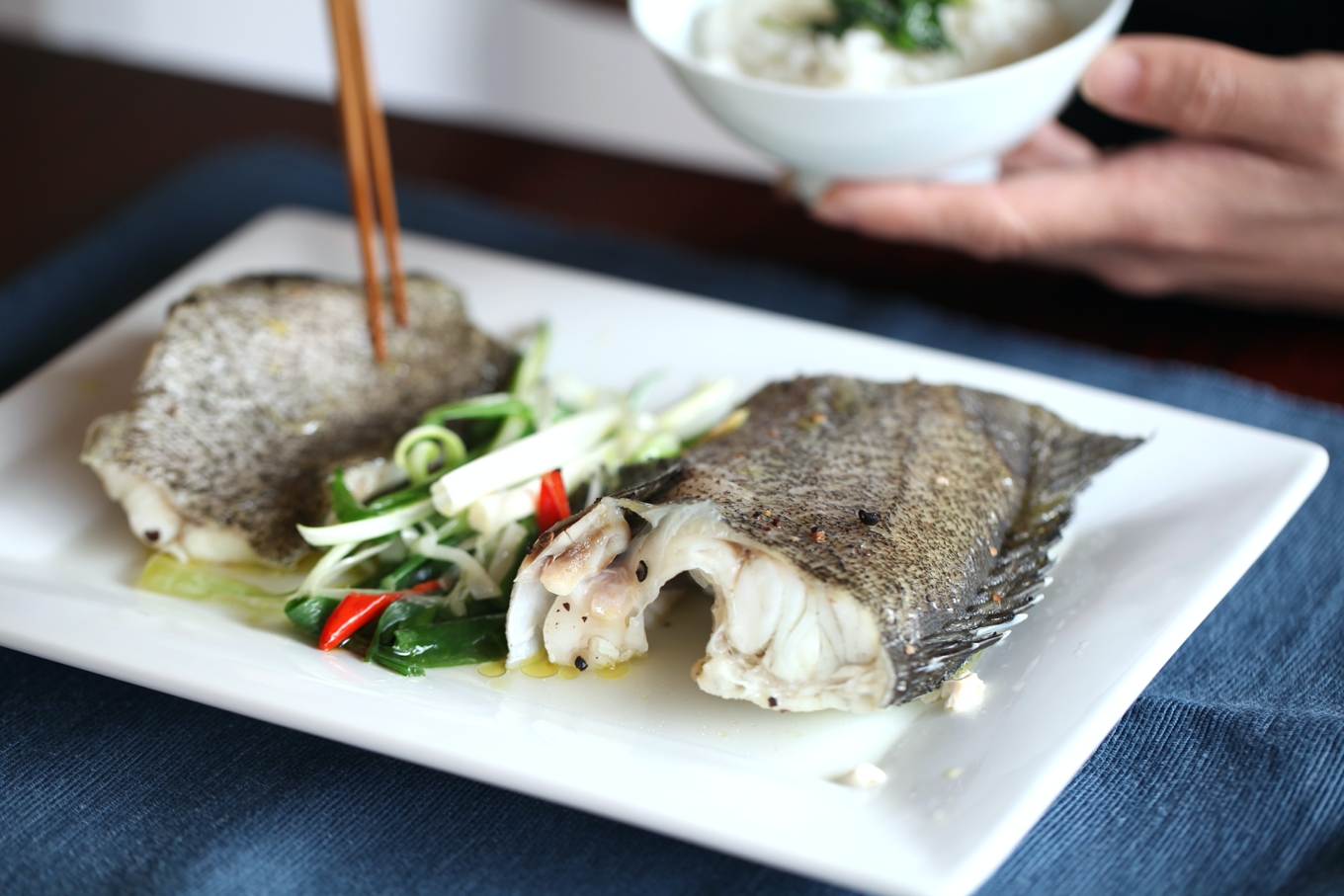
More than 70% of Taiwan's grouper is sold to China; prices fell sharply amid the Wuhan pneumonia outbreak
Taiwan's farmed grouper is mainly produced in the Kaohsiung-Pingtung area, with three main species: the traditional green grouper commonly seen at banquets, the giant grouper which is large in size and requires years of rearing, and the hybrid dragon-tiger grouper that has become popular in recent years. Currently, 70% of production is shipped to China (including Hong Kong, China) by live fish transport vessels, supplying local wholesalers and restaurants for continued rearing, catering to the Chinese consumption habit of eating live fish.
After the Lunar New Year, the Wuhan pneumonia outbreak erupted, and grouper prices have continued to decline to this day. Pond-side prices for green grouper have reached NT$70 to NT$90 per Taiwanese catty, and giant grouper NT$160 to NT$190 per Taiwanese catty, both sharply down compared with the same period last year. Farmers lament that they are already selling at a loss.
Facing price fluctuations, Zheng Chunzhong, a major wholesaler in Linbian and Jiadong who owns three live fish transport vessels, said: "The pneumonia outbreak happened to hit during the grouper off-season. Most grouper had already been sold before the New Year, and there are not many grouper in the ponds now. So for the time being the impact on the industry is not too great." As for the price decline showing no sign of stopping, Zheng Chunzhong believes the main reason is sluggish sales caused by reduced restaurant demand. However, it is still the post-New Year off-season, and farmers do not have much grouper in their ponds, so Zheng believes there is no need for excessive panic.
Chen Zhongmin, general secretary of the Linbian District Fishermen's Association, said: "The peak season for grouper is from the second half of the year to before the New Year. After the New Year, only a small amount of grouper remains in the ponds, and it has not yet grown to market size. Even if the market contracts, the impact on the industry is still limited. Fishermen may not make money or may take a small loss, waiting for the market to gradually absorb it."
Whether to continue releasing fry this year; farmers are taking a wait-and-see attitude
Although major wholesalers and the fishermen's association are calm about the low prices, for farmers, as long as there is a chance to ship, they still hope to sell as early as possible. The reason is that "fish in the pond not only consume feed, but also grow larger day by day." If they grow beyond the size demanded by the market, they become substandard products with even lower prices.
Another urgent question is whether, as spring warms the water, they should release water and introduce new fry. This year, many grouper farmers are adopting a conservative wait-and-see attitude again and again. Su Jinfu, who farms grouper (green grouper), believes: "I will still continue to release fry, just in somewhat reduced quantities. On the one hand, I consider that the current situation is not clear; on the other hand, I also imagine that if the pandemic ends in the second half of the year and the economy recovers, I will need fish on hand to sell."
The reason fishermen are conservative about releasing fry, apart from the uncertain pandemic, is that after 2016, due to political changes across the Taiwan Strait, grouper prices collapsed and have continued to hover at low levels. Although fishermen still stock grouper every year, they feel uneasy every year about price changes caused by political shifts across the Taiwan Strait.

Fishermen's association: Cross-strait relations affect grouper trade; it has always been a political fish
According to official Chinese statistics (2012-2018), grouper production exceeded 70,000 metric tons in 2012 and approached 160,000 metric tons in 2018, eight times that of Taiwan. According to United Nations data, it had actually surpassed 200,000 metric tons in 2015. In the ten years after the signing of ECFA, Taiwan's grouper production reached a peak in 2013 and 2014, then gradually declined, but China's grouper production grew astonishingly. Taiwan lost its industrial competitiveness, and prices never recovered.
Zhan Manse, associate professor at National Taiwan Ocean University, wrote an article in 2016 predicting the grouper collapse. She said the Chinese Communist Party issued an anti-extravagance order, market demand for grouper gradually declined, but supply continued to increase, so a market collapse was imaginable. Sure enough, that year grouper prices nearly halved and have still not returned to previous levels.
Zhan Manse believes: "Taiwan's grouper has long relied on the Chinese market, and China's grouper production is far greater than Taiwan's. Any change in the Chinese market will impact prices. If cross-strait politics interferes again, Taiwan can easily fall into a passive state." She also suggested that the government and grouper industry players should envision new outlets as early as possible.
Facing the warning about the growing risk of reliance on a single market, Chen Zhongmin said: "Grouper is just a political fish. With such a large market right beside us, if we do not do this, what else can fishermen do? Farmers cannot leave their ponds empty."

Chairman of the seed association: Crisis is a turning point; we should make a painful decision to re-inventory the grouper industry
Yu Naiheng, chairman of the Aquatic Seed Association, the most representative private professional aquaculture organization in the country, believes that the gap between the grouper industries across the Taiwan Strait is due not only to China's overall larger production volume, but also to policy support widening the technological gap. "In recent years, domestic aquaculture research funding has concentrated on AI 4.0 smart control and technology transfer, neglecting basic research and seed cultivation. Aquaculture R&D results have become available for technology transfer only to large companies and cannot be channeled into an industry dominated by small farmers," he said.
Second, Taiwan's aquaculture industry has been too comfortable in a single market for too long, and the production environment has not changed much in ten years. This situation is not conducive to opening other markets. Yu believes: "Over the past decade, markets such as the European Union and Japan have imposed stricter environmental and safety hygiene standards on imported aquatic products, such as wastewater discharge, drug testing, and farming environments. Taiwan must face these issues and raise its own standards to break through."
Yu Naiheng suggests that the government should take advantage of the situation to transform, make a painful decision to treat the crisis as a turning point, and propose policies. "External market development and quality control are the prerequisite; next is promoting cuisine," he pointed out. Taiwan imports large quantities of salmon, cod, and other non-local fish species, also because foreign governments and industry players cooperate, imperceptibly changing Taiwanese consumers' fish-eating habits.

Hybrid dragon-tiger grouper exports are restricted; it has reproductive capacity, and escape will cause ecological harm
Apart from the industry's fundamentals, Yu Naiheng is also worried that in recent years most small farmers have followed market preferences and farmed the hybrid "dragon-tiger grouper," causing a sharp decline in the farming of giant grouper and green grouper and creating risks for the aquaculture industry. Yu Naiheng reminds that ordinary improvement is "inter-species improvement," but dragon-tiger grouper is a "hybrid of different species," which will cause species conservation and ecological impacts. According to general international practice, it cannot be exported, which will restrict the industry.
Looking through the fisheries annual report, dragon-tiger grouper is currently mostly exported under the names of green grouper and giant grouper, which has become an "open secret" in aquatic product trade. Yu Naiheng said: "From an aquaculture professional standpoint, I oppose hybrid species. However, given industry realities, it is understandable. The industry must move forward to survive in the market, otherwise there is no way out."
He believes that in the long run, developing varieties suited to local conditions and able to differentiate the market is the way to strengthen the foundation. "Seed is the foundation of the aquaculture industry. It is nothing more than optimizing varieties or cultivating new varieties. The resources needed for seed research are beyond what small farmers can bear, and the Fisheries Research Institute must shoulder this important responsibility."

Related Articles
- How to prevent and control rabies in dogs? Timely vaccination of puppies ensures safety
- How to Explore Keelung's Fishing Port Docks? Practical Tips for Picking Fresh Seafood
- The Slow Food movement advocates that how you eat matters more than what you eat, helping you eat your way to health
- How to Identify Inferior Cooking Oil? Key Points for Quality Control from Cultivation to Purchase
- Which agricultural activities require tax payment? The ranch court case clarifies the boundary of tax exemption
- Ractopamine, a lean meat agent, is banned; scientific pig farming to increase lean meat percentage is the right path
- Horizontal Windbreak Nets for Welsh Onion Cultivation in Winter Reduce Losses
- Top Ten Fungicides Ranking Released, a Useful Reference for Farmers Choosing Products