What are the care methods for terrestrial cacti and succulents?
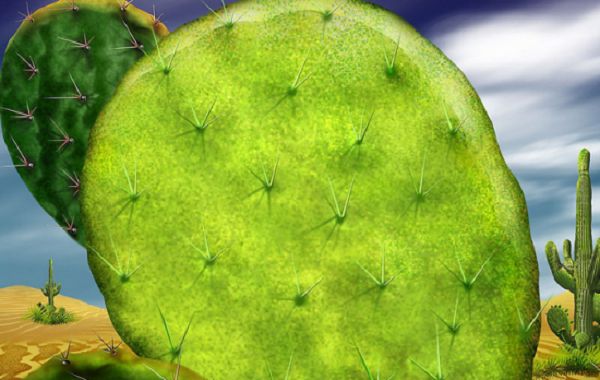
Most cacti of various globular, pad-shaped or mountain-shaped forms belong to the terrestrial types. Their places of origin are tropical and subtropical deserts or semi-desert regions, where the rainy and dry seasons are distinct throughout the year. In the rainy season they grow vigorously, flower and bear fruit, and store water in their tissues; in the dry season they enter a semi-dormant or dormant state. They like strong light, tolerate heat, drought and poor soil, have tenacious vitality, and require only rough management.
When repotting, even if you do not change to new soil, simply turning the original potting soil upside down is also fine, and it will promote plant growth. Repotting is best done in spring and autumn. The pot should preferably be small rather than large, as long as it is slightly larger than the plant. You can put more small stones at the bottom of the pot to help drainage. For the potting soil, use a weakly alkaline soil with good drainage and aeration; for rather clayey soil, you can mix in some old wall lime powder, plant ash or coal ball ash, so that it drains water and becomes weakly alkaline. When planting, do not set it too deep, as long as it can stand steadily in the pot.
To make terrestrial cacti and succulents grow quickly, you must create an environment of high temperature and high humidity during their growing period; in this way it matches the conditions of the growing-period environment in their places of origin. This is precisely why such flowers grow well in greenhouses. If you do not have a greenhouse for growing plants at home, you can cover the pot with a glass cover or a transparent plastic film bag and place it in the sun to bask, and the plant will noticeably speed up its growth.