How to solve the nutrient solution problems in soilless cultivation of flowers
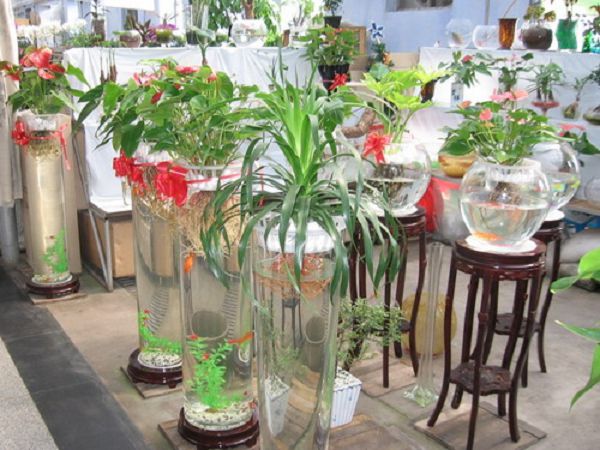
When flowers are grown in soilless cultivation, all the nutrients they need must come from the nutrient solution. At present, flower shops, nursery companies and large shopping malls in major cities generally sell it. Usually what is sold is a concentrated nutrient solution. After buying it and taking it home, before use, pay attention to diluting it according to the dilution ratio stated in the instructions.
The flower and tree nutrient agent produced by the Beijing Broadcasting Science Research Institute is suitable both for ordinary soil cultivation and for soilless cultivation, and among them there are also orchid fertilizer and clivia nutrient agent specially formulated for ornamental flowers such as orchids and clivias.
The "soilless flower comprehensive nutrient solution" developed by the Beijing Academy of Agriculture and Forestry Sciences is suitable for both flowering plants and foliage plants.
Flower nutrient solutions are produced in Shanghai, Nanjing, Zhenjiang and other places, and they are also suitable for soilless cultivation, with quite good results.
Flower enthusiasts can also prepare the nutrient solution themselves according to a basic formula. The nutrient solution is divided into two parts, macroelements and microelements. Here a formula with relatively comprehensive elements is chosen and illustrated with an example:
Macroelements added to each liter of water include: potassium nitrate 0.7 grams, calcium nitrate 0.7 grams, superphosphate 0.8 grams, magnesium sulfate 0.28 grams, ferric sulfate 0.12 grams. Microelements include: boric acid 0.0006 grams, ammonium molybdate 0.0006 grams, zinc sulfate 0.0006 grams, manganese sulfate 0.0006 grams, copper sulfate 0.0006 grams.
Of course, for different kinds of plants, the types of elements should be controlled flexibly.